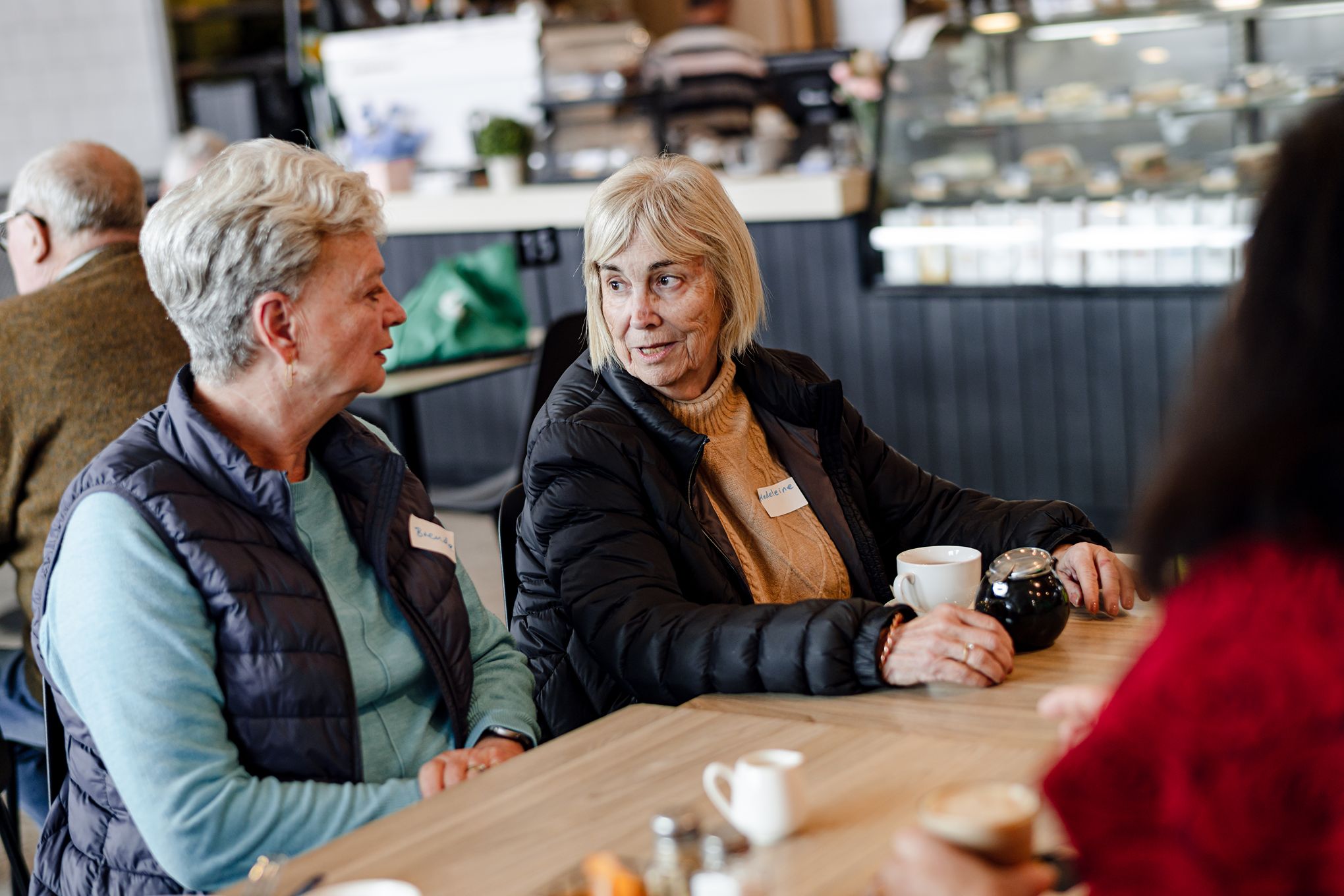
Talking Cafes: Melbourne’s Free Connection Fix
Free, no-booking talking cafes across Melbourne’s outer east and beyond are quietly helping people rebuild their social lives after retirement, loss or a big move.
Living Our Best Life measures its own success in an unusual way: when someone stops turning up. Not from losing interest, but because they’ve made friends, joined a U3A class or picked up a standing lunch date elsewhere. That’s the whole point of the talking cafes, free drop-in sessions held in ordinary cafes, aimed at anyone whose social circle has shrunk after retirement, a bereavement or a move. Nine cafes are running now across Melbourne’s outer east, with more opening on the Mornington Peninsula this October.
Related reading: Social events and activities for older people in Melbourne
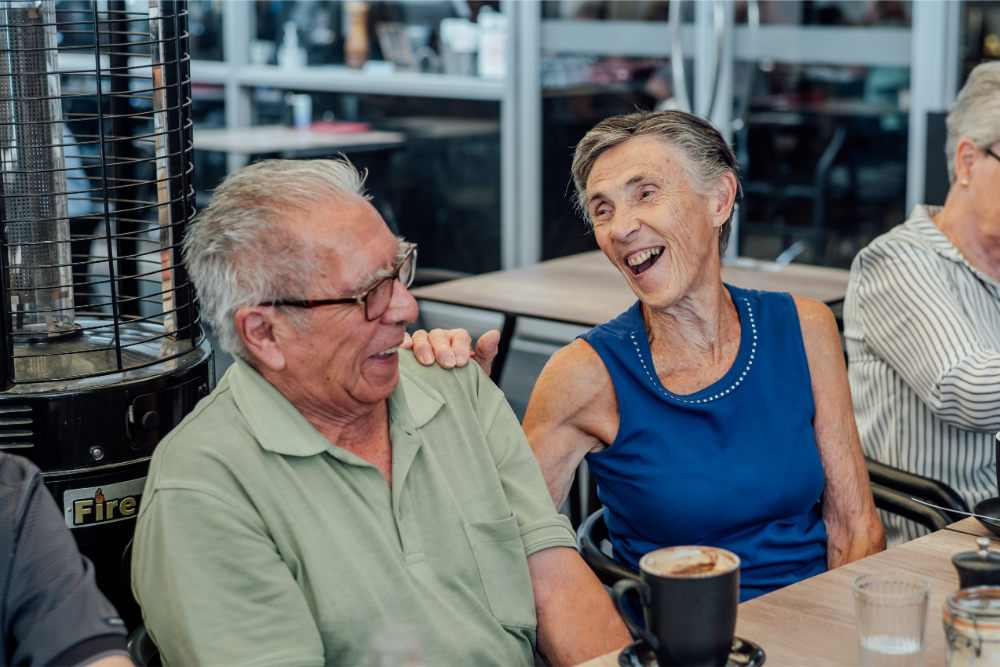
Success looks like someone getting too busy to come back
Maureen McLaughlin runs Living Our Best Life (LOBL) as part of the Community Houses Association of the Outer Eastern Suburbs (CHAOS Inc) network, and she measures the program by an unusual yardstick.
“When someone tells us they are now too busy to come along, because they have made friends or go along to other activities, we see that as a success,” she says.
It’s a radical way to run a service. Most programs want you to keep coming back. LOBL’s talking cafes are built to make themselves unnecessary, one new friendship at a time.
What actually happens at a talking café
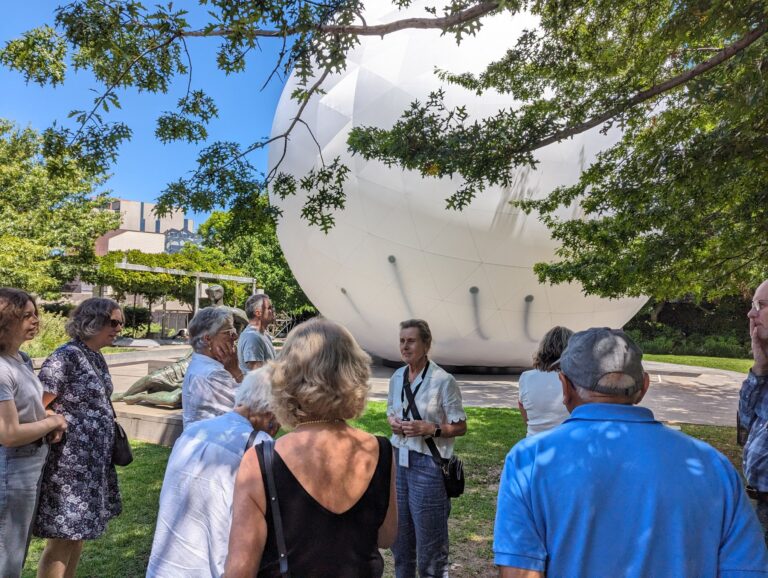
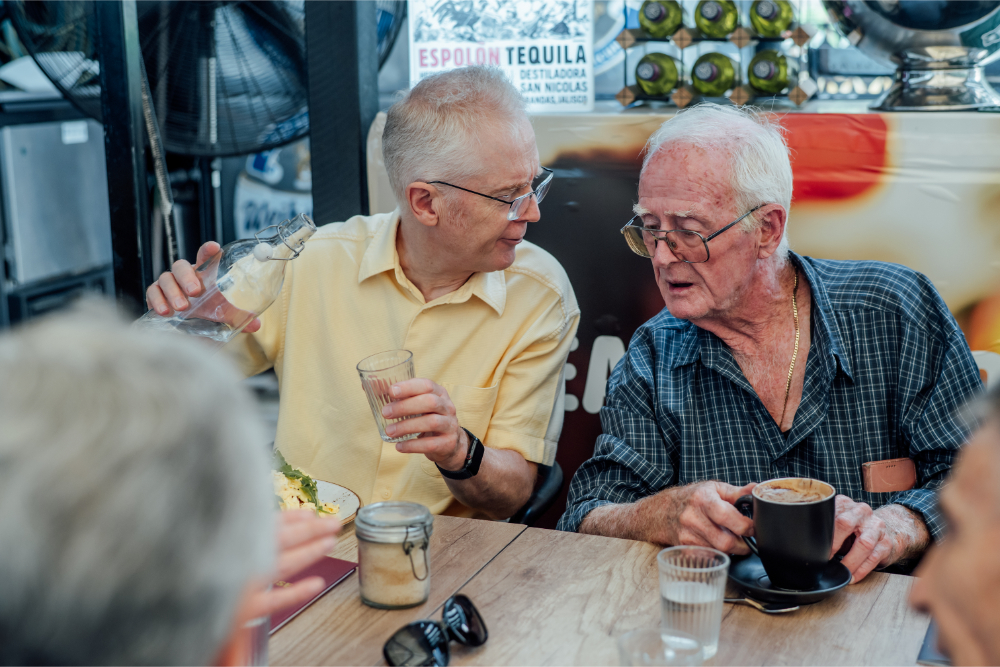
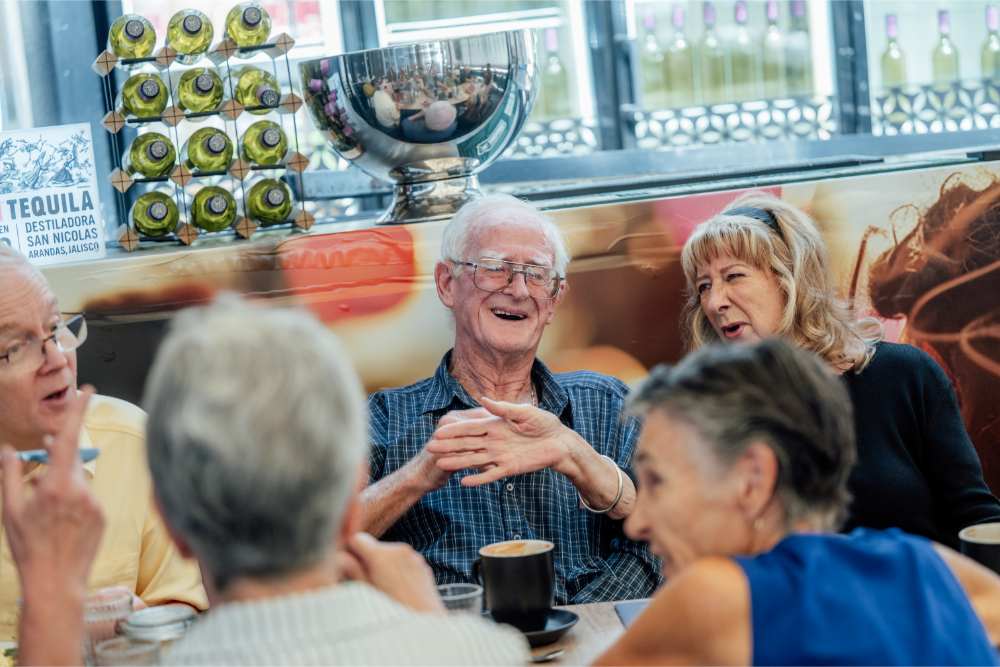
The format is deliberately low-key. Talking cafes run every weekday, hosted by trained volunteers, inside a regular working café rather than a community hall or function room. There’s no sign-up required to see what it’s about.
“A potential new participant can walk by or sit at a table near the talking café to check it out before they decide whether to join in or not,” Maureen explains.
Once someone does sit down, the conversation is mostly unstructured. New cafes sometimes start with a few prompt questions to get things moving, but that scaffolding tends to fall away quickly once a group finds its rhythm. Local clubs, volunteering groups and healthy ageing services are occasionally invited in as guests, so regulars hear about other things they might enjoy without it feeling like a pitch.
Maureen describes a lot of the value happening in the gaps between the official purpose of the group — peer support, new friendships, people quietly keeping an eye on each other week to week.
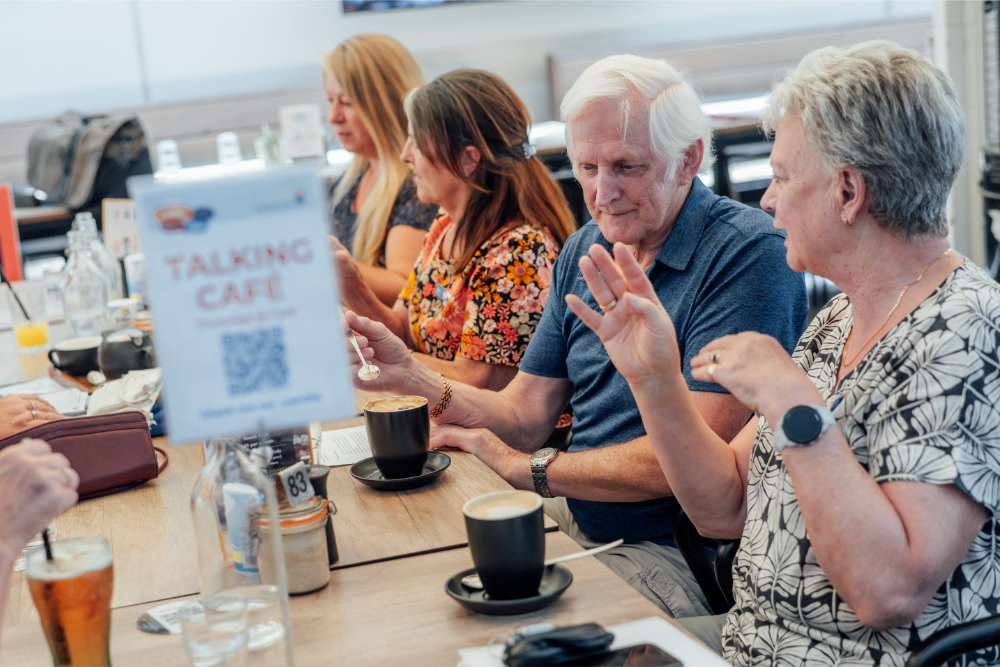
Why it started
The model was adapted from a program in Mendip, in the UK, developed off the back of research showing loneliness affects not just mental health but long-term physical health too.
Maureen and her team, working through the CHAOS network, noticed that plenty of older people were already out and connecting with others, but for some, that connection had become hard to find again.
The moments that tend to trigger it are familiar to most of us: retirement, the death of a spouse, a partner moving into residential care, a health setback, relocating to a new area, or a relationship ending. Any one of those can quietly empty out a social calendar that took decades to build.
“A fantastic network in my new home”
Marian found her way to a talking café after moving to Melbourne and needing to build a network from nothing. Here’s her story, in her own words.
After arriving in Melbourne, needing to establish a network, last year I found a comment on a Facebook page suggesting Talking Cafe.
I attended 3 in the following weeks and found everyone so very welcoming, hosts and attendees alike.
After filling out paperwork, Maureen contacted me by phone and said Narissa would email me to help find activities I would enjoy.
This led to conversations about my needs and interests and I am so pleased to say Narissa found so many options in my area.
With her help I am pleased to say I am a very happy, busy person attending talking café groups, U3A groups such as Friday Flicks, Australian History, lunch groups and a Singing group.
So, thank you ‘Living Our Best Life’ for helping me find purposeful activities and a fantastic network in my new home.
— Marian
Marian’s path through the program is a fairly typical one: a talking café first, then a one-on-one conversation with a community connector who matches interests to what’s actually running nearby, rather than handing over a generic list of activities.
If you’re looking for that same kind of variety on your own, our guide to social events and activities around Melbourne is a good next stop.
Getting involved
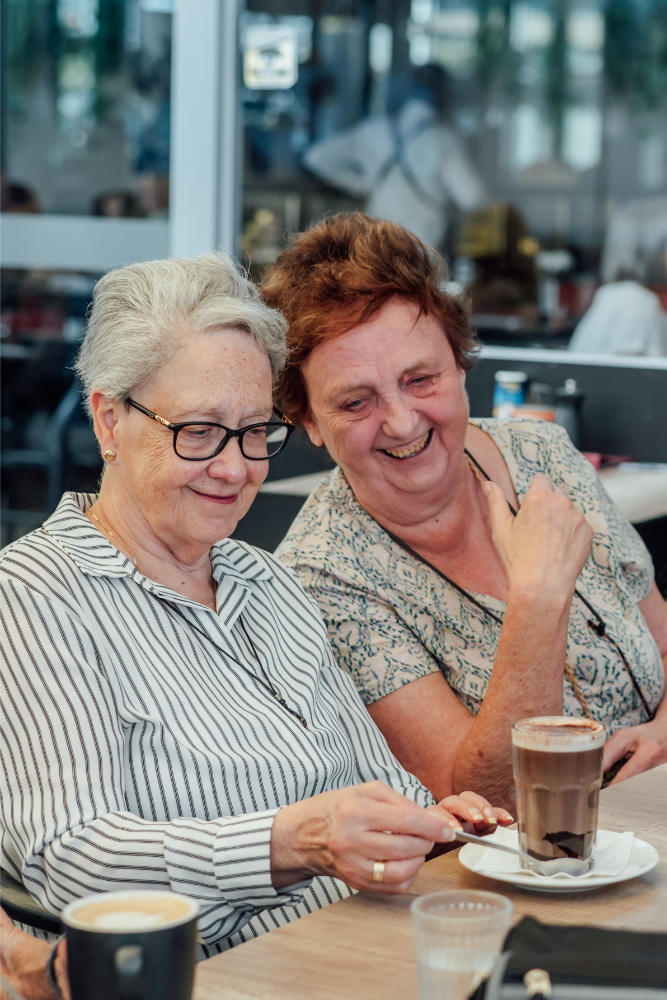
The practicalities are as unfussy as the format itself:
- Free to attend. Participants only pay for their own tea, coffee or lunch.
- No booking needed. Just turn up during the café’s running time.
- A short registration form is filled out at the café so the team has contact details on file.
- One-on-one support is optional. Participants can ask to speak with a community connector, who works through interests and needs to suggest other groups, clubs or volunteering opportunities.
- Everyone attending is expected to treat others with respect and courtesy, and that expectation is made clear from the start.
Where to find one
There are currently nine talking cafes across Melbourne’s outer east, plus a further eight in the Upper Murray region. Find the locations listed here.
Locations aren’t picked at random. Maureen’s team looks for cafes that are:
- Accessible
- Close to other everyday services such as pharmacies, supermarkets or GPs
- Near public transport
- Easy to park near
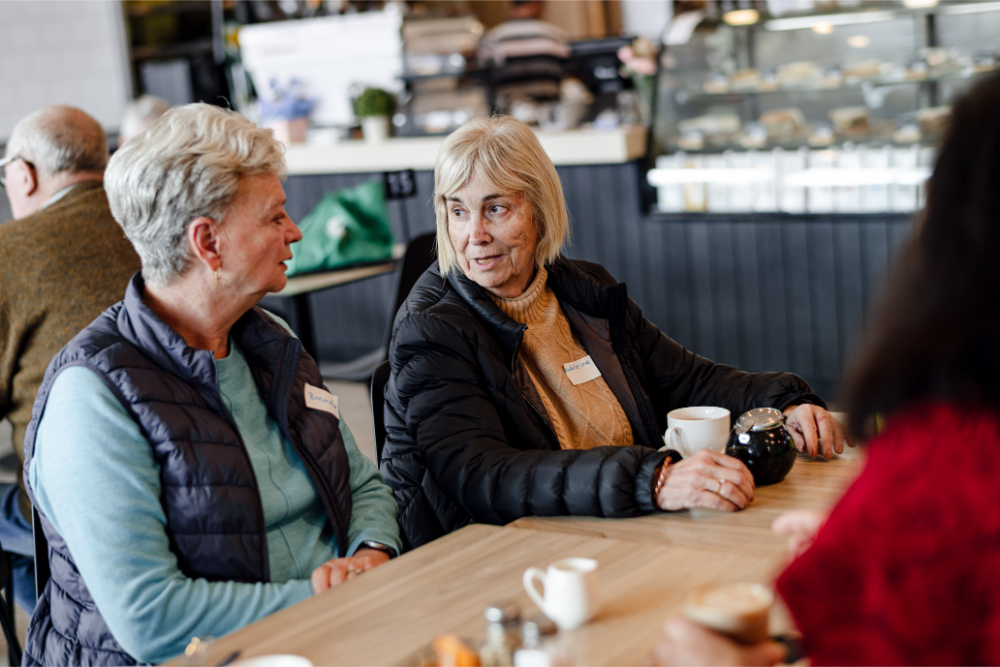
Sessions run in the quieter afternoon stretch rather than over the busy lunch trade, which works well for both sides — participants get a calmer room to talk in, and café owners pick up an extra seven to twenty customers on what would otherwise be a slow afternoon.
Each café is supported through the local community or neighbourhood house, and volunteer hosts are formally attached to that house rather than to LOBL directly. It’s a structure designed so the cafes keep running even if LOBL’s own small team weren’t there to keep steering it.
That matters more than it might sound. LOBL has been funded through philanthropic grants over the past seven years, run by a team of less than one full-time equivalent staff member. Building the model to survive independently of that small team was a deliberate design choice, not an afterthought.
New cafes and a seventh anniversary
Two things make this a good moment to know about LOBL if you haven’t already.
The program is marking seven years since it began, funded initially through ageing innovation funding from EQ. And new talking cafes are opening on the Mornington Peninsula in Rye and Dromana in mid-October.
It’s a timely spot for them: the Mornington Peninsula has one of the older populations in Victoria, with LOBL citing that more than a quarter of residents were aged 65 and over at the 2021 Census, against roughly 15 per cent across greater Melbourne.
If you’re on the Peninsula and curious, mid-October is when you’ll be able to walk past a table and see what it’s about for yourself.
For more information on talking café locations and the Mornington Peninsula launch, contact Living Our Best Life directly via their website here.
Living Our Best Life CHAOS Inc network
Heading off on your own Melbourne adventures? Join our Facebook Group and share your stories, ask questions and connect with others for further inspiration.