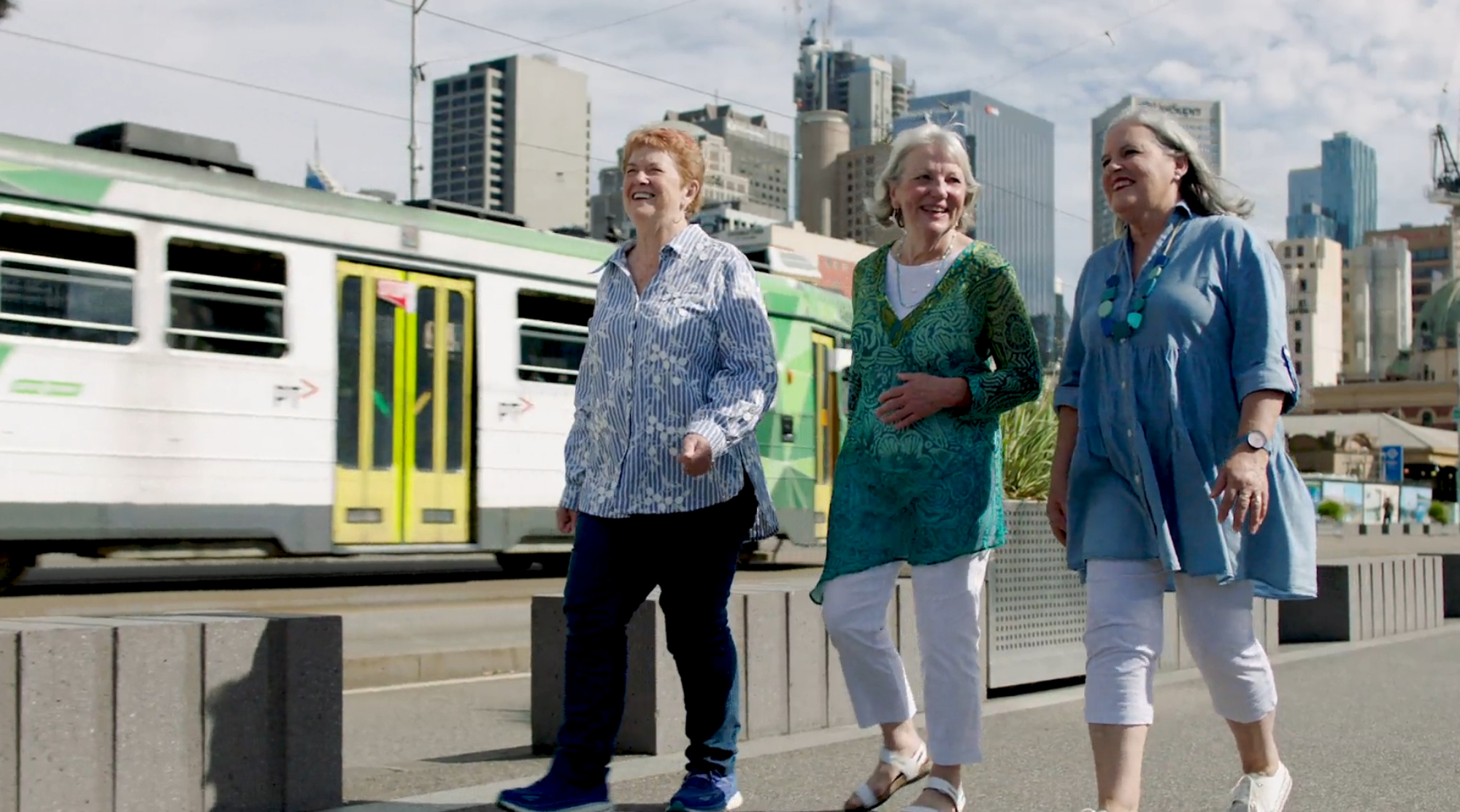
Melbourne made easy: your resource for planning accessible outings across the city and beyond
Melbourne is an adventure waiting to be celebrated and explored. This page exists to save you time. Public transport, venues, mobility equipment, hearing support, vision resources and more, all checked and gathered in one spot. Several of our contributors bring firsthand experience to what’s included here, so it’s built around what actually helps rather than a generic checklist.
Jump to: Getting around · Travellers Aid · Vision · Hearing · Sensory · Events · Getting outdoors · Regional Victoria
Getting to and around the city
We’ve written detailed, practical guides to the transport hubs you’ll use most.
Our own tip: if it’s been a while since you’ve navigated the city, start at Southern Cross or Flinders Street rather than a smaller station — both have staff on hand who deal with these questions daily, and it takes the guesswork out of the rest of your trip.
- Navigating Southern Cross Station with Confidence — platforms, lifts and escalators, the accessible drop-off zone, and Travellers Aid’s buggy service, wheelchair hire, accessible toilets with adult change table, and companion assistance, with tips from Travellers Aid’s Site Supervisor.
- Using Your Seniors myki and Navigating Public Transport in Melbourne — how to get the most from concession travel across trains, trams and buses.
- A Practical Guide to Using Melbourne Airport — what to expect getting in, around, and out again.
- A Useful Guide to Melbourne’s New Metro Tunnel Stations — which of the five new underground stations to use for hospitals, theatres, shopping and gardens, with routes that avoid transfers and minimise walking.
- Free Weekend Travel for Seniors in Victoria — how Seniors myki holders travel free on trains, trams, buses and V/Line every weekend, and what to know before you tap on.
- CBD Parking in Melbourne: tips from our community — reader-tested advice on council car parks, pre-booking apps, accessible bays and street parking rules, for the times driving in is unavoidable.
- Travellers Aid Melbourne — see the dedicated section below for the full range of services, from mobility equipment hire to companion assistance.
Mobility resources
These are the tools we reach for ourselves when planning a day that involves more walking than usual. If you’re short on time, start with the City of Melbourne’s interactive map below — it’s the fastest way to check gradients and toilets before committing to a route.
- City of Melbourne’s interactive Accessibility Map — covers accessible parking, mobility-friendly routes, and a downloadable CBD Mobility Map showing street gradients, accessible toilets and parking.
- Wheelchair-accessible taxis — 13cabs runs a dedicated Wheelchair Accessible Taxi (WAT) service across Melbourne, with ramp or hydraulic-lift maxi taxis and drivers trained in safe loading. Book via the 13cabs app or by calling 13 22 27; there’s no extra charge for booking a WAT vehicle.
- Transport Victoria’s accessible travel hub — mobility aid specifications for trains, trams and buses, plus how to use the PTV Journey Planner’s accessible-routes filter.
- Companion Card — lets a carer travel free alongside a cardholder on all public transport.
- Changing Places Victoria locator — for adult-sized change tables and hoists beyond Southern Cross Station. Victorian Companion Card holders can apply for a free Master Locksmiths Access Key (MLAK) to open these facilities.
- City of Melbourne’s accessible amenities directory — the council’s own listing of accessible restaurants, bars, cafes and toilets across the CBD.
- Access Keys — a scheme that lets venues and events flag their accessibility features clearly, so you know what to expect before you arrive.
- Our guides: Best Restaurants Near Southern Cross Station (Within 500m) and Best Restaurants Near Flinders Street Station (Within 500m) — worth bookmarking alongside the transport guides above, for somewhere close and comfortable before or after a journey.
- Access with Ash — run by Melbourne local Ash Dolby, a mobility scooter user, this is a first-hand review guide to accessible cafes, restaurants, bars and attractions across the city. Reviews go beyond a venue simply claiming to be accessible, checking entry, table height and manoeuvring room in the accessible toilet before recommending anywhere.
For more, our Resources hub covers some transport, apps, cards and maps for exploring Melbourne and Victoria.
Travellers Aid
Travellers Aid is a charity we’re proud to partner with, and one of the most useful resources on this whole page. They run service hubs at Southern Cross, Parkville and Flinders Street stations in Melbourne, plus Seymour, Ballarat, and Geelong stations in regional Victoria, and Melbourne Airport. Most services are free.
- Mobility equipment hire — manual and electric wheelchairs, mobility scooters, walking frames, crutches and strollers, available from as little as 4 hours up to 4 weeks. Book ahead through travellersaid.org.au, especially in peak periods. A holding deposit applies to wheelchairs and electric items.
- Connection Assistance (buggy service) — free buggy transfers, wheelchair assistance and personal guidance at Southern Cross Station, Melbourne Airport, Seymour and Parkville stations, with wheelchair assistance also available at Ballarat and Geelong.
- Travel Companion Service — a trained volunteer meets you at a transport hub and accompanies you to and from medical appointments, social outings or other essential trips, including into the Parkville medical precinct. Free, but book at least 72 hours ahead.
- Personal care — assistance with mealtime support, communication and personal toileting for people with disability, available at the Flinders Street and Southern Cross lounges. Free, no referral needed.
- Lounge and rest areas — at Southern Cross and Flinders Street only, with seating, charging points, country train connection screens, an information counter, toilets, and showers (small fee) at Southern Cross.
- Accessible toilets — including facilities for people who need assistance from a carer, at the Southern Cross and Flinders Street hubs.
- Event support — Travellers Aid also works with major event organisers to provide onsite mobility support, including at the Australian Open, the Grand Prix, Moomba and the Melbourne International Flower & Garden Show.
- Hidden Disabilities Sunflower lanyards — available free from Travellers Aid at Flinders Street and Southern Cross stations (see below).
Read our full guide: Travellers Aid Melbourne: Wheelchair Hire and So Much More.
Vision
A few practical things to know for those who are blind or have low vision, or who support someone who is. Our tip: don’t underestimate a phone call — most venues are happy to talk you through what to expect on arrival, and it takes the uncertainty out of a first visit somewhere new.
Many performing arts venues, including Arts Centre Melbourne, offer audio-described performances for selected shows — check the specific show listing or call the venue’s access line before booking.
- Guide and assistance dogs are welcome at all Victorian public transport, venues and eateries by law.
- Vision Australia Radio — a Melbourne broadcast service (formerly 3RPH) reading newspapers, magazines and books aloud, alongside specialist programs on current affairs, health and the arts. As of 1 July 2026 it’s moved off 1179 AM and is now available on DAB+ digital radio (VA Radio and IRIS channels) and via streaming.
- Cocky Guides — a Melbourne and Sydney-based tour operator running small-group, multi-sensory day trips and short breaks designed specifically for blind and low vision travellers, including regional Victorian destinations such as the Yarra Valley, Daylesford and the Great Ocean Road. Guides are trained to provide vocal navigation support, and guide dogs are welcome.
Hearing
A few practical resources for those who are deaf or hard of hearing, or who support someone who is. Our tip: it’s always worth looking for the loop symbol at the door before you sit down — and if a venue doesn’t display one, it’s fine to ask at the counter.
Hearing loops — many Melbourne venues, including theatres, libraries and larger cinemas, have induction hearing loops that broadcast directly to compatible hearing aids. Coverage varies by venue, so it’s worth checking with the venue directly or looking for the loop symbol at accessible seating and service counters before you go. Curious how they actually work? The University of Melbourne’s Hearing Loops Demystified guide is written for a campus audience, but the explanation of induction loops, telecoils and how to get the best seat for signal strength applies just as well to a theatre or concert hall.
- Australian Government Hearing Services Program — provides free hearing assessments and fully subsidised hearing aids for eligible Pensioner Concession Card holders and Department of Veterans’ Affairs Gold or White Card holders. Note a Commonwealth Seniors Health Card alone doesn’t qualify you — check the eligibility criteria before booking.
- Deaf Connect’s Ageing Well program — a dedicated aged care service for Deaf, deafblind and hard of hearing Victorians over 65.
- National Relay Service / Access Hub — lets people who are deaf, hard of hearing or have a speech communication difficulty make and receive phone calls with relay support.
- Quiet Restaurants in Melbourne: Where to Enjoy a Peaceful Meal — our own guide built specifically around hearing accessibility: carpeted floors, generous table spacing, and venues where you don’t have to raise your voice to be heard.
Other city resources
These are the practical links we keep coming back to ourselves, especially useful to check before a longer day out.
- National Public Toilet Map — genuinely useful for planning ahead, wherever you’re headed.
- City of Melbourne drinking fountains map — shows free bubbler fountains and more than 60 fitted with bottle refill taps across the city. Handy for a day out, especially in warmer months.
- Choose Tap finder — a companion map covering cafés and venues that welcome bottle refills beyond council fountains, so you’re not stuck buying water on a hot day.
- Cool Places interactive map — locates air-conditioned spaces across the city offering rest areas, free water and toilets, useful for heatwave days or simply when you need a break.
- Best Gluten-Free Melbourne CBD Lunch Spots — grown from personal experience within our own contributor family, distinguishing genuinely safe kitchens from menus that are merely “gluten-aware.”
Events and attractions
Across our Event Guides, we try to flag accessibility details that are easy to miss amid general event promotion. Our tip: it’s always worth checking a festival’s own accessibility page before assuming an event is standing-room only — relaxed sessions and access programs are becoming much more common at Melbourne’s major events.
Other resources:
- Arts Access Victoria — works across the state’s arts and cultural life, supporting access, engagement and professional development for people with disability.
- Our own Melbourne City Walking Tours, delivered in partnership with guide Paul Daffey, are built with comfort in mind — a gentle pace, regular rest stops, and small groups capped at 10.
Sensory considerations
A couple of resources worth knowing about if sensory sensitivities or cognitive considerations are part of the picture, for you or someone you’re travelling with.
- Hidden Disabilities Sunflower program — a discreet lanyard or wristband that signals you may need a little extra time, patience or support, for conditions that aren’t visibly obvious. Adopted by Metro Trains, the MCG and many Melbourne venues. Lanyards are available free through Travellers Aid at Flinders Street and Southern Cross stations.
- Guide to dementia-friendly art therapy classes across Melbourne — for those navigating dementia, or the people caring for them.
Getting outdoors and staying active
A few resources for anyone wanting to get out into nature, onto the water, or keep active.
Parks Victoria’s all-abilities access — TrailRider all-terrain wheelchairs are available to borrow in several parks for sandy and semi-rough tracks, alongside beach wheelchairs, boating aids and modified cabin accommodation. See the Parks Victoria accessibility page for what’s available and where.
- Accessible Beaches Australia — a directory of accessible beaches, each given an inclusivity rating. The closest to the CBD are St Kilda and Port Melbourne, with many more across the state.
- AAA Play (Access for All Abilities) — run by RecLink Australia, a searchable directory of accessible sport and recreation activities across Victoria.
Access across regional Victoria
For day trips further afield, we check accessibility venue by venue as we write each guide in our Regional Victoria Hub — it’s always worth confirming directly with the venue if a specific access need is essential to your visit.
A few official resources worth bookmarking if you’re planning further afield:
- Visit Victoria’s Accessible Victoria hub — the state tourism body’s own accessibility page, covering accommodation, attractions, getting around and links to several specialist resources across the state.
- Accessible Experiences — a broader directory of accessible things to do across Victoria, catering to a range of mobility levels.
- Accessible Accommodation — a booking service for accessible holiday accommodation across Victoria, from houseboats to hotels, with curated options for NDIS participants.
- Visit Ballarat’s Accessible Travel guide — one of the most thorough regional guides we’ve come across, covering access-friendly cafes, restaurants, hotels and attractions, alongside the City of Ballarat’s interactive accessibility map showing Changing Places facilities, MLAK locations and accessible attractions.
- Visit Geelong & The Bellarine’s Accessible Travel page — covers access-friendly stays, cafes and attractions, plus practical detail like hearing loops at Avalon Airport and accessible ferry travel between Sorrento and Queenscliff.
- Victoria’s High Country’s Accessible Travel guide — a comprehensive hub covering accessible transport, accommodation, food and drink, tours and experiences, plus low-sensory escapes and a personal accessibility guide written by a wheelchair-using local.
- Visit Phillip Island’s Accessibility page — links through to Bass Coast Shire’s accessibility resources, lists three named Changing Places facilities (Phillip Island Health Hub, Berninneit Cultural Centre and Penguin Parade Visitor Centre), water wheelchairs for hire, and a downloadable Cowes Mobility Map.
- Bendigo Accessibility guide — the City of Greater Bendigo’s own accessibility hub, with downloadable maps for Bendigo, Heathcote, Eaglehawk and Kangaroo Flat showing accessible toilets, scooter and wheelchair charge points, and audible pedestrian crossings, plus recommended itineraries built around venues assessed for accessibility.
- Victoria Walks’ Accessible Walks — a Victorian Government-supported project auditing walking paths for people with mobility disability, with 70 accessible walks mapped across Greater Melbourne and regional Victoria, each with photos, an interactive map and practical FAQs.
Using this website itself
You’ll notice an Accessibility Toolbar icon in the bottom corner of every page on this site, including this one. It’s a free tool that lets you adjust how the page displays to suit you, rather than us guessing at a one-size-fits-all layout.
What it does:
- Increase or decrease text size — useful if the default size is too small, or too large for a smaller screen
- Contrast — switches to a higher-contrast colour scheme, helpful for low vision or bright-screen glare
- Mark titles — outlines headings clearly, useful if you’re scanning a long page for the section you need
- Highlight links and buttons — makes clickable elements stand out, handy if links blend into the surrounding text
- Keyboard navigation — lets you move through the page using the keyboard rather than a mouse or trackpad
To use it, click the toolbar icon (bottom left of the screen), select the settings that help, and they’ll apply for the rest of your visit. You’ll find the same style of toolbar on plenty of other tourism and government websites, including several we’ve linked throughout this page — it’s a common, well-tested way for sites to hand a bit of control back to the reader rather than assuming everyone wants the same experience.
Help us make this better
If there’s a venue, event or experience with accessibility features we should know about — good or bad — we’d love to hear from you. Get in touch, or join the conversation in our Facebook Group.