The Australian Sports Museum and MCC Museum: A Visitor’s Guide
A cold day, a warm museum, and a good excuse to bring the grandchildren into the city.
The Australian Sports Museum, tucked inside Gate 3 of the MCG, works just as well as a solo outing for anyone who grew up following the cricket or the football, as someone who simply enjoys a walk through Australia’s sporting story. Contributor Angie recently took her family along during the winter break, and her notes below cover exactly what a first visit looks like.
Related reading: our guide to the 75-minute MCG Tour if you want to pair the two.
About the Australian Sports Museum
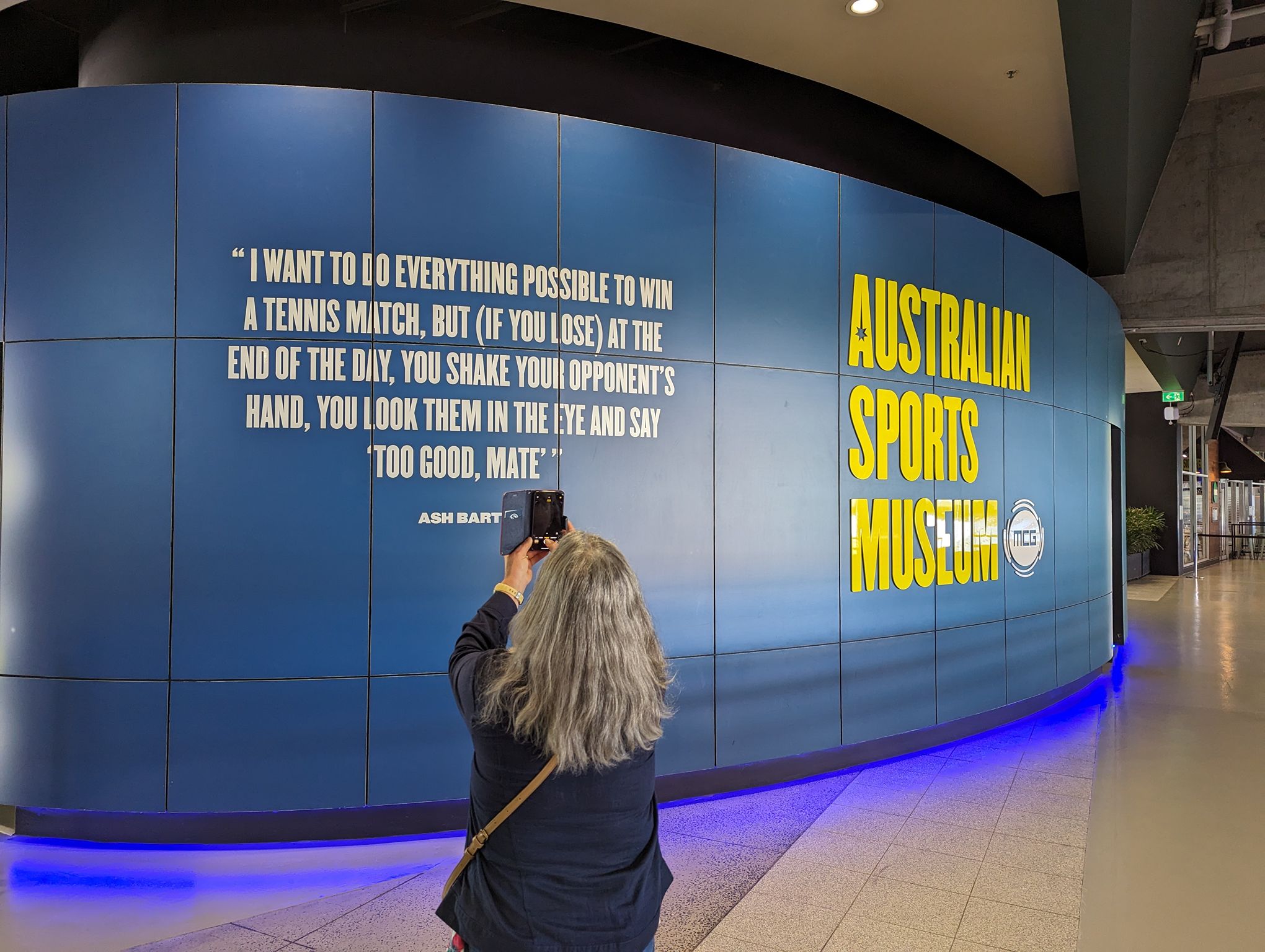
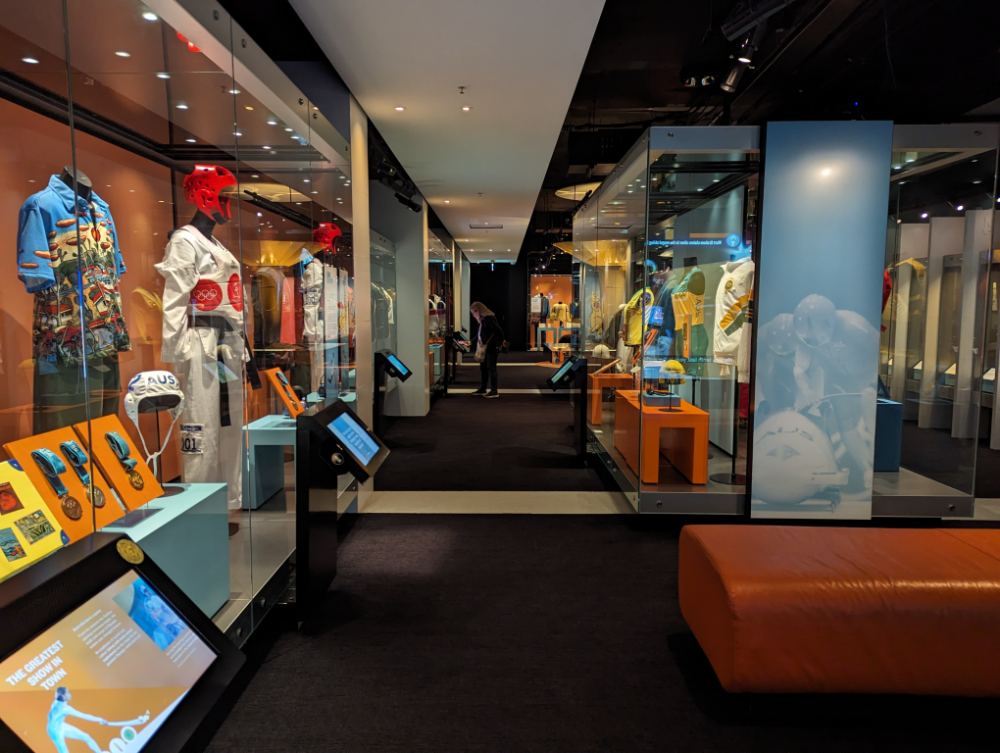
The Australian Sports Museum sits inside the Melbourne Cricket Ground, across three levels connected by lift and ramp. It covers more than 95 sports, from cricket and AFL to the Olympics, boxing, netball and horse racing, and includes the adjoining MCC Museum.
Entry is self-guided, with a wristband that activates digital displays throughout, so you can move at your own pace and spend as long as you like in any one gallery.
Angie’s visit
Australian Sports Museum & MCC Museum
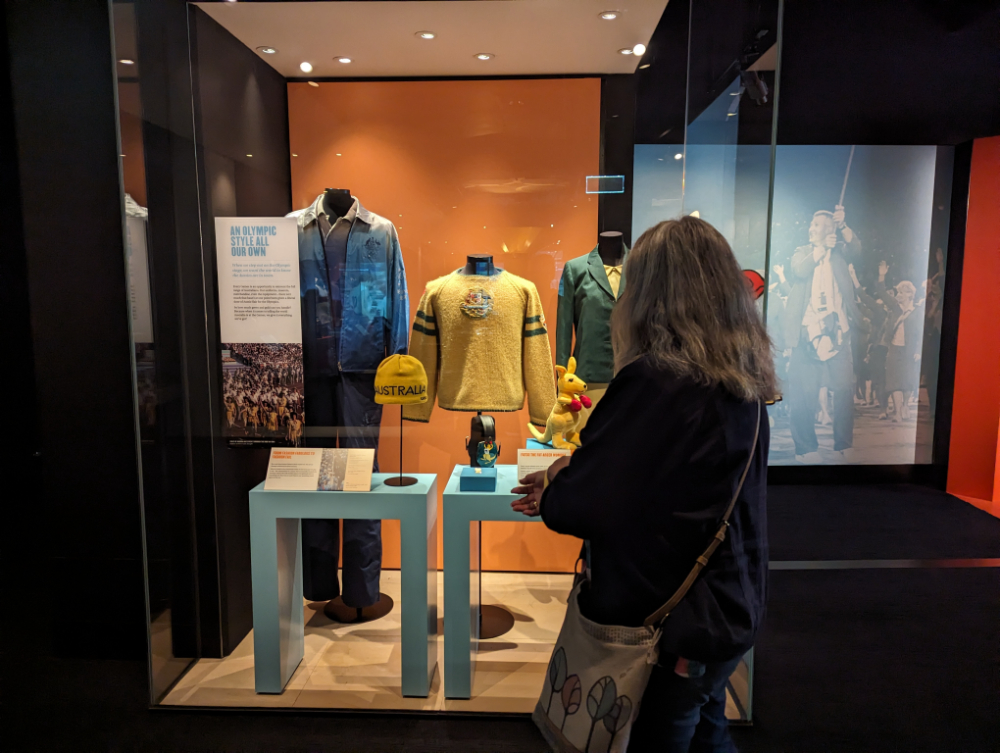
It’s the Winter school holidays, it’s cold outside which is the ideal time to take the family to the Australian Sports Museum, located within the MCG building. This world-famous sporting arena looms large as we make the short walk to the ground from Jolimont Station. Once inside we peek beyond the barriers into the ground itself which gave us goosebumps. Carn’ the Cats!
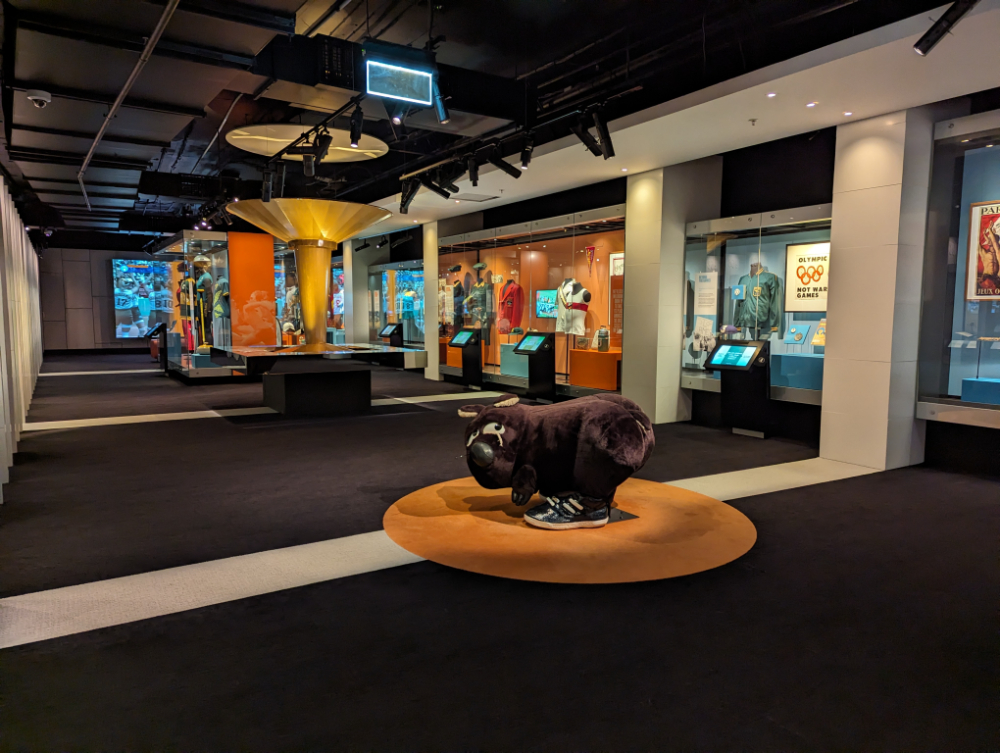
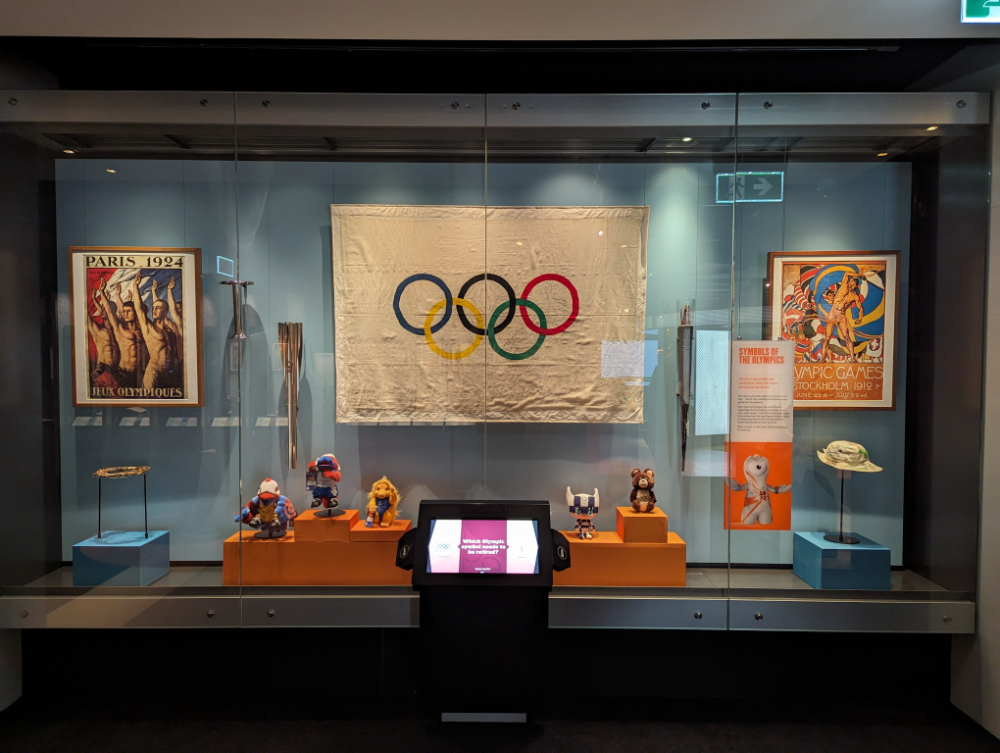
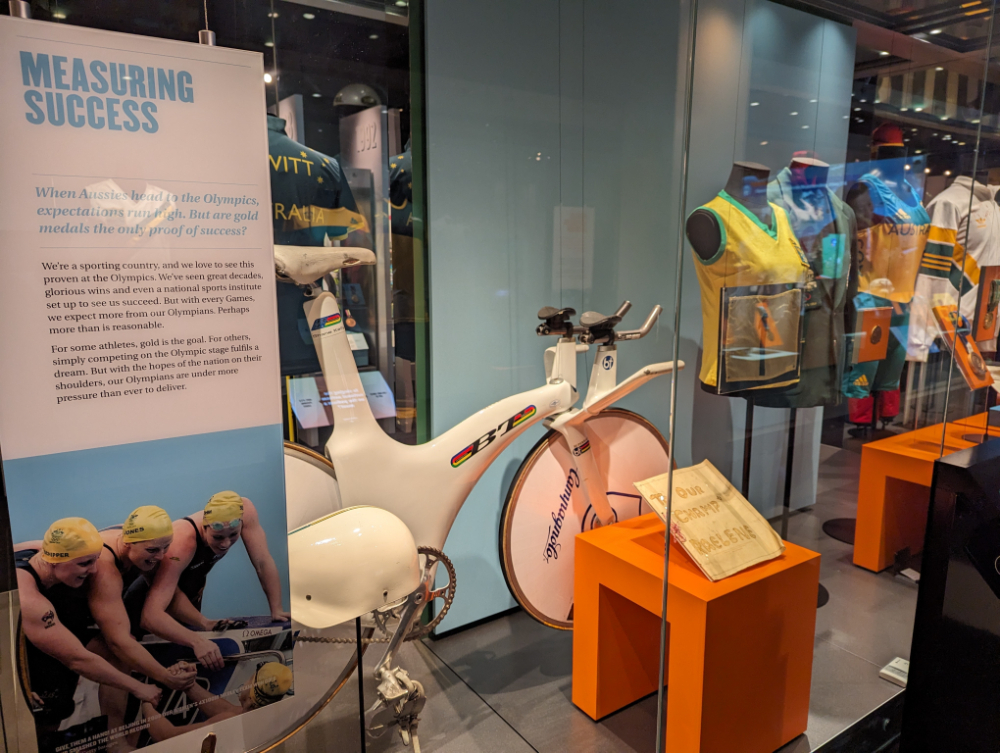
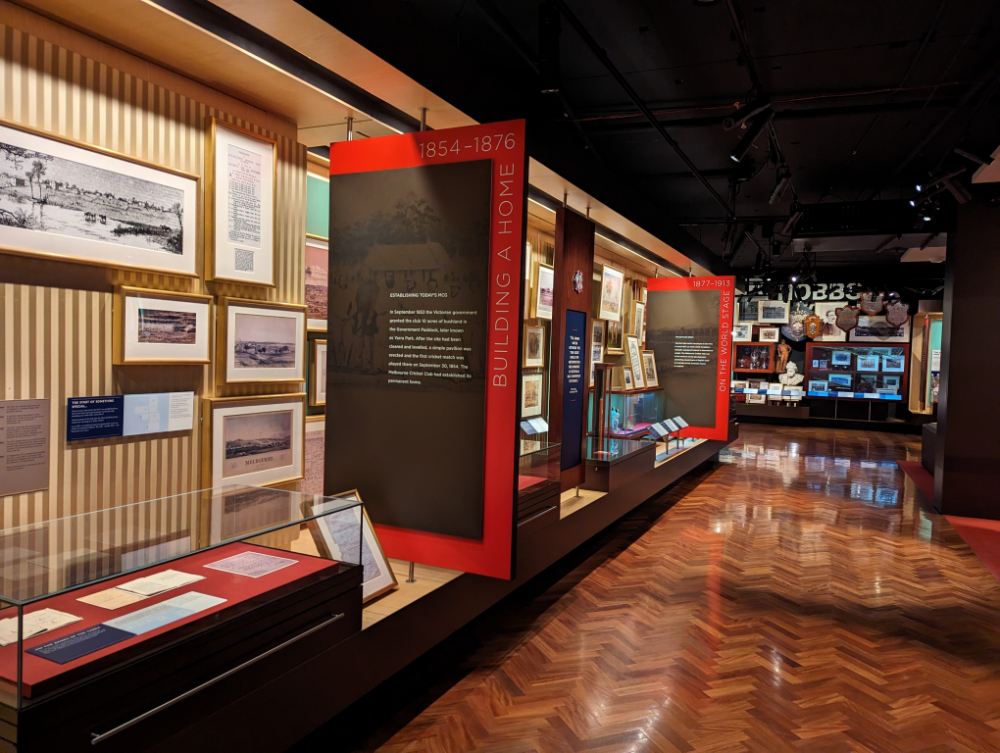
Since it was the boys’ first visit we decided to save the 75 minute MCG tour for next holidays & explore the Museum itself housing memorabilia of Australia’s long and vast sporting history & heroes. This museum is not just a space for cricket & football supporters but also for fans of Olympic sports, soccer, boxing, yachting, surfing and more.
Included in the entry ticket is the atmospheric MCC Museum. In its corner location this is an absolute must on any visit to the sports museum and for cricket fans, hours could easily be spent in this room alone.
The MCC/MCG guides are easily identifiable in their striped sports jackets and they look out for keen fans with whom they share their knowledge & answer your questions. We were able to view up close a replica of the Ashes Trophy. When I looked at Alan Border’s portrait, initially I thought it was a beer in is hand but it was the Ashes trophy. It’s tiny and the replica being handed around reminded us of it’s petite stature but it’s major significance to international cricketing fans. The guides are the first to say they learn something new every day from the sporting fans who enter the museum space.
I had visited this part of the museum many years ago and asked about the special drawer housing the very first rules written for our game of Australian Rules Football. Dated 1859, this document is carefully preserved under glass & away from light. Please ask to see it for yourselves when you visit.
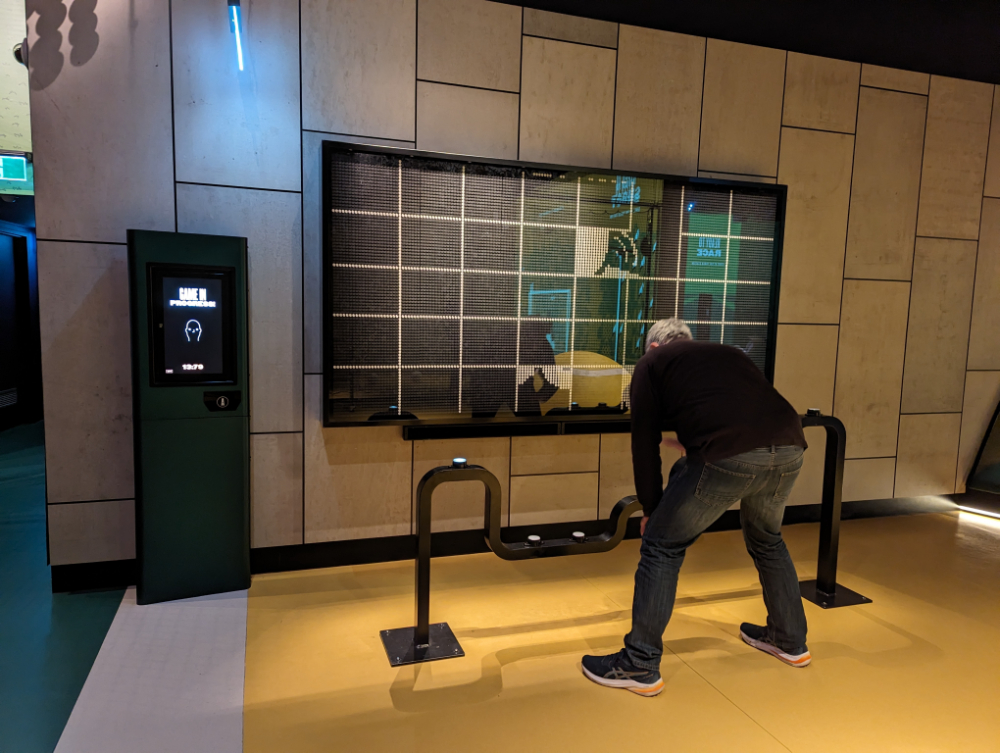
Provided with the ticket is a wristband which we each used to activate information on the digital displays and as we warmed up, we saw wonderful footage of Australia’s sporting champions, ogled at the glass case holding all the letters sent to Ian Thorpe to wish him well for his Olympic swim, then imagined how hard it would have been to box in huge leather gloves in the days of old.
One cannot feel help feeling enormous pride for every athlete who puts themselves through years of training, endurance & sacrifice to do their best to represent Australia in the sporting field.
Before we headed downstairs to set the boys burning off energy kicking soccer balls, shooting hoops, scaling the climbing walls and throwing cricket balls, we sat down and watched Shane Warne in hologram talking about his sporting highlights in cricket. It sparked a few tears to see this irreplaceable sportsman recreated as if he was in the room and then afterwards to see on display his memorabilia & stand up close to the cricket balls he bowled with such remarkable results.
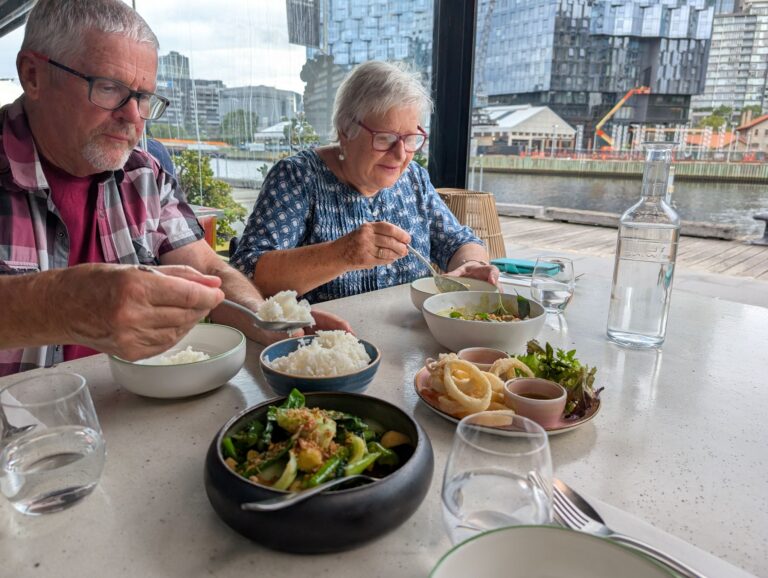
We took a lunch break at Paddock within the museum complex and their food offering was excellent & fairly priced. The boys were able to refill their water bottles at the refill station by the rest rooms before they headed back to challenge their sporting skills once again. We spent an easy three hours in the museum. If you have the time, add on the 75 minute MCG tour. The tours do book out so you will need to reserve in advance however for the museums, just roll up & purchase your ticket to see both museums on the day.
On the Australian Sports Museum website, there is a $1 first come/first serve opportunity to take the MCG tour – Monday 6th July only. Next school holidays I’ll be on the lookout early for another incredible offer.
There is a cloakroom for bulky bags & coats, an access lift, the Flinders Street trams & the Jolimont Station are within a 300 metre walk.
Insider tips for your visit
- Book the MCG Tour ahead, but not the museum. The 75-minute guided tour books out, so reserve online if you want to add it on. Museum entry can simply be bought at the counter on the day. Book here.
- Your wristband is the key to the displays. Tap it at digital screens throughout to unlock footage and stories as you go, no app or login needed.
- Ask the guides about the 1859 rules document. It’s kept in a drawer under glass to protect it from light, so you need to ask a guide to bring it out for you.
- Budget around three hours. That covers a relaxed pace through the galleries plus a break at Paddock Café, without needing to rush the last gallery.
- Bring a small bag or use the cloakroom. There’s a cloakroom near the entrance for coats and bulky bags if you’d rather not carry them around, useful on a cold day.
- Watch for periodic ticket offers. The museum occasionally runs limited-time deals on the MCG Tour, worth checking the website before you book.
- Consider a Relaxed Hours session for a quieter visit. Held roughly once a month with dimmed lighting and reduced sound, these sessions suit anyone who prefers a calmer pace through the museum.
A bit of history
The museum’s story starts well before its current name. It opened in 1986 as the Australian Gallery of Sport and Olympic Museum, was renamed the National Sports Museum in 2008, then closed in 2019 for a $17.1 million redevelopment. It reopened as the Australian Sports Museum on 29 February 2020, Melbourne’s leap year gift to sports fans, with a much stronger focus on interactive and digital exhibits.
The adjoining MCC Museum has its own history. The first Melbourne Cricket Club Museum was established in 1969 and ran until the old Members Pavilion came down in 2003. It reopened in its current location on Level B1 of the Members’ Reserve in November 2006, then again in December 2021 following a $700,000 renovation. It now holds more than 700 artefacts, including the ball used when Australia won its first Test on English soil and a large architectural model of the ground itself.
Cricket and football both have deep roots here. The MCG has stood in Yarra Park since 1853, and it was inside a nearby hotel that the earliest written rules of Australian football were drawn up on 17 May 1859, by Tom Wills, William Hammersley, James Thompson and Thomas Smith. That original handwritten document, now heritage listed, is held in the MCC archives and occasionally brought out for visitors to view, as Angie’s guide did for her.
In 2010, the Australian Racing Museum was folded into the Australian Sports Museum, adding horse racing to a collection that already spanned the Olympics, the Sport Australia Hall of Fame and more than 95 sports in total.
Accessibility
- The museum is split across three levels: a lift connects the ground floor to Level B1, and a ramp connects B1 to B2, so you’re never relying on stairs alone.
- Seating is spread throughout the galleries if you need to stop and rest.
- A limited number of wheelchairs are available to borrow, but you’ll need to contact the museum in advance to arrange one.
- Companion Card holders can bring a support person free of charge, bookable online or at the Gate 3 counter.
- Accessible bathrooms are available both inside the MCG and nearby outside it.
- Assistance dogs, including dogs in training, are welcome throughout.
- Monthly Relaxed Hours sessions offer reduced lighting and sound for visitors with sensory sensitivities.
- Accessible parking at the MCG is limited to non-event days and must be booked in advance by emailing the museum with your booking reference, name, mobile number and car registration.
If you’re planning to borrow a wheelchair or need accessible parking, email or call the museum ahead of your visit rather than relying on turning up on the day.
Food and drink
Paddock Café sits on Level 1 inside Gate 3, with views over the MCG turf, and is open seven days a week from 9am to 4:30pm on non-event days. It’s the café Angie’s family stopped at for lunch, serving coffee, cakes and simple meals at reasonable prices.
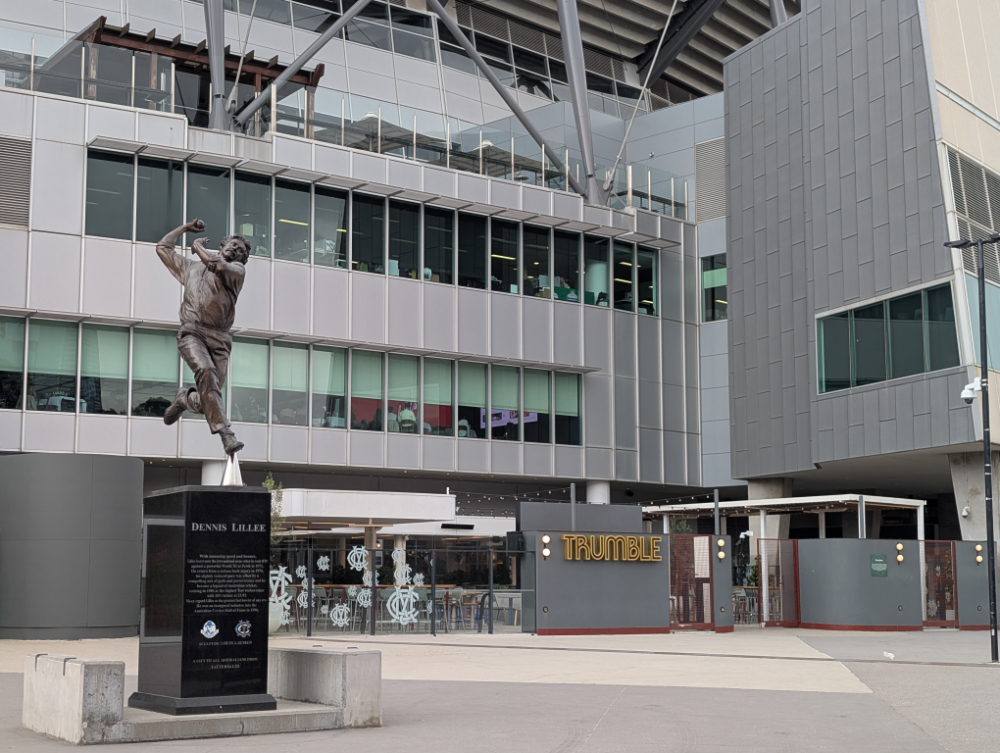
If you’d rather sit down for a proper meal, Trumble Bar & Café is on Level 1 between Gates 1 and 2, open weekdays from 7:30am to 2pm, with a bistro-style menu and an outdoor courtyard for warmer days.
For something truly memorable, the Committee Room Restaurant is worth booking ahead for. It pairs well with an MCG Tour beforehand, though a neat dress code applies and bookings are essential.
Getting there
Public transport: Jolimont Station is the closest, a five-minute walk through Yarra Park to Gate 3. Tram routes 75 and 48 stop nearby at Stop 11 Jolimont Station/MCG, also around five minutes on foot from the gate. Richmond Station is a slightly longer walk, ten to fifteen minutes.
Driving: There’s no on-site parking for museum visitors on non-event days. The nearest option is the Eastern Plaza Car Park on Olympic Boulevard, connected to the MCG concourse by lift, around an eleven-minute walk from Gate 3.
Drop-off zone: Taxis and rideshares are directed to the Bus Turning Circle on the corner of Jolimont Terrace and Jolimont Street, about a five-minute walk from Gate 3.
Australian Sports Museum Gate 3, Melbourne Cricket Ground, Brunton Avenue, Yarra Park, East Melbourne VIC 3002 For Box Office enquiries, please contact the Australian Sports Museum on (03) 9657 8879.
Heading off on your own Melbourne adventures? Join our Facebook Group and share your stories, ask questions and connect with others for further inspiration.
The Seniors in Melbourne team was hosted by Melbourne Cricket Club. All opinions are the writers’ own.
This post contains affiliate links. At no extra cost to you, I may earn a small commission if you click on a link and make a purchase.