
A guide to visiting Abbotsford Convent
Tucked beside the river in Melbourne’s inner north, Abbotsford Convent is one of those places that rewards a slow wander.
Grand historic buildings. Quiet gardens. A choice of cafés. A monthly farmers market. And creative spaces where artists, musicians and makers quietly go about their work.
In our experience, the convent offers a relaxed day out that feels a world away from the city, even though it’s only a few kilometres from the CBD.
Before you visit, here’s what to expect — plus a couple of first-hand reviews from our contributors.

What is Abbotsford Convent?
The Abbotsford Convent precinct sits where the Yarra River meets Merri Creek, on Wurundjeri Country.
Once a large convent complex, the historic buildings have been carefully restored and now house artists’ studios, galleries, community organisations and cafés. The site has become one of Melbourne’s most interesting cultural hubs, and it’s free to visit.
Visitors can explore:
- Historic buildings and gardens
- Art studios and exhibitions
- Cafés and bakeries
- Walking paths along the river
- Workshops, classes and cultural events
It’s the sort of place where you might come for a coffee… and end up staying for half the day.

Visiting on a Weekday
Weekdays are often the quietest time to explore the convent grounds. It’s perfect for a leisurely walk, coffee with friends, or simply sitting in the gardens enjoying the atmosphere.
Here’s Terrie’s experience visiting with family.

Terrie’s review
Another Day, another adventure! I had heard about Abbotsford Convent many years ago, a rumour that a cafe/restaurant had opened, using food from the garden that they grew themselves. It was a renowned not-for-profit, pay-as-you-feel vegetarian restaurant called Lentil as Anything. However, that closed in 2022. Rest assured there are other cafes/restaurants operating at the Convent, which we found offered a good choice of food and drink.
We travelled by train to Southern Cross, then changed to the Mernda line, getting off at Victoria Park. From here, Nanna, daughter and 3-year-old granddaughter walked about 15 mins to the Abbotsford Convent. There is a car park directly opposite the main gate if you wish to drive.
We initially followed a winding path, through beautiful old gardens, to a pavilion surrounded by lawn.
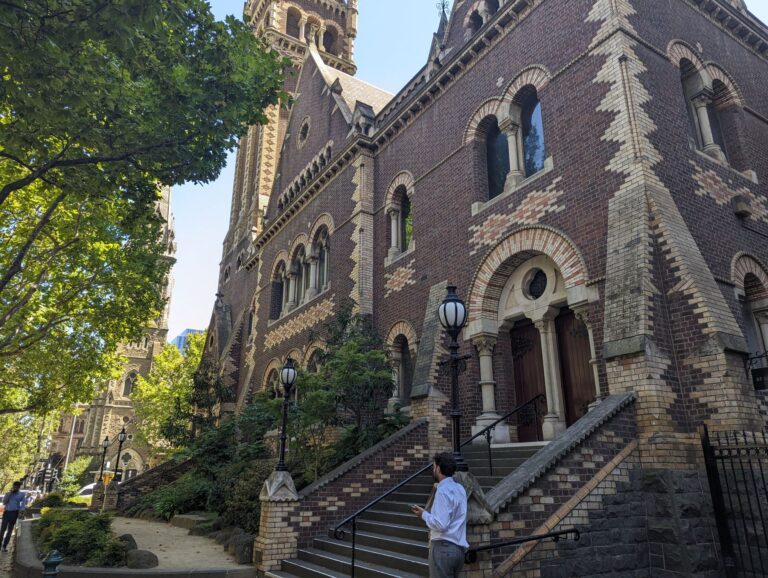
From this point, we had a magnificent view of the old Convent Building. Like a castle arising above the tall old trees. Just beautiful. So much history attached to this place.
Lunch was at the Bakery, easily accessible and a good choice of menu, including a Kids menu.
This place is now used as an arts, educational and cultural hub. We only had time for a short look around, but I will be back to learn more about the history of this place and look into some more of the activities.

Cafés and Places to Eat
One of the pleasures of visiting the convent is choosing where to sit down for a coffee or bite to eat.
The popular Cam’s Cafe is located inside the main building and is a favourite meeting spot for locals.
Nearby, the Convent Bakery offers freshly baked breads, pastries and casual lunches.
Kapaya offers Japanese soul food, beer, sake and organic coffee and tea.
Then there’s the seasonal garden restaurant, Julie, open on weekends in the Convent Annexe.
Food options change over time, but you’ll usually find several relaxed spots across the precinct.

Self-Guided Audio Tours and Podcasts
If you enjoy discovering the stories behind historic places, the website for Abbotsford Convent offers several self-guided audio experiences and podcasts that add an extra layer to your visit.
Two free self-guided audio tours can be accessed on your phone. All you need is a smartphone and headphones, and you can listen as you walk around the grounds.
Social History Tour – This walk shares the convent’s complex past through recorded memories from former residents and others connected to the site. It explores the many roles the precinct has played, from a meeting place for the Kulin Nation to its years as a closed monastic community run by the Good Shepherd Sisters, and finally its transformation into today’s arts and cultural precinct.

Ngulu-nganjin (Our Voice) Sound Trail – A one-hour walking trail that shares the history of the land through the voices of Wurundjeri Elders, artists and musicians, highlighting the deep connection between the site and its Traditional Owners.
For those who prefer listening at home, there is also The Abbotsford Mysteries podcast, an evocative series inspired by the poetry of former resident Patricia Sykes. The podcast combines music and storytelling to explore what life was like for the thousands of girls and women who lived at the convent during its monastic years between 1863 and 1975.
Listening to these stories can bring a deeper understanding of the convent’s past — and adds another dimension to a walk through the gardens and historic buildings.

Visitor Tip
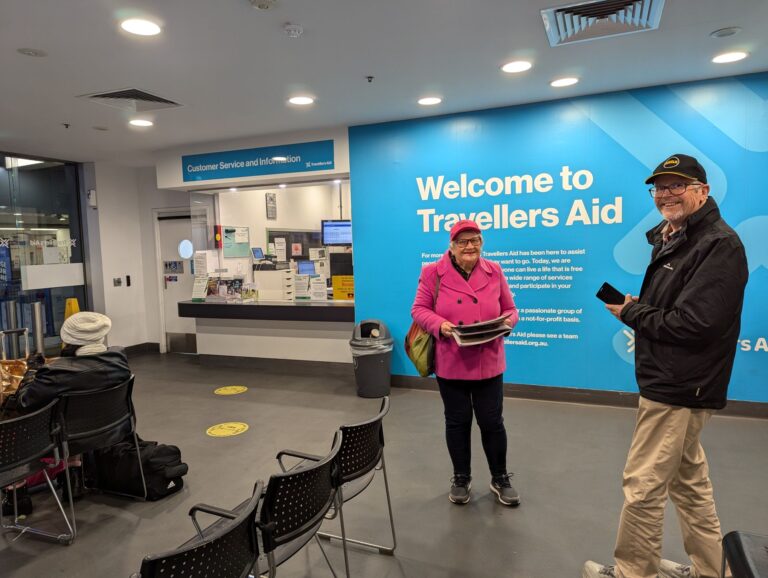
If you need a hand finding your way around, drop into the information office at Abbotsford Convent.
Friendly staff are usually available to answer questions and point you in the right direction.
You’ll also find brochures, maps and event information, which can be very helpful given the size of the precinct and the number of buildings, gardens and courtyards to explore. It’s a good place to start if you’d like to learn about current exhibitions, workshops or markets happening during your visit.

An extra tip from Kathy
I haven’t been as often of late but last time I managed to earn a whopping parking fine when I inadvertently misread the sign on Johnston Street hill!
Beware … they are ruthless.
Parking these days is available in Helier Street and side streets but it can be competitive on market days.

The Monthly Farmers Market
One of the highlights of the convent calendar is the farmers’ market held once a month.
The market focuses on produce that is grown or made by the stallholders themselves, meaning you’re often buying directly from the farmer, grower or maker.
Expect fresh produce, preserves, baked goods and plenty of tempting treats.

Kathy’s review
Some time ago, included in the ambitions of rescuing the convent site from so-called development was to offer a farmers’ market once a month. After many successful years, the market was mysteriously lost to the western suburbs, but recently it has returned to Abbotsford to the immense relief of many. To remain true to the philosophy, the market produce must be grown or made by the store-holders themselves.
My latest Saturday visit was time very well spent. My conversation with an expert apiarist from Western Victoria was very enlightening and somewhat encouraging. As the world, and now even Australia, deals with the impact of the verroa virus on our food security, we are reminded that there are such people committed to growing our food, regardless of the difficulties they face, such as pests, bushfires and drought.
As expected, I found the home-grown vegetables and fruits, such as the freshly picked tomatoes, cantaloupe and berries to be superior in freshness and flavour to any I have purchased elsewhere this summer. Overall, the prices were not expensive, especially considering the hard work and uncertainty involved in growing crops during our record-breaking hot summer.
Thankfully, busy hands have also continued to provide preservative-free goods for the larder. Peanut butter, chutneys, kassundi and the true reason for my visit, real apricot jam filled my basket! Various cheeses, seafoods and homemade pies created a mild dilemma as to how much one should purchase for the week’s menu. To allay any guilt of overindulgence, simply call it “market research” or “supporting The Cause”.
The farmers’ market is one of several important sources of revenue for the ongoing restoration and preservation of the convent site. Others include the artists’ precinct and the home of 3MBS Classical Music 103.5 FM. The Convent Bakery and Cam’s café continue to be favourite meeting spots for a coffee and treat, and recently renovated wings and gardens are available for hire for functions or festivals.
To complete the morning, a stroll around the historic grounds and gardens was interesting, with informative boards dotted around the precinct explaining the convent’s past life. Indeed, the sounds of a musician practising wafted soothingly from the rooms of Rosina.
Thankfully, the Abbotsford Convent Market has returned to its home base. It now calls us to enjoy this precious space and moment on our calendar as frequently as possible in order to ensure its longevity.

Accessibility at Abbotsford Convent
One of the nice things about visiting Abbotsford Convent is that there are plenty of places to sit, relax and take your time exploring the grounds.
The precinct is quite large, with a mix of paved paths, courtyards, garden paths and gentle slopes between buildings. Most of the main areas, cafés and public spaces are accessible, although some of the historic buildings have steps or uneven surfaces typical of heritage sites.
If mobility is a consideration, it’s a good idea to take things slowly and allow extra time to move between areas. There are benches and open lawn areas throughout the gardens where you can stop for a rest and enjoy the surroundings.
Accessible toilets are available within the precinct, including inside the main convent buildings and near the café areas. Public toilets are clearly signposted once you’re inside the grounds.
Because the site hosts regular events, markets and workshops, facilities are generally well maintained and easy to find.

Getting There
Abbotsford Convent is easy to reach by public transport or car.
By train:
Take the Mernda line and get off at Victoria Park railway station. From there it’s about a 15-minute walk to the main entrance.
By bus:
Several bus routes service the area around Abbotsford Convent, stopping along Johnston Street and nearby streets. From there it’s usually a short walk to the main entrance.
By car:
There is paid parking available near the main gate and in surrounding streets, although it can be busier on weekends and market days.

Heading off on your own Melbourne adventures? Join our Facebook Group and share your stories, ask questions and connect with others for further inspiration.