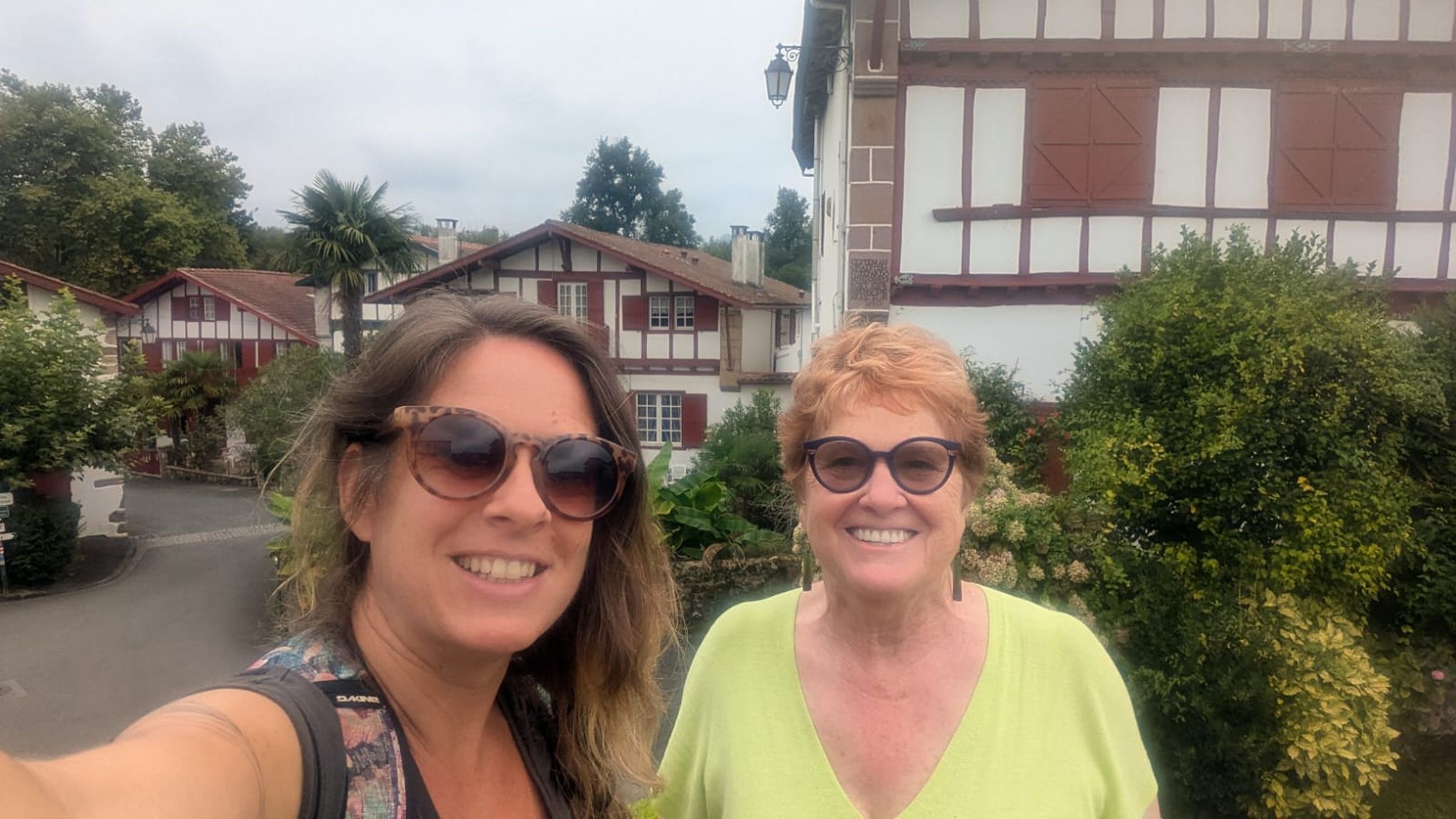
Learning French in France away from the classroom!
You may have schoolgirl or schoolboy French. Like me you may have improved your French with online lessons; trips to France, French conversation groups and watching French films. You may even have taken language classes at Alliance Francaise, U3A or with a private tutor.
But if you’re like me, as time marches on, spending time in a classroom is not life’s most attractive option. Suppose you could travel and learn French at the same time?!
I found the answer after a year or so having online tutoring with Sarah Zwick of Be-My-Guest Immersion in France.
How the French immersion homestay works
It happens like this. Your base is a homestay at the family home of Sarah near Bayonne in the South of France. You have your own bedroom and bathroom. All meals are provided at home or at a restaurant.
Before you arrive, you choose your balance between lessons and excursions. A committed traveller, I chose more excursions. You also choose the areas you’d like to visit and I chose to focus on the Basque culture and locations.
I also chose one-on-one immersion week of in the Basque culture. We spent a lot of time together, so it was important that she was completely capable and charming in all her additional roles as head chef, tour guide, driver, interpreter, photographer and motivator!
As we journeyed each day through different parts of the local landscape and culture, I travelled and absorbed all the information I’m about to share, in French, Whatever your French language level, it’s much more fulfilling and immersive than simply travelling through Basque Country.
Here’s your opportunity to learn about Basque Culture. Come along with me or visit Sarah in France. What you’ll read about here is what I heard about and experienced during my immersion.
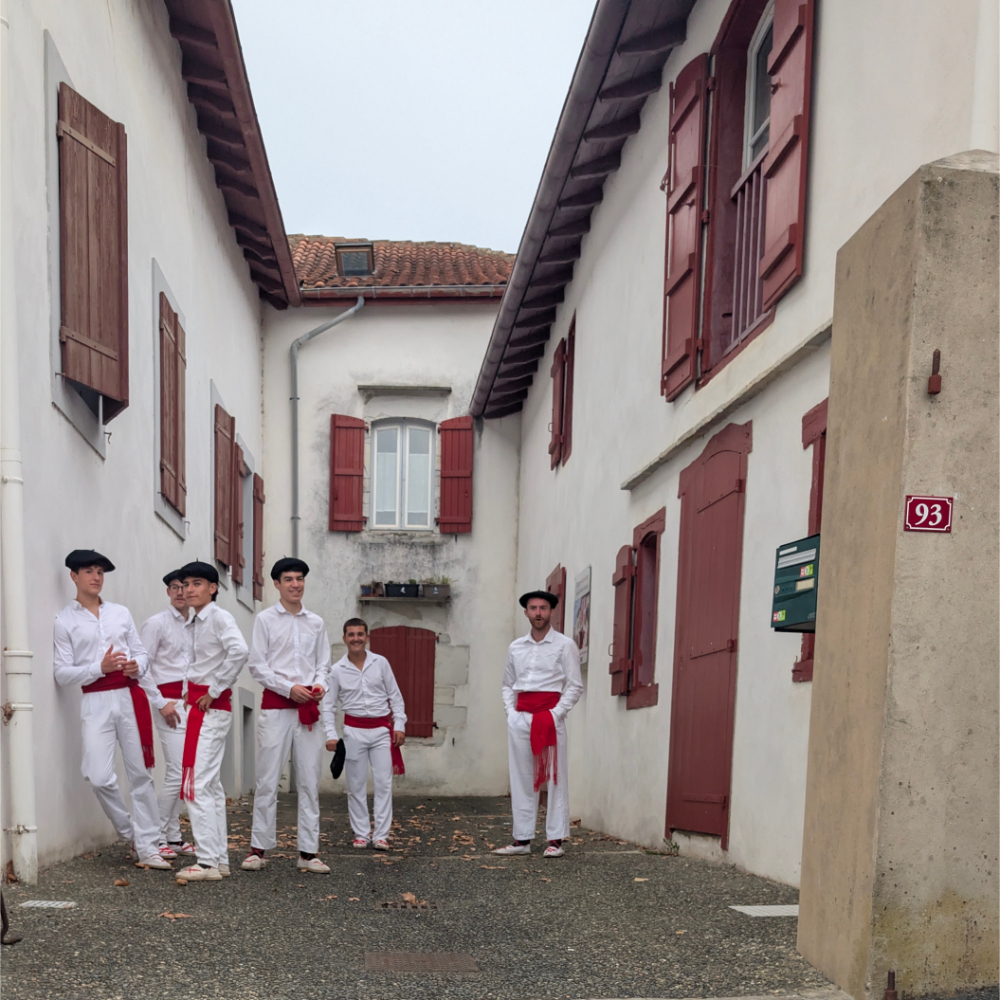
What is Basque Country?
Basque Country is a unique sub-culture straddling France and Spain. Look at a map, and you’ll see seven distinct provinces: four in Spain and three in France. But to the Basque people, 4 + 3 = 1. These seven provinces are a united entity. They are one.
Basque linen, such as that made by manufacturers like Lartigue 1910, is marked by seven stripes, one for each province, perfect coding for “the real thing”.
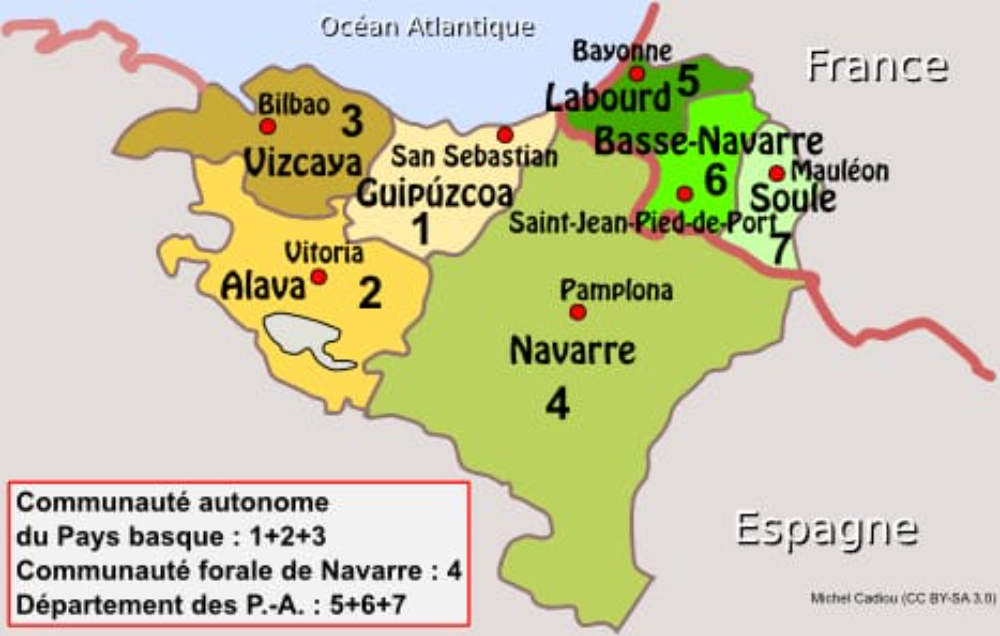
Basque Country then straddles the two countries of France and Spain. There are differences and similarities.
On the French side, the dominant architectural style is the Basque House, with its crisp white walls and striking timber trim painted in a deep, traditional ox-blood red. This colour is a tribute to a time when actual ox blood was used to protect the wood from the wind and rain.
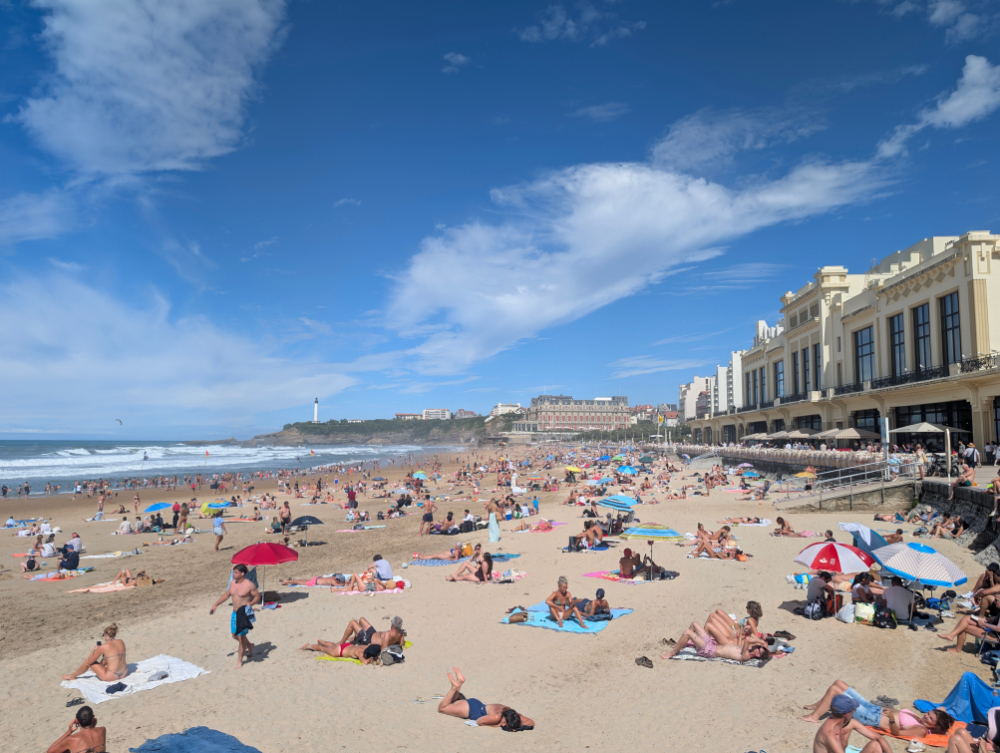
It’s a place of both country life on the one hand, and grandeur on the other. For example, the grand seaside town of Biarritz has a rugged coastline, sophisticated promenades, and Belle Époque buildings. Its earliest aristocratic visitors earned it the title of “Queen of Resorts, fit for Kings”.
The Cuisine
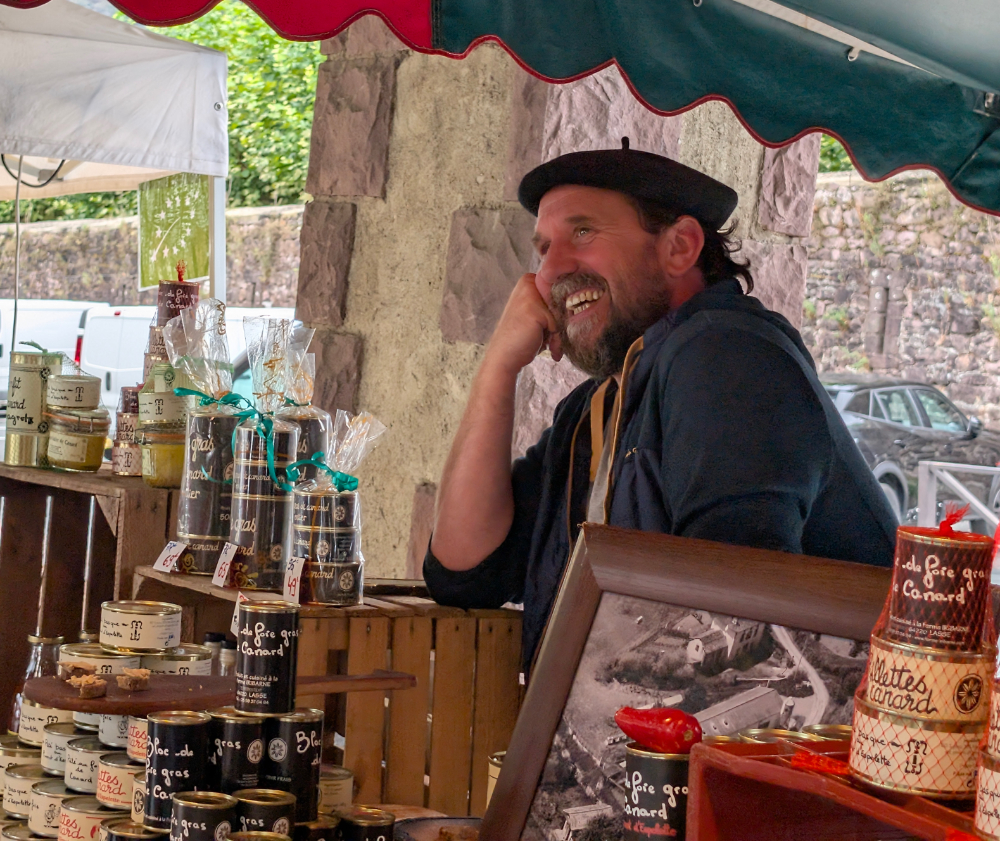
Traditional French fare is available, but there are plenty of culinary nuances in Basque Country. The town of Espelette is completely focused on cultivating its exclusive red peppers for an appellation-controlled red pepper powder. It’s now a kitchen essential in my Melbourne home.
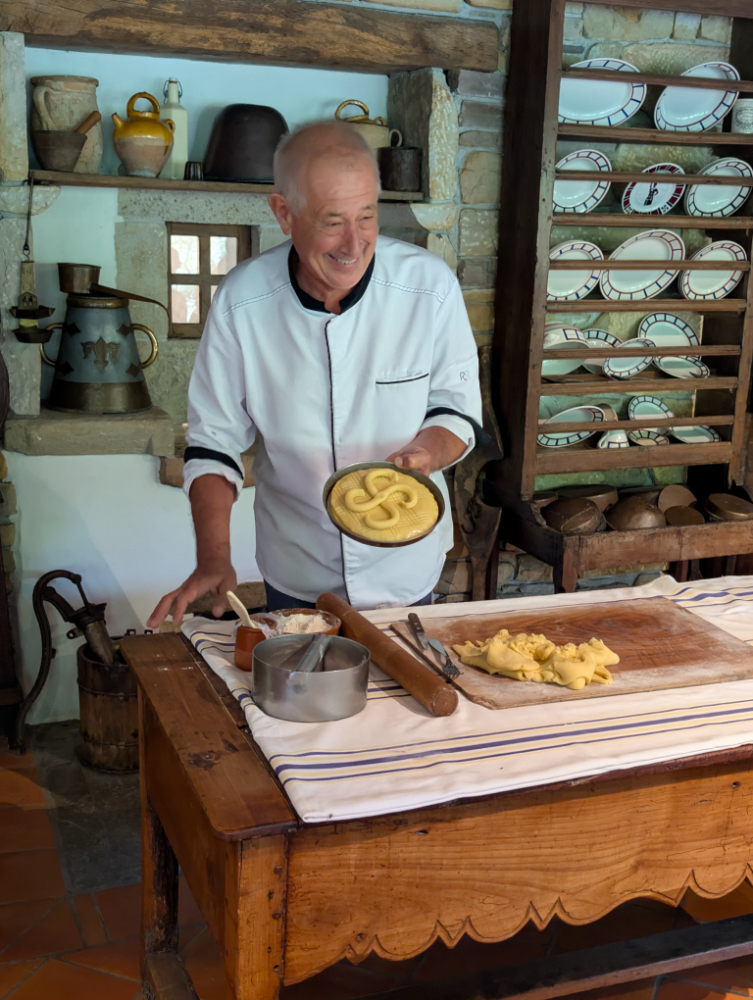
There’s the crusty Basque gateau of France featuring cherries and custard cream, comedically demonstrated at the Basque Cake Museum. It’s ubiquitous in markets. Restaurants offer Piperade for meat lovers and Ttoro for fish lovers.
And while the Basque Cuisine of France differs from the pintxos traditions of San Sebastian or Bilbao in Spain, it’s still common to have a tapas meal in this part of Basque Country. I had several.
Another unique sensory delight awaits on the French side: Bayonne chocolate. The chocolate tradition here began with Sephardic Jewish settlers in the 16th and 17th centuries, who brought the knowledge of the cocoa bean, which had arrived from South America via Spain. My chocolate highlight was in Cambo-les-Bains at a café where the delicious hot chocolate was served in special cups featuring an inset which is a moustache protector, to save customers from frothy indignity. And hot drinks could melt your moustache wax! A chocolate shop and museum are on the same site.
And to my delight, Basquella, their own variety of chocolate and hazelnut spread, has been especially created as a non-palm oil version of this mainstream spread!
Heritage and Play
The Basque spirit of tradition and sport is fierce. Basque Pelota is not tennis, but a fast-paced game evolved from the French Jeu de Paume. With over a dozen variations, it’s considered the fastest ball sport on Earth. Every village, on both sides of the border, has a court called a fronton or a trinquet.
Even the weapon known as the bayonet is a claim to fame: it’s named after the town of Bayonne. The local tradition holds that it was invented when peasants, short on gunpowder, attached their hunting knives to the muzzles of their muskets.
And while the region is dominated by the majestic Pyrenees the coast has its own deep maritime traditions. Coastal churches feature ship models hanging from the ceiling, acting as offerings from sailors and a cultural symbol of gratitude for safe passage. Chapels near the water are common.
Throughout this new dimension, you’ll often see the Basque flag or the symbol of the Lauburu, or Basque Cross. This elegant, four-headed swirling symbol, represents the four elements.
My base allowed me to explore everything from the semi-wild Basque Pottok ponies in Ainhoa, and to the pilgrims traversing the Camino de Santiago at various points including St-Jean-Pied-de-Port on the French Way of the Camino.
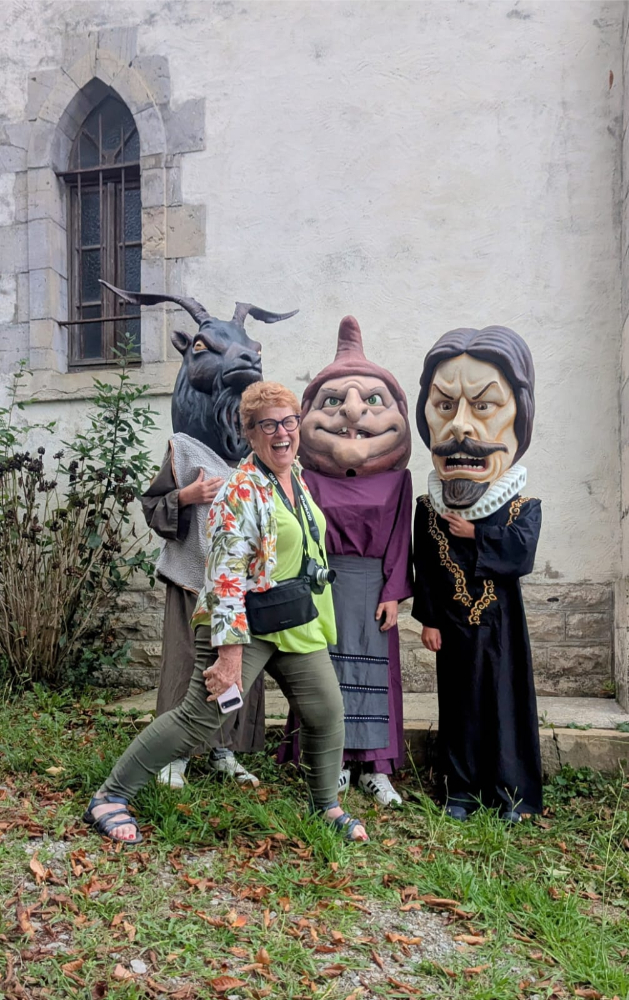
There are so many more Basque traditions to discover. The beret; the masks of Bigheads, representing local authorities or respectable archetypes; the music, dance, processions; maritime chapels, tri-storied balconies in coastal Basque churches. The people who are neither French nor Spanish, only Basque. There are never-ending discoveries.
The outcome and the recommendation
I was immersed in French during this excursion and it became so natural to speak French, albeit with the occasional correction, that I absorbed all this information organically. I came back a more confident French speaker, but also a more informed one. I’d travelled. And I’d also had a holiday! To do that while learning French, is a rare opportunity.
FURTHER INFORMATION
In Basque Country, I chose to have one-on-one tuition but you can go with your whole family, a partner, a friend or a group of up to 6 people. You can choose to focus on lessons or excursions and you can also choose the level of physical activity.
Locally you can choose Basque Country or other districts close by which aren’t part of the Basque sub-culture.. In the future, you will also be able to consider options for an immersion programme based in Burgundy, Bordeaux Lyon, the Dordogne and potentially Corsica!
Further information is available at their website, Facebook or Instagram. They also have a podcast Discover France with Stef and Sarah available from their website or major podcast streaming platforms.
Heading off on your own Melbourne adventures? Join our Facebook Group and share your stories, ask questions and connect with others for further inspiration.