

Essential Tips for Travelling to China
Having visited China previously and knowing I’d be joining a tour group, I did minimal preparation for my TripADeal tour in November 2025. In hindsight, I should have prepared more thoroughly. If only I’d known beforehand what I know now.
The following China travel tips may save you some grief and, at the very least, limit some of the frustrations involved in travelling to this stunning part of the world.

China Travel Tips: What to Prepare Before You Go
China Has Changed
My first foray into Mainland China was a day trip from Hong Kong in 1992 to Xian to see the Terracotta Warriors. The roads were action-packed with jostling cars, blaring horns and cyclists and carts weaving in and out of the mayhem. It seemed remarkable that we didn’t see any accidents until we did. A similar bus sideswiped our mini-bus. The traffic moved so slowly that it was a minor skirmish. Although my partner was annoyed, the impact broke his fake Cartier watch.
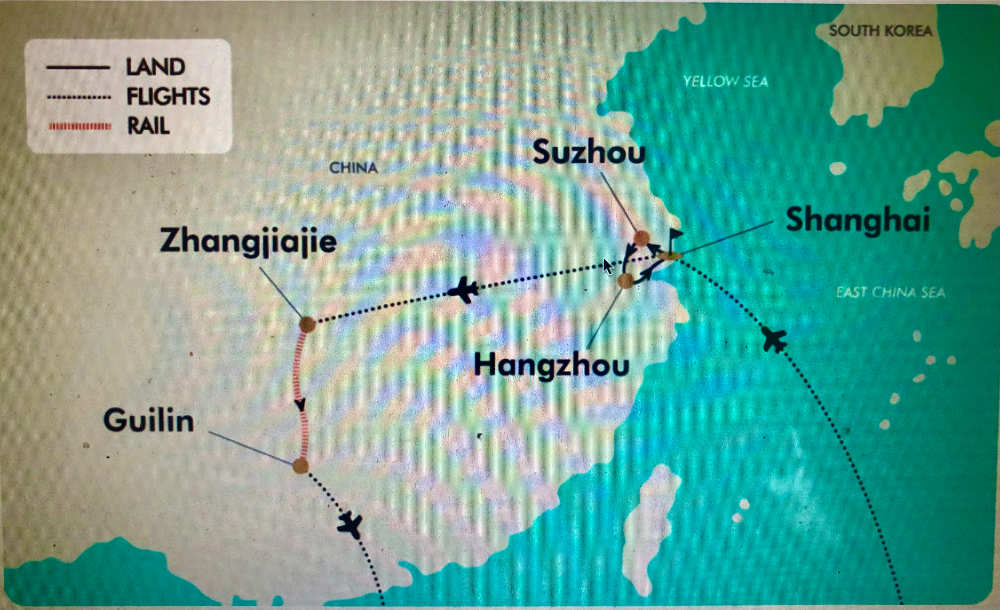
In 2014, I visited Beijing, a city then infamous for toxic smog and traffic congestion. On this third trip, I would get to see more of the country by visiting Shanghai, Zhangjiajie (the “Avatar” floating mountains), and Guilin, known for its emerald witch-hat mountains interlaced by the stunning Li River. Guilin is a major high-speed rail hub, and my tour included a seven-hour train journey.
My travels revealed China’s rapid transformation. Today, traffic is quieter and smoother, with EVs accounting for about 50% of new-car sales. The country emphasises affordable, widespread public transport. I didn’t experience air pollution, and everywhere was exceptionally clean and litter-free. This pristine urban landscape was consistent even over a seven-hour train journey through multiple cities.

No Need to Fret About Visas
On my previous visit, I needed to apply for a visa. Filling out the visa forms felt like death by a thousand questions.
China now has a visa-free policy for ordinary Australian passport holders, valid through December 31, 2026. Eligible travellers can enter multiple times, with a 30-day period per stay.
Money, Payments and Safety in China
China Runs on Apps
How payments actually work
They say money talks. But in China, technology is doing all the screaming. Nor is it tech as we know it, such as mobile wallets (Apple Pay, Google Pay).
Instead, over 90 per cent of transactions are made via apps such as WeChat or Alipay.
As I watched some videos about the widespread use of these apps, I felt a sync hole opening before me, and I was falling into the depths of my ignorance.
Customers scan a merchant’s code. The comprehensive system spans all sectors, from luxury shopping and hotels to street vendors and public transport. It is also fully integrated with Didi, China’s version of Uber.
Of the two systems, Alipay offers the more robust English version.
Travellers must set up Alipay before leaving home, as SMS verification for registration can be difficult to receive due to China’s “Great Firewall”.

Set Up Alipay: Before You Leave
Why timing matters
I found it easy to download Alipay and to link to my credit card information. But as a foreigner, I needed to scan my passport, which is where I came unstuck. I tackled this task at night. I had a new R-series passport that features more holograms that can catch the light and create more glare.
Alipay rejected my scan. Thinking it was a glitch, I tried a few more times — fatal mistake. The system flashed a message: it was kicking me out for 28 days because it suspected fraudulent activity. My trip was 7 days away.

Being Prepared for a Technology Lock-Out
Thinking it would be an easy fix, I contacted Alipay Customer Support. Alipay has over 1.3 billion users, so customer service is highly automated.
The more I typed in my concerns, the more I realised I was dealing with an AI bot. It acted like my new best friend, it seemed genuinely sympathetic to my problem, but kept reiterating that my ban remained in place.
Exasperated, I began typing. “I want to speak to a human, I want to speak to a human.” To no avail.
After 30 minutes of arguing, I typed “I give up!” There could not have been a more obvious AI response.
“Don’t give up. Life is worth living!”

The Joys of Using Alipay
Why you really don’t want to miss out
Some of my tour group, mainly those in their 20s and 30s, and some retirees, had successfully downloaded Alipay. The rest of us watched in awe as they breezed through payments in China. Tap, tap, tap and go. They even paid our guides’ gratuities via Alipay.
These apps are not just payment tools. They are the key to ordering food, booking taxis, viewing online restaurant menus, and much more.
Where the convenience really hit home was when one young woman found a skirt she liked online. By using Alipay, it was delivered to her hotel room within two hours.
As one traveller put it bluntly, “being a cash-only dinosaur means you miss out on the wonders of Chinese tech innovations.”

China is Safe
I was one of these dinosaurs. In lieu of Alipay, I took a wad of Yuan to pay the mandatory gratuities outlined by the tour company (more about that later).
People rarely carry cash in China, so petty crime like pick-pocketing has been all but eliminated.
Also, as my Chinese-Australian hairdresser explained before I left, “China is so safe. There are cameras everywhere!”

Related reading: Staying Healthy While Travelling: A Practical Guide for Older Travellers
Cash is Problematic
The People’s Bank of China (PBOC) prohibits merchants from refusing to accept cash. But as China becomes increasingly cashless, there is a gap between the law and daily operations.
So yes, if you get stuck, you can use cash, but no one will thank you for it. It can create havoc.
For example, I paid cash for dinner. The vendor didn’t have the correct change. “Keep the change”, I said, but in China, giving change is mandatory.
He sent his waiter to ask the surrounding restaurants for change. It was a busy night; they had two people on duty. My cash completely disrupted their workflow for the night.

Finding ATMs That Work
Halfway through my trip, I needed more money to pay for additional tours.
Not every ATM in China accepts foreign cards. And if you keep trying the same one, it can swallow your card.
Forewarned, I asked my tour guide to show me a suitable ATM. He bypassed the one in the hotel lobby and led me outside, turning his back as I punched in my numbers.
For higher success rates with foreign cards, use the large state-owned banks, such as Bank of China (BOC), ICBC, Agricultural Bank of China (ABC), or Construction Bank of China (CCB).
If you visit ATMs during bank hours (usually 9 am – 5 pm), staff can help if the ATM swallows your card.

Credit Cards in China: Where They’re Accepted
Western credit cards (Visa, Mastercard) are accepted mostly in major cities (Beijing, Shanghai) and only at high-end establishments such as upmarket hotels, restaurants, and shopping centres. Smaller shops, cafes, or local vendors rarely accept them.
I normally use a Wise card so I can transfer money between currencies and avoid hidden foreign transaction fees. Even the website for this international card acknowledges the dominance of mobile payments in China, recommending users “link their cards to Alipay or WeChat Pay for seamless mobile payments”.

Staying Connected: Internet, Apps and the Great Firewall
Why Internet Access Matters
Because apps rule in China, you need an internet connection on your smartphone.
Both local SIM cards and hotel Wi-Fi are subject to the Golden Shield Project, also known as the Great Firewall of China (GFW). This multi-layered internet censorship system blocks many services Australians rely on for communication and navigation, including Google (Maps and Translate), Instagram, YouTube, WhatsApp, and Facebook.
Getting Around the Great Firewall: eSIMs and Global Roaming Explained
One way around the wall is to purchase an eSIM from providers like Airalo. These services circumvent restrictions by routing your data through servers located in Hong Kong or Singapore.
Airalo is a popular eSIM provider that lets you install a data plan before you leave Australia, giving you internet access as soon as you land. Because Airalo routes data through overseas servers, it can help travellers access familiar apps and websites that are otherwise restricted in China.
Save 15% on Airalo for new users using code SIMFREENEW. Save 10% on Airalo for any users using SIMFREE.
Other options
My hand-me-down phone was pre-2020; too old to support an eSIM.
Earlier in the year, I’d purchased a $70 “The Epic” Roaming Pack from Amaysim that provides 100 minutes of talk, 60 SMS, and 9GB of data for use in over 90 destinations.
Instead of the hotel Wi-Fi, which blocks Google, I tethered my phone to my laptop. Global roaming data, routed through your home carrier, can bypass China’s “Great Firewall” without needing a VPN.
Cultural Differences and Everyday Realities
Power Banks and Flights
You need a power bank in China because when your phone battery dies, so does your wallet.
As of June 28, 2025, China strictly enforces a 3C (CCC – China Compulsory Certification) safety mark on all power banks carried on domestic flights.
Most power banks sold in Australia — even from well-known brands — do not carry the required 3C mark (it should be printed or moulded on the device itself, not just a sticker). If you want a compliant unit before you fly, you’ll need to check product images carefully or consider buying a CCC-marked power bank once you arrive in China.
When I boarded an internal flight, three people ahead of me had their chargers confiscated. The official was standing next to a tub overflowing with confiscated chargers.

Tipping in China: When It’s Offensive — and When It’s Expected
I learnt the hard way that tipping can be considered condescending.
But there is also the tour guide paradox. When you book tours from Australia, one stipulation is that you provide a daily tip to your tour guide.
For TripADeal, the gratuity was $12 AUD (or 60 RMB) per person, per day, covering both guides and drivers.
Expect Crowds
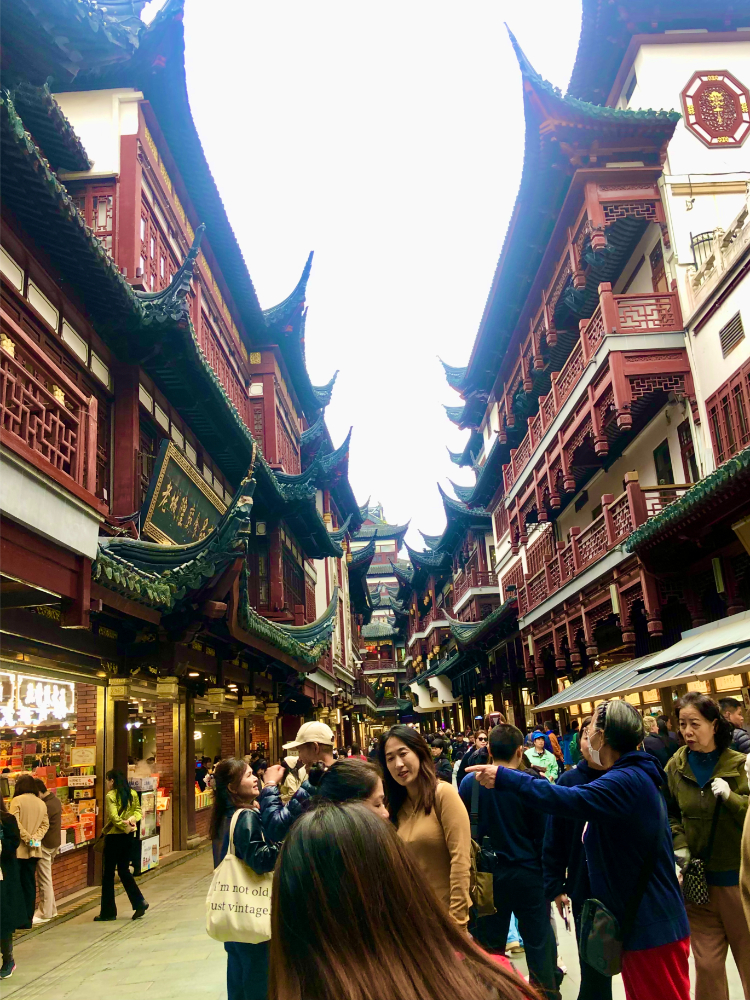
Australian tourists are a minuscule fraction of China’s tourism market. The bulk are Chinese domestic tourists who made 6.52 billion internal trips in 2025.
Be prepared for queues at star attractions.

Lost in Translation: Communicating Without a Shared Language
English is widely studied, but conversational speaking and listening skills are less common.
Menus are written in Chinese characters, with a few exceptions in large tourist areas. You often order by pointing at pictures or somebody else’s plate.
Locals will usually pull out a translation app to help you. WeChat and Alipay both have built-in translators.

Quick Checklist: China Travel Tips for Seniors
- No visa required (at least until the end of 2026)
- Download Alipay before leaving
- Accept that cash is legal but awkward
- Don’t rely on Western credit cards
- Avoid peak travel periods
- Ensure your power bank has the CCC logo
- Use eSIMs or global roaming
- Don’t tip — except tour guides

Choosing the Right Tour Company
Of the places I travelled in China, I would go back to Shanghai on my own.
But tour groups have their advantages. You get to see so much so fast. Guides monitor you through tricky situations such as checkpoints, internal flights and train connections.
Are Meals Beyond Breakfast Included?
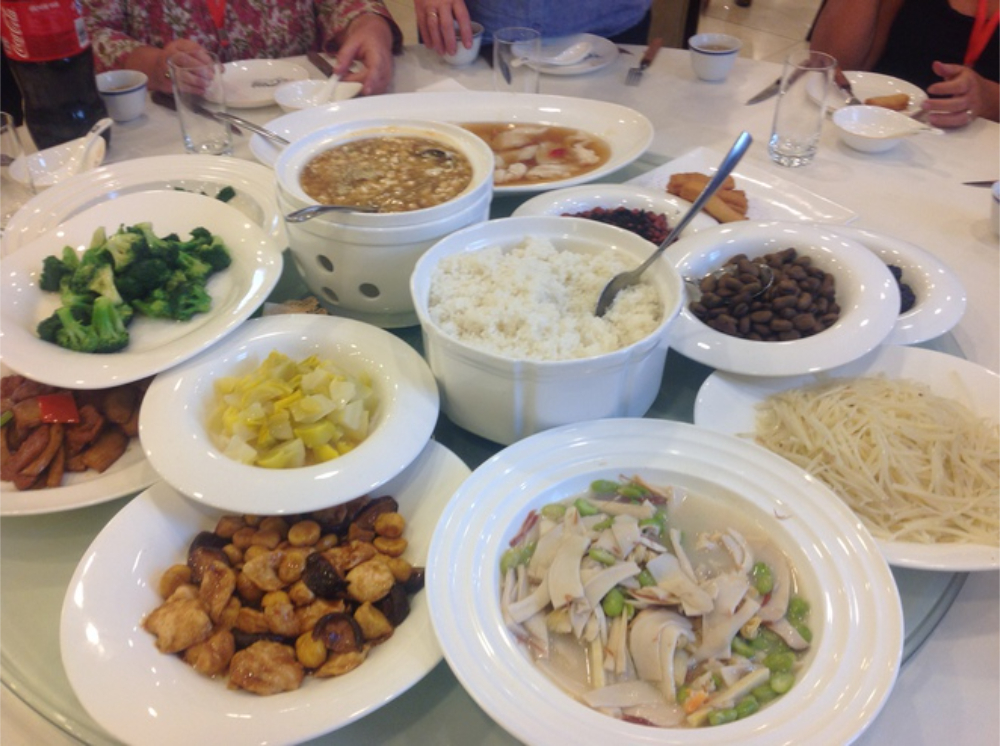
All-inclusive tours, like Wendy Wu, can be a good option if you don’t want to navigate menus on your own.
How Many Excursions Are Included?
Some companies include more tours upfront, others offer paid “optional” extras.
Avoid Tours with Too Many Factory Tours
These stops can be time-consuming and are often linked to commission-based selling.
Chinese Hotels: What to Expect
Hotels in China are highly tech-enabled, exceptionally clean, and efficient.
Customer Service: Know the Costs
Cheap tours often charge fees for changes. Make sure all details are correct when booking.
Tour Leaders
I have nothing but praise for the tour guides I experienced. They spoke excellent English and shared personal stories that moved us to laughter and tears.
Wendy Wu Tours: A Closer Look
Wendy Wu Tours is one of the more established operators specialising in China. They tend to sit at a higher price point than budget brands, but their strength lies in inclusions and cultural immersion. Many of their itineraries include most meals, trusted local guides, well-rated hotels in central locations, and group meals that make socialising easy for solo travellers.
For people who prefer fewer optional extras and more structure, Wendy Wu Tours can be a reassuring choice — especially if you want to focus on seeing the highlights without navigating logistics yourself.
Read what others think of Wendy Wu here.
Tip Sheet: Choosing a Tour of China
- Check inclusions carefully
- Confirm hotel standards and locations
- Ask about factory stops
- Compare value, not just price
- Read recent reviews
- Clarify group size
- Ask about luggage handling
- Understand cancellation policies
Here’s to smooth travels, authentic experiences, and learning a little with every step. Safe journey to China — and may your memories be as rich as the landscapes you’ll see.
Nadine

I hope this post has inspired you to get out and explore Melbourne! Subscribe to our free weekly newsletter to find out more ways to discover (or rediscover) the joy of exploring Melbourne.
This post contains affiliate links. At no extra cost to you, I may earn a small commission if you click on a link and make a purchase.






Thanks Nadine, you infohas just come in time for my solo trip for 3 weeks in Shanghai
Perfect timing, Ced. Hope you have a good trip and make the most of these tips.
I have just returned from a tour of China and l wish l had read your tips before l travelled.
I should have downloaded alipay before travelling and l should have researched my tour group before travelling. ( we did so many stops at places aimed at getting us to buy things)
Yes, ATM’s are dodgy and one girl on our trip had hers eaten up by the machine in the hotel foyer.
We did get by without alipay. Luckily some ATM’s were ok and we did have Chinese money.
We also got to use our debit cards in many stores too.
One thing l can’t stress enough is having travel insurance. My travel companion got very sick and had to attend hospital in Beijing.
We went to Beijing United Family Hospital. Most of the staff spoke English, especially the nurses and doctors and the care and treatment was of a very high standard.
So following on from your great article l would agree totally.
Plan where you want to go. Research the tour group before you leave. Check inclusions and where the group stops.
We went on a really cheap tour and ended up paying more for all the extra things not included.
It was a great trip all the same and China is well worth a visit.
But if nothing else, do get alipay before you leave. It will save a lot of drama.
Oh and do be prepared to show your passport at many places such as motels, entry to Tiananmen Square.
Thanks again for your informative article. I surely hope it helps others before they travel.
Hi Tracey. Thank you for adding your tips to my bunch. I agree China is wonderful but it is a very different world where you need to go prepared. I’m glad to hear your companion received good care at the hospital. I am just back from Vietnam where a filling followed by half my tooth fell out. The dentist there fixed it and the emergency crown cost around $260 rather than the $1800 plus it would have cost me in Australia. The difference almost paying for my trip. And the dentist seemed wonderful. There is some great medical and dental care in places where we often worry about receiving. it. Thanks again for helping other seniors with your verifications and extra tips. Happy future travels. Nadine
Tracey. Thank you for adding your tips to my bunch. I agree China is wonderful but it is a very different world where you need to go prepared. I’m glad to hear your companion received good care at the hospital. I am just back from Vietnam where a filling followed by half my tooth fell out. The dentist there fixed it and the emergency crown cost around $260 rather than the $1800 plus it would have cost me in Australia. The difference almost paying for my trip. And the dentist seemed wonderful. There is some great medical and dental care in places where we often worry about receiving. it. Thanks again for helping other seniors with your verifications and extra tips. Happy future travels. Nadine