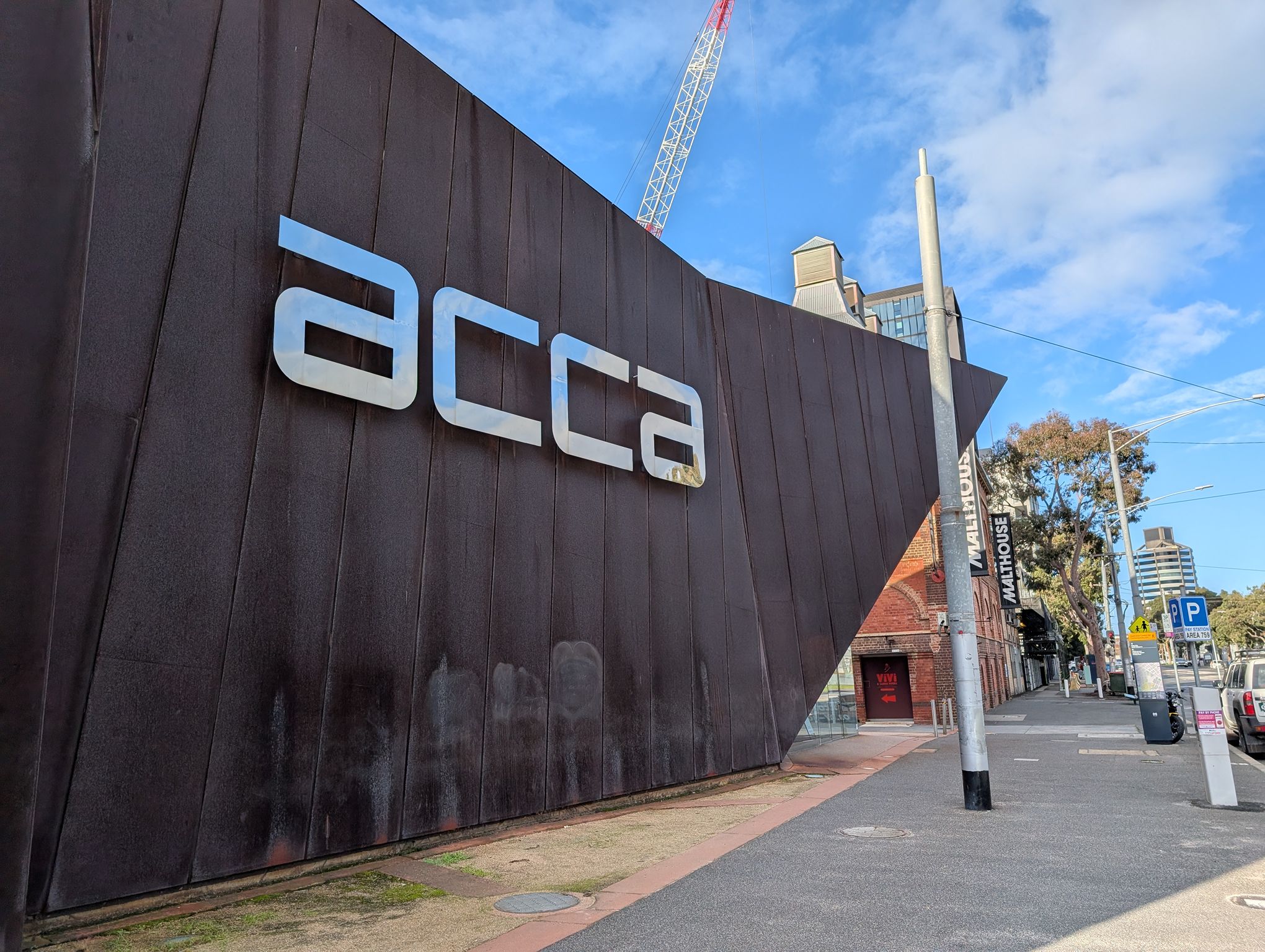
Rust, Rebellion and Free Entry: A Visitor’s Guide to ACCA
ACCA doesn’t look like most galleries you’ll have visited. The rust-red, angular building on Sturt Street has been dividing opinion since it opened in 2002, and that’s rather the point. It’s a place built for contemporary art that doesn’t sit quietly on a wall, and if you’ve mostly stuck to the NGV or Ian Potter Centre, ACCA is worth adding to your Southbank rotation.
Right now, ACCA is partway through a new multi-year exhibition series exploring human emotion. The first instalment, on loneliness, runs until 30 August 2026, with rage and joy to follow in 2027 and 2029. Entry is always free, which makes ACCA one of the easiest and most budget-friendly gallery outings in Melbourne.
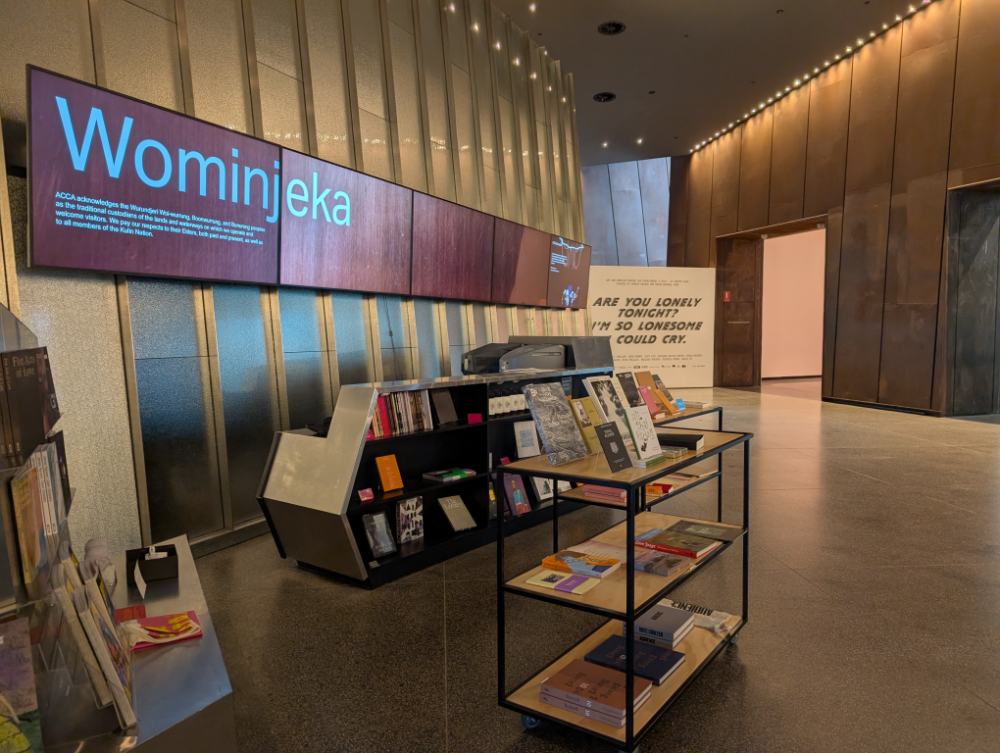
Related reading: Experience Artistic Brilliance at NGV International
About ACCA Melbourne
ACCA is a contemporary art gallery in Southbank, part of the Melbourne Arts Precinct alongside Arts Centre Melbourne and the National Gallery of Victoria. Unlike the NGV, ACCA doesn’t hold a permanent collection — it exists purely to show changing exhibitions of new and experimental work, so there’s always something different on show.
The building itself, designed by Melbourne firm Wood Marsh, is one of the city’s more talked-about pieces of architecture, with four gallery spaces opening off a striking central foyer.
General admission is always free, though some public programs and talks may require a booking.
Related reading: Navigating Arts Centre Melbourne: What you Need to Know
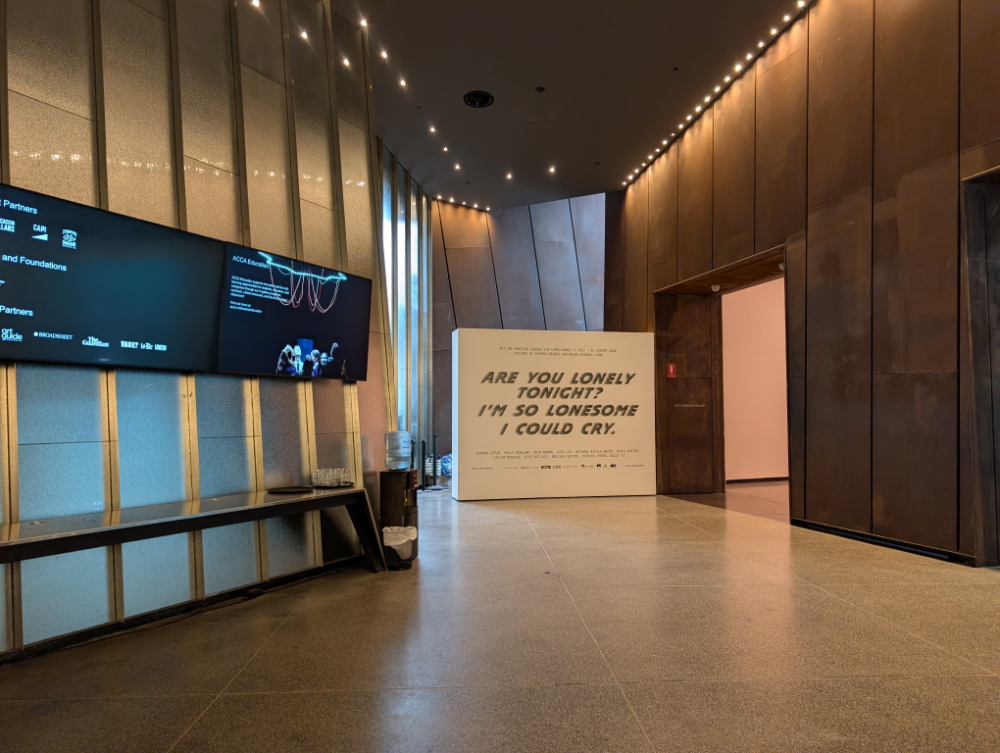
Kaye’s review
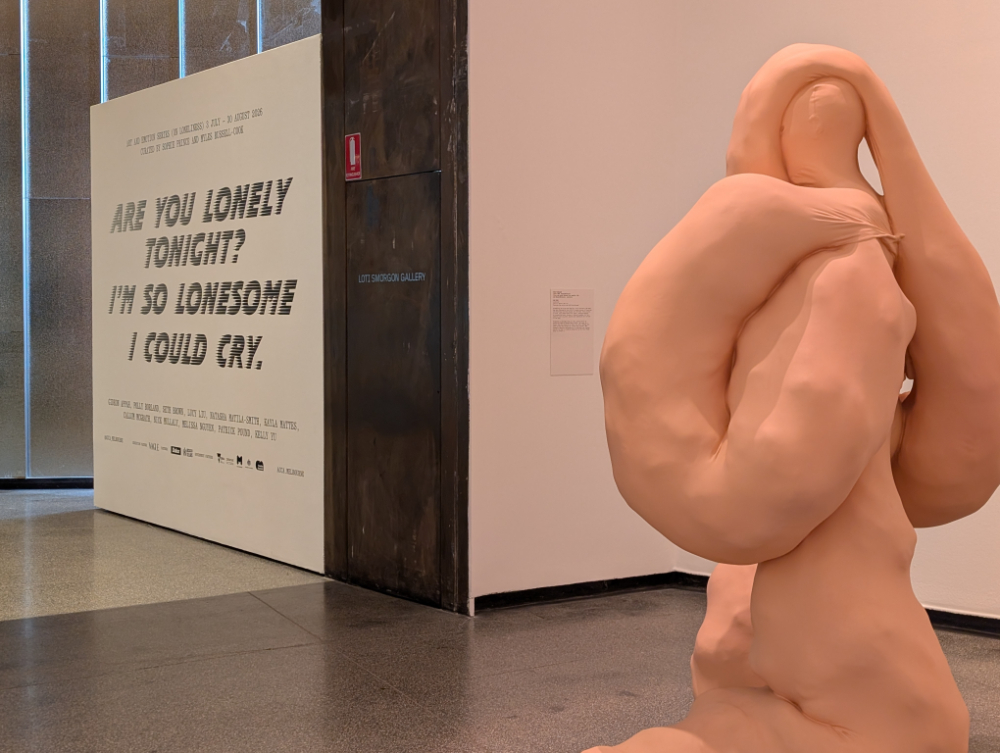
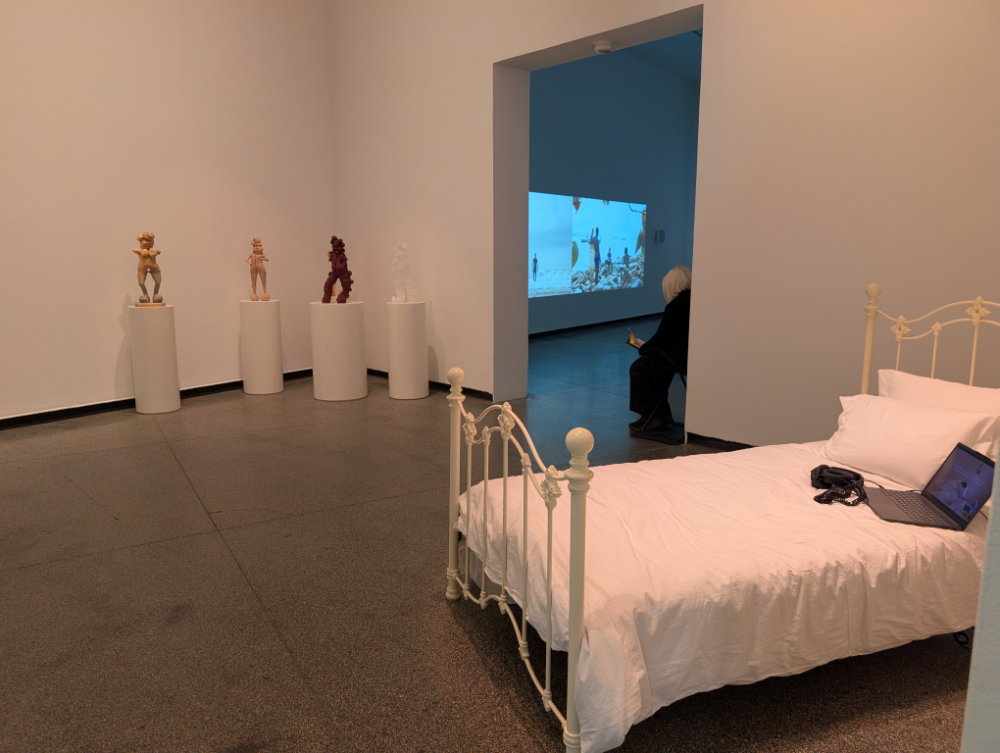
I spent the morning at Australian Centre for Contemporary Art (ACCA) seeing Are You Lonely Tonight? I’m So Lonesome I Could Cry, and it ended up being really different from what I expected. I thought it would be quite heavy, but it actually felt thoughtful and the artists explored the topic with compassion and care.
The work that really stayed with me was Frank 2024 by Seth Brown.
‘Presenting the viewer with a hot dog sausage that scrolls on an iPhone, endlessly searching for its perfect piece of bread, it is the promise of fulfilment perpetually offered-but never quite delivered-by the digital world at our fingertips’.
We see this every day—on public transport, in cafés, and even walking down the street. Our first instinct is often to reach for our phones and start scrolling, creating a sense of social isolation and disconnect from the people and world around us.
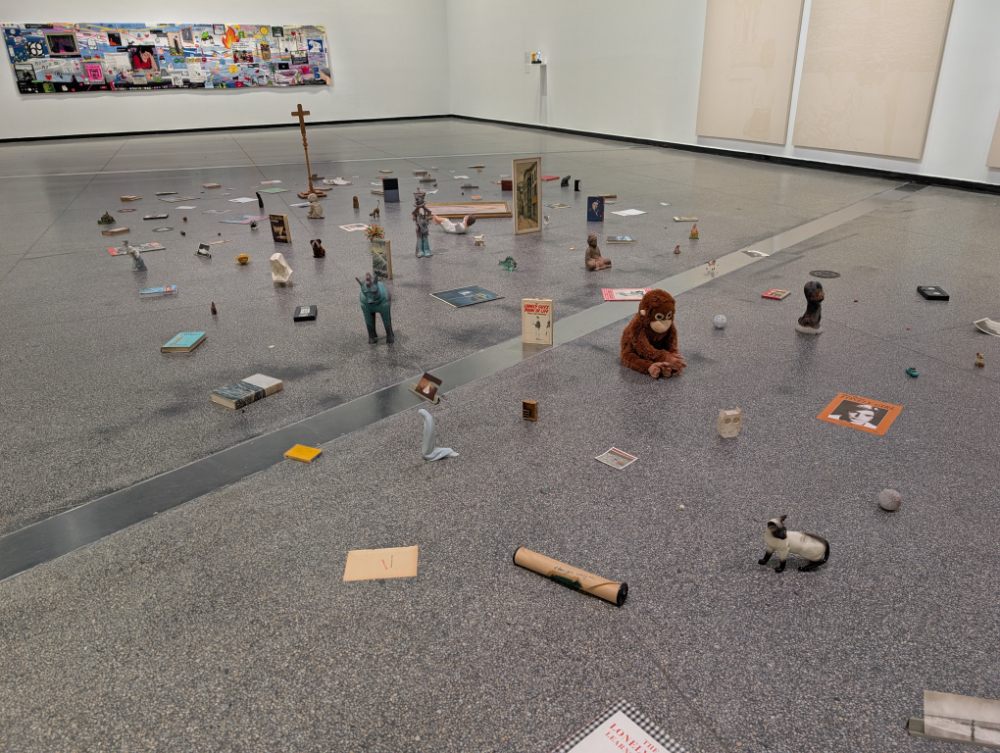
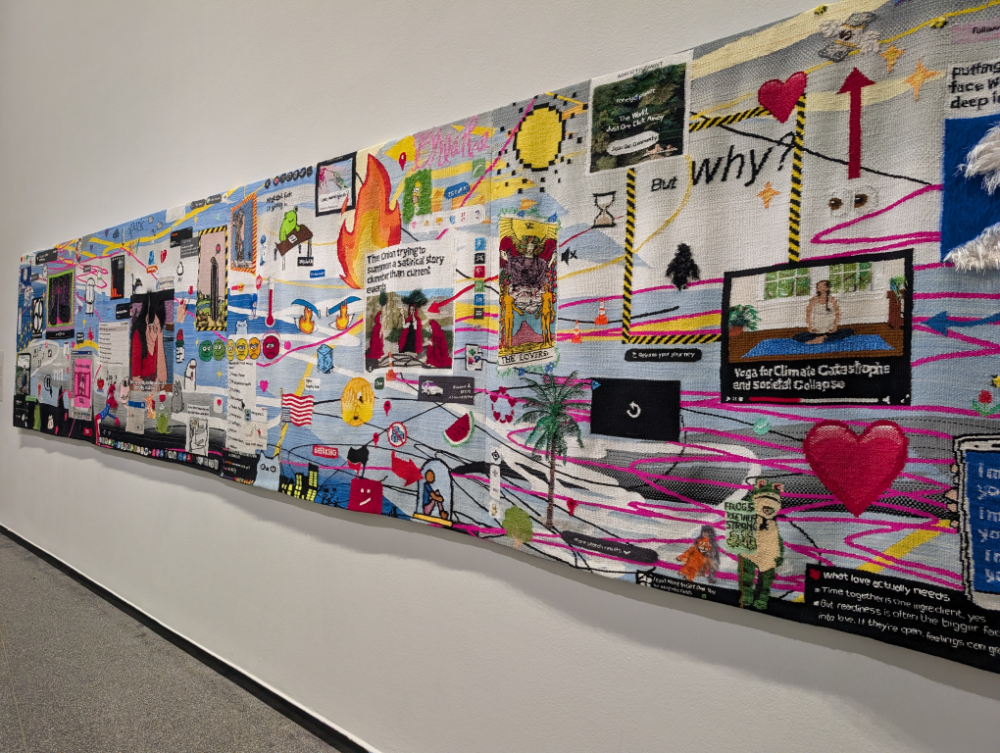
Overall, I really enjoyed the exhibition. Some of the installations were more abstract and required me to read the wall plaques to better understand the artists’ inspiration. I left feeling more reflective than sad. I would definitely recommend it to anyone looking for an experience that encourages you to slow down and see loneliness from a different perspective.
After visiting the exhibition, I headed to Betwixt Café for a delicious lunch. Housed in the beautifully restored former PMG building at 45 Sturt Street, Southbank, it’s a great spot to relax and reflect on the exhibition.
If you have time, it’s also worth visiting Buxton Contemporary, located on the corner of Southbank Boulevard and Dodds Street. The gallery is open Tuesday to Saturday from 11:00 am to 5:00 pm and makes a great addition to a day exploring Southbank’s art scene.
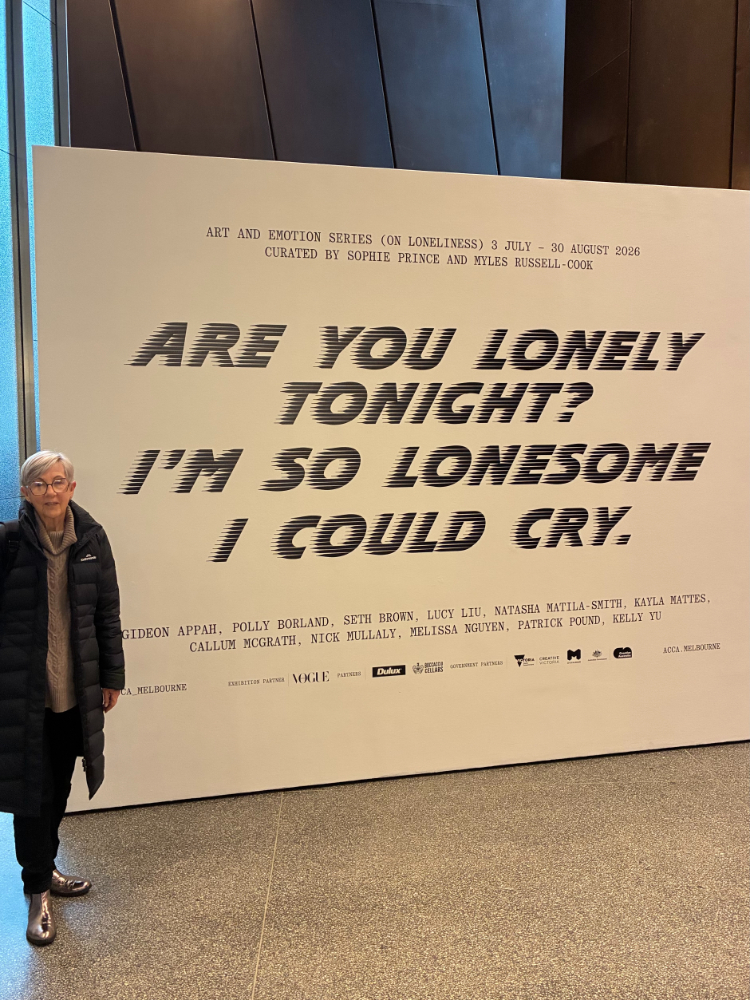
The Art and Emotion Series
ACCA has just launched an ambitious new series called Art and Emotion, bringing together new commissions and existing works from Australian and international artists across three separate exhibitions, each built around a different emotional state.
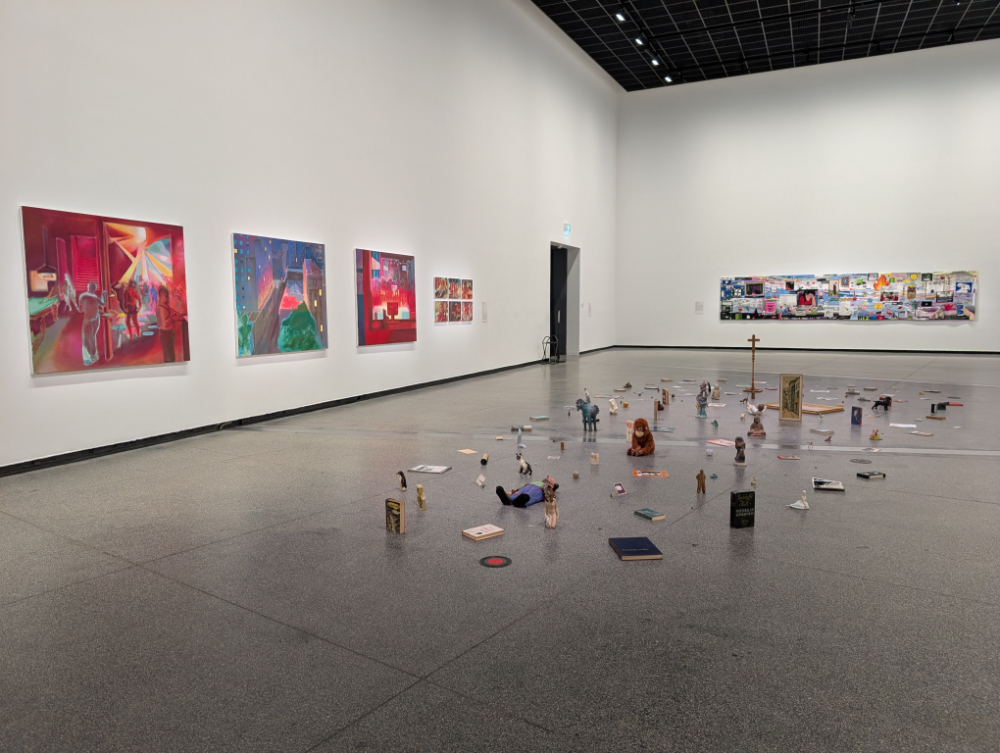
The first, “Are you lonely tonight? I’m so lonesome I could cry.”, takes its title from the Elvis Presley lyric and runs from 3 July to 30 August 2026. It brings together painting, sculpture, installation and video from artists including Polly Borland, Seth Brown, Lucy Liu and Kayla Mattes, exploring loneliness and the pull toward connection. It’s curated by Sophie Prince and Myles Russell-Cook.
The series continues in 2027 with an exhibition on rage, titled after a Yoko Ono lyric, in which Ono herself will exhibit alongside works she’s selected exploring rage as a form of resistance. The third instalment, on joy, is planned for 2029. Each exhibition is accompanied by a new scholarly publication, so this isn’t a one-off show but a genuine long-term project — worth checking back on every couple of years, even after the current loneliness exhibition has closed.
Insider tips for your visit
- Art in Focus for Seniors is offering a one-hour guided tour on Sunday 23 August at 3:00 pm, which adds another layer to the exhibition and would enrich the overall experience. More here.
- Grab a fold-up stool: ACCA has fold-up stools available to take with you through the gallery, so you can rest whenever you need to rather than having to find a bench.
- The toilets are genuinely good: clean, comfortable and easy to find.
- Fill up at the water station: there’s a free drinking water station with glass cups, a nice touch if you’re spending a couple of hours wandering through.
- It’s free entry: general admission to ACCA costs nothing, which makes it an easy, low-pressure gallery to add to a Southbank day out.
- Time it around a quiet session: ACCA runs regular Quiet Sessions for the current exhibition, where audio is lowered and gallery activity is kept minimal. No booking required — just turn up.
- Bring a companion card: Companion card holders (Victorian or interstate) get free access to any paid programs.
- Check before a special event: Regular exhibition entry is free, but talks, panels and workshops can require registration, so it’s worth checking the ACCA website before you go if you want to attend a specific program.
- Note the Monday closure: ACCA is open by appointment only on Mondays, so plan your visit for Tuesday to Sunday.
- Also visit Buxton Contemporary, located on the corner of Southbank Boulevard and Dodds Street.
A bit of history
ACCA was established in 1983, when Melbourne’s arts community pushed for a dedicated space for contemporary work that didn’t fit neatly into traditional gallery programming. Its first home was a modest 19th-century gardener’s cottage near the Royal Botanic Gardens on Dallas Brooks Drive — a world away from the building you’ll visit today.
In 2002, ACCA moved into its current purpose-built home on Sturt Street, designed by Melbourne architects Wood Marsh. The rust-coloured, geometric building has become one of the city’s most recognisable pieces of contemporary architecture, often compared to everything from an outback shed to a Kubrick film set. Its high ceilings and uninterrupted wall space were designed with video and moving image art in mind, and the gallery’s first show in the new building featured a video work by artist Fiona Tan.
Since then, ACCA has built a reputation for backing emerging and experimental artists early in their careers, alongside major international names. It presents four new exhibition seasons a year, meaning even regular visitors will always find something they haven’t seen before.
Source: ACCA’s own history archive. Read the full history here.
Accessibility
- Wheelchair access: ACCA is at ground level and fully wheelchair accessible throughout, with a wheelchair accessible bathroom and a wheelchair available on request from the front desk.
- Companion card: Free entry for companion card holders (Victorian and interstate) to paid programs.
- Quiet Sessions: Scheduled sessions with lowered audio and minimal gallery activity, no booking required.
- Assistance animals: Guide and assistance dogs are welcome.
- Auslan and captions: Auslan interpretation can be arranged for public programs with seven days’ notice; recorded programs and videos include closed captions.
- Travellers Aid: Travellers Aid, based at Flinders Street Station, can arrange wheelchair and mobility scooter hire and personal guidance support for your visit.
If you’d like to check anything specific before you go, ACCA’s team can be reached on (03) 9697 9999 or info@acca.melbourne.
Getting there
Public transport: The easiest tram stop is Stop 17 (Arts Precinct/Sturt St) on Route 1, which has street-level access, followed by a flat, roughly five-minute walk down Sturt Street. The closer Stop 18 (Grant St/Sturt St) is not street-level accessible and involves crossing traffic. ACCA is also a flat, approximately 1.2 kilometre walk from Flinders Street Station if you’d prefer to walk the whole way.
Driving: Metered street parking is available in Grant Street, Dodds Street and Sturt Street, and there are commercial car parks nearby at Arts Centre Melbourne and the Australian Ballet Centre.
Drop-off: The best drop-off point is the laneway entrance between ACCA (111 Sturt Street) and Malthouse Theatre (113 Sturt Street), where there’s a large kerb cut and space to safely pull over.
Australian Centre for Contemporary Art (acca.melbourne)
111 Sturt Street, Southbank VIC 3006
For enquiries, please contact ACCA on (03) 9697 9999 or info@acca.melbourne.
Heading off on your own Melbourne adventures? Join our Facebook Group and share your stories, ask questions and connect with others for further inspiration.