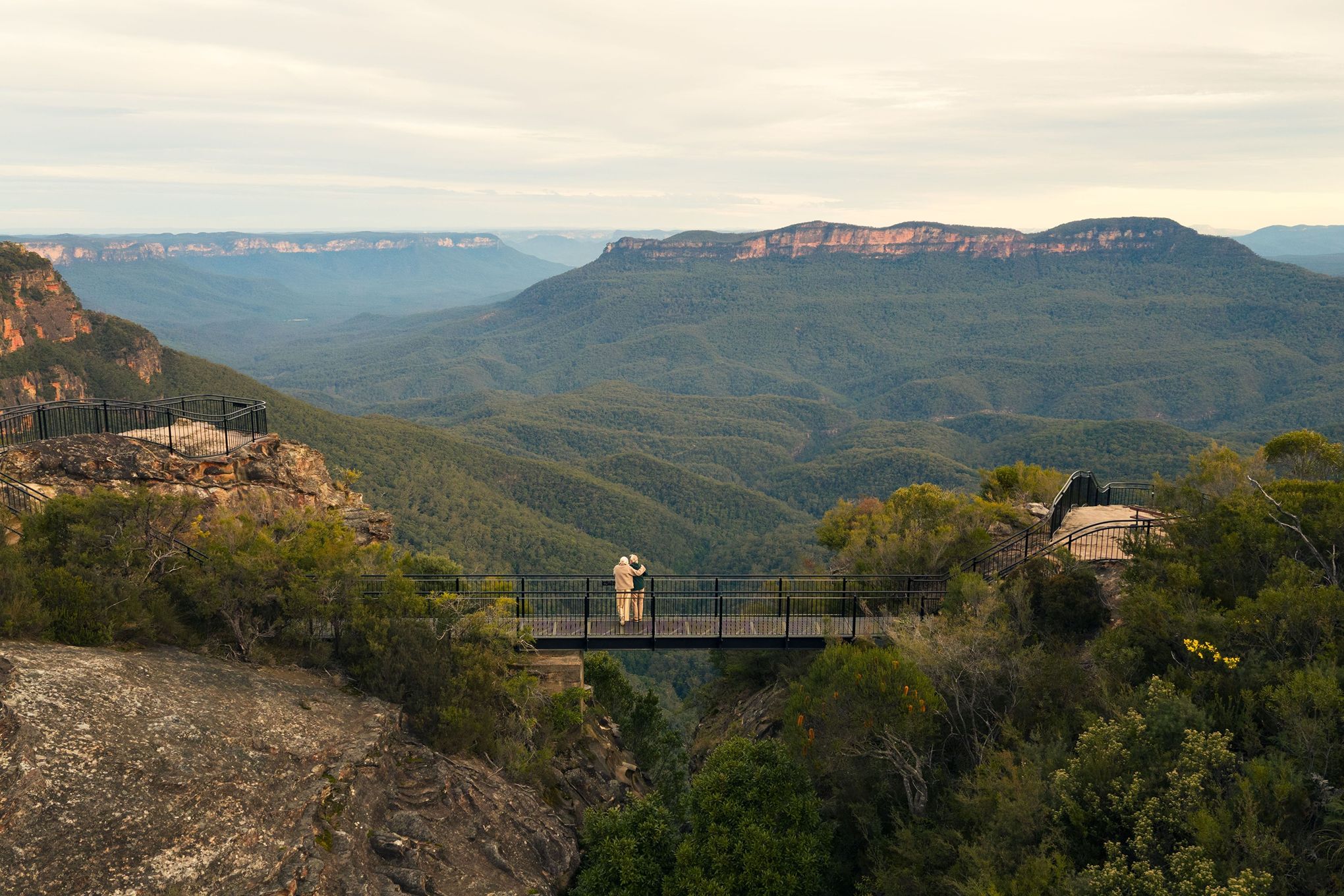
I Think I Can: Exploring the Blue Mountains Without a Car
Blue Mountains Without a Car: How I Did It With Trains, Buses and a Little Help
The clickety-clack of the train to Katoomba in the Blue Mountains seemed to echo a familiar refrain.
“I think I can. I think I can.”
It reminded me of The Little Engine That Could, in which a small blue engine hauls a train over a mountain everyone else believes is too much for her.
I could relate. Many people had questioned whether my plan to explore the Blue Mountains, west of Sydney, without a car was realistic.
Still, I boarded that train.
Like the Little Engine, I stuck with my mantra: “I think I can.” It turned out I could. Trains, local buses, the hop-on, hop-off Explorer Bus and walking routes between stops made Katoomba and Leura accessible without a car.
So if you’re considering a car-free trip to the Blue Mountains, rest assured that using public transport like trains and buses is safe and manageable. Here’s what you need to know.
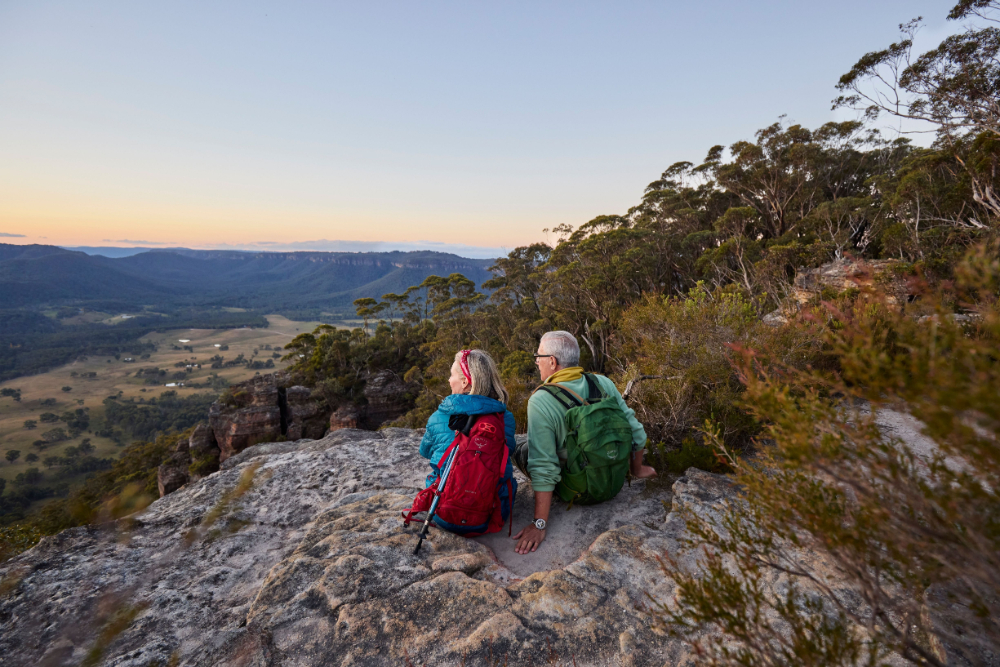
Visiting the Blue Mountains by Train
Get your Gold Opal Card before you go
A Gold Senior/Pensioner Opal card lets eligible seniors travel by train, bus, ferry, metro and light rail throughout the Opal network for no more than $2.50 a day. The network extends west to the Blue Mountains.
Eligible interstate seniors must apply for a Gold Senior/Pensioner Opal card before travelling. I was excited when mine arrived in the mail. The website stated a seven-day delivery time, but to be safe, I applied two weeks in advance. Here is the Interstate Seniors Application.
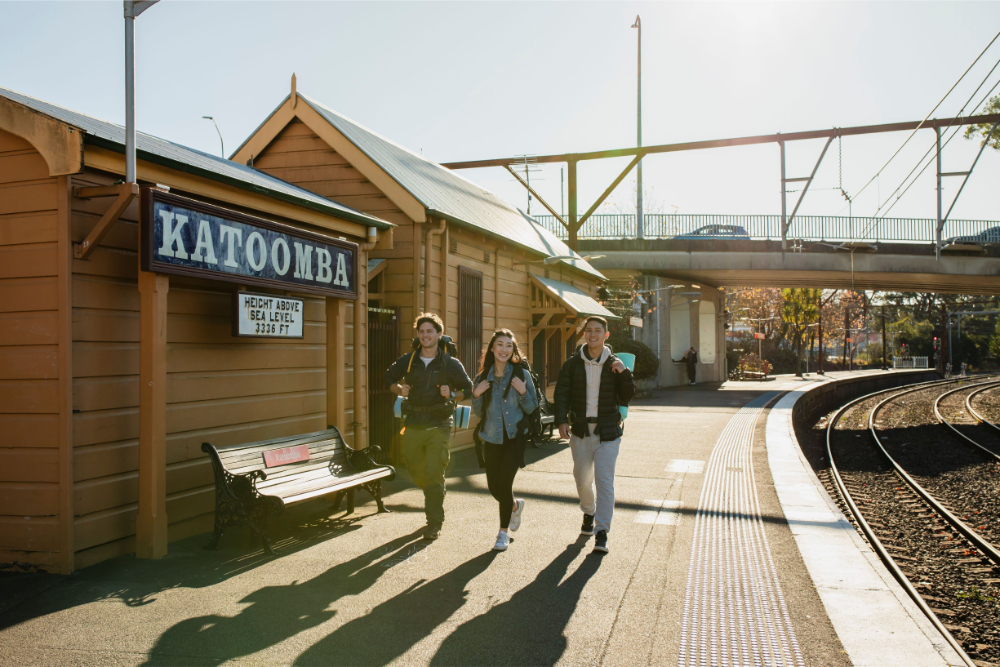
All aboard for the Blue Mountains
The Blue Mountains Line runs from Central Station to Katoomba in about two hours. Departing Sydney, the train passes Parramatta, Blacktown, and Penrith before climbing into the mountains.
As it climbs, the train leaves the suburbs for dense eucalyptus bushland, sandstone cuttings and deep valleys. It calls at Glenbrook, Wentworth Falls and Leura before Katoomba.
Tip: Sit on the left-hand side of the train facing forward when travelling from Sydney to the Blue Mountains for the best views.
Mind the gap at Katoomba
As the train pulled into Katoomba, I missed the announcement but grabbed my bag anyway and moved towards the door.
I was at the end of the queue, behind a British couple with whom I’d chatted briefly.
Note to self—and to you: it pays to chat to your fellow travellers. The man was about to get me out of quite a pickle.
The garbled announcement, which none of us heard clearly, told passengers to move forward through the internal carriage doors to an adjacent carriage.
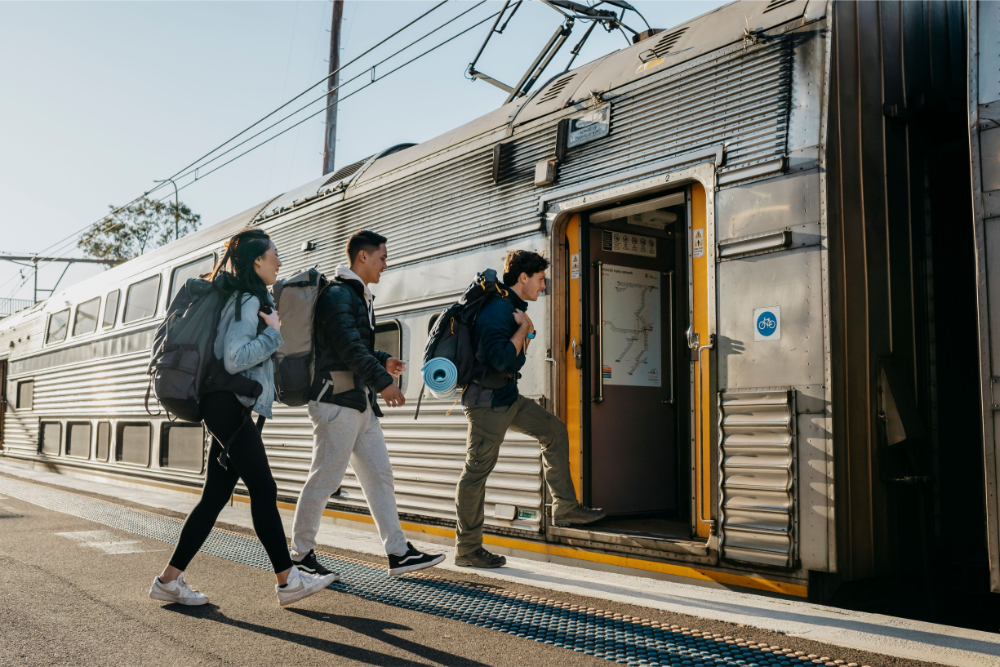
Katoomba Railway Station, built in 1891, has a curved platform. When straight modern train carriages pull up alongside it, the two do not sit flush.
I watched the man help his partner off. She looked nervous.
Then it was my turn.
He turned to see if I was okay.
“Give me your bag,” he said.
As I handed it to him, I saw the gap.
I came, I saw, I capitulated.
“I can’t do it!” I cried.
“You can, you can!” he called back, glancing at the train as though it might leave at any moment.
“Give me your hand. Now jump!”
I leapt. Perhaps I should mention that I’d only recently had a hip replacement.
The Blue Mountains have many dramatic gaps, but to my mind, this railway gap rivals Govetts Leap, one of the region’s best-known lookouts.
A heritage stay at The Carrington
Hundreds of visitors take day trips to the Blue Mountains, but I wanted to stay for a few days. I searched for a midweek package and found one at The Carrington, only a five-minute suitcase trundle from the station.
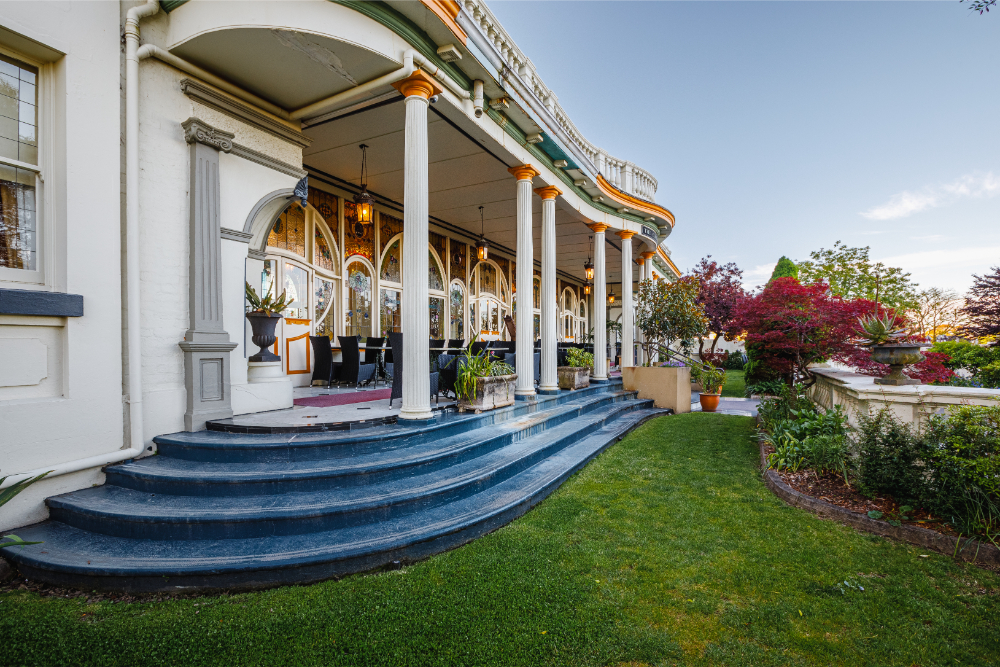
Dating from 1883, The Carrington is Australia’s oldest remaining resort-style hotel. Sydney socialites once came to “take the air”. During the 1920s and ’30s, Katoomba was Australia’s honeymoon capital.
The hotel even had a brush with royalty, hosting the future King George VI and Queen Elizabeth (later the Queen Mother) in 1927, as well as Edward, Prince of Wales.
Choose your room carefully
Lovely as it is, the Carrington is a warren, with only one fully accessible room. See accessibility information before booking.
The hotel has an old Otis lift, installed around 1927. Although it has been upgraded internally and its inner doors operate automatically, you must open the external door manually.
Some people find vintage technology fascinating, but after the novelty of using the lift once, I opted for the stairs.
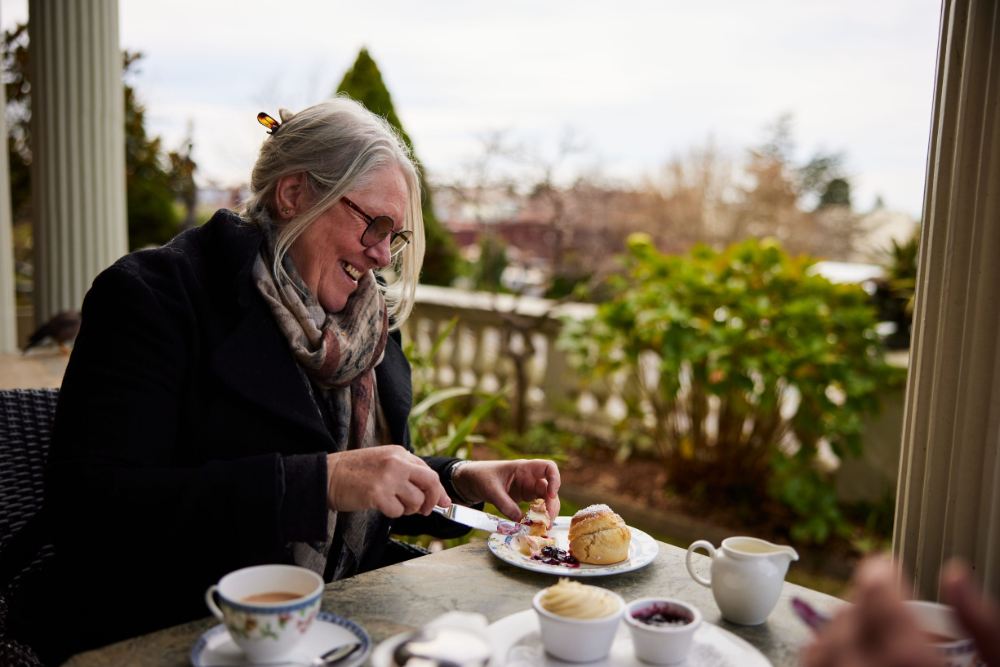
I booked the Retirement & Leisure Package for Australian Seniors Card holders. It included two nights’ accommodation, Devonshire tea, daily breakfast and a two-course dinner in the famous Grand Dining Room. Current details are available on The Carrington’s packages page.
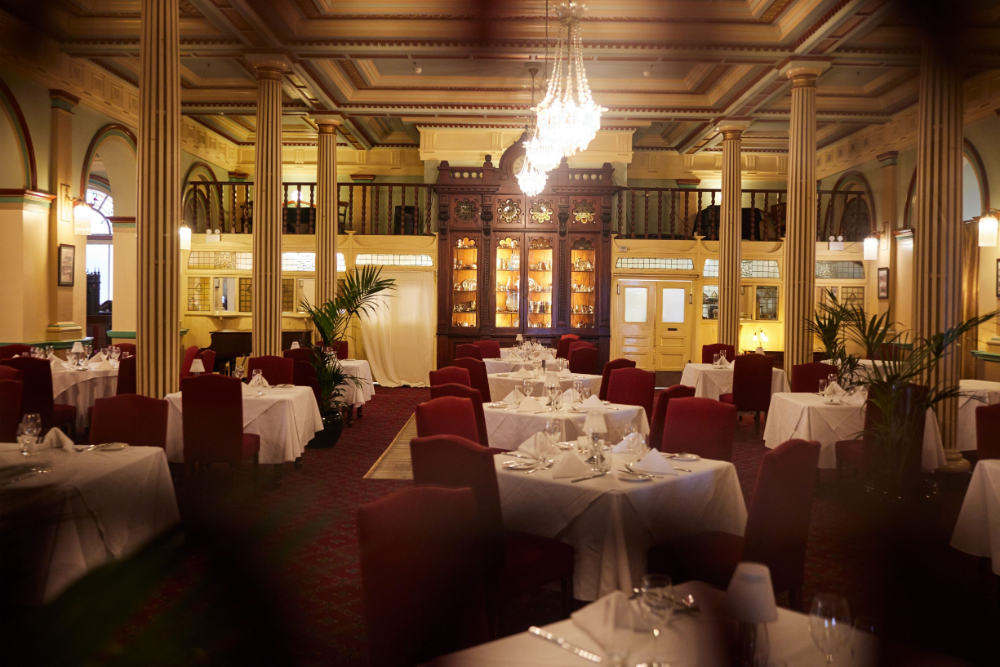
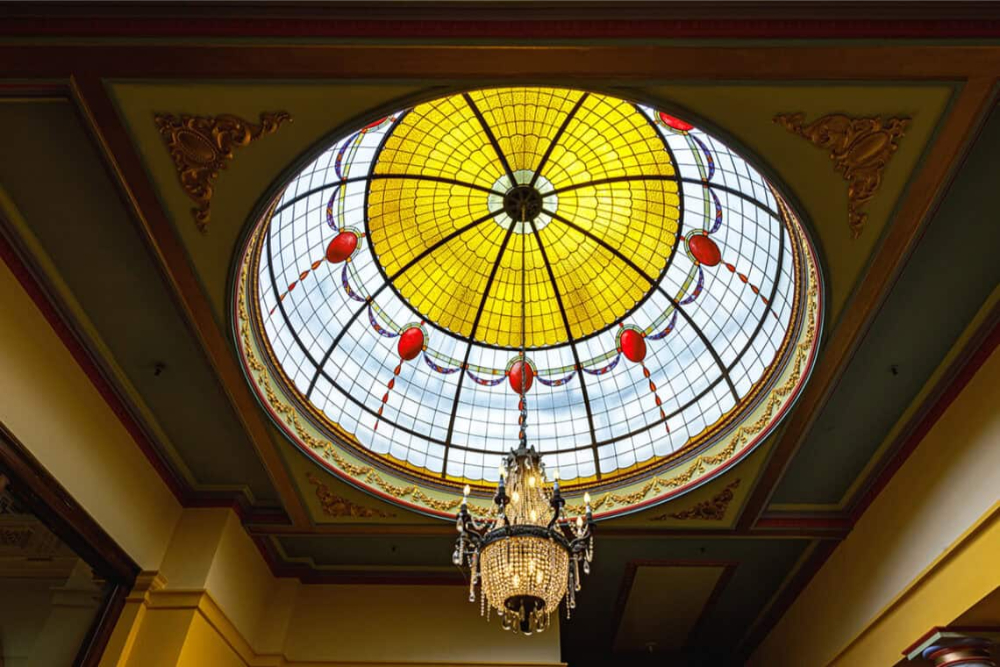
The Grand Dining Room is a “beautifully restored Victorian gem”. It has soaring vaulted ceilings, crystal chandeliers, a plush red carpet, its original silver cabinet and a baby grand piano, which was played during dinner. Breakfast is also served here, so you don’t need to book the package to experience the room.
As you’d expect, the dining room is quite formal and the menu traditional. I preferred the food and intimate atmosphere of the Old City Bank Bar & Brasserie, part of this heritage complex but with a separate entrance from the main street.
Where to find Senior Accommodation Deals
The Carrington Retirement and Leisure package isn’t the only accommodation option worth considering. If you’re planning your own visit, it pays to compare packages and check exactly what each one includes.
The Old City Bank Package, around $470 for two people, may be a better option. Phone for details: +61 2 4782 1111.
Other places offering senior discounts include Mountain Heritage and No. 14 Lovel St, a smaller guesthouse option.
YHA Blue Mountains – Katoomba offers private rooms, lift access and a cosy, heritage-listed setting. It’s a good option for mature travellers on a budget, but the return trip from the station is a 10-minute uphill walk.
Questions to ask before you book
Wherever you book, it is worth asking:
- Is there a Senior’s Card discount?
- Do I need a particular Seniors Card to qualify?
- How far is the accommodation from the station?
- Is the route steep? Even 500 metres can be challenging when it involves a hill.
- Is lift access available?
A stroll through Katoomba
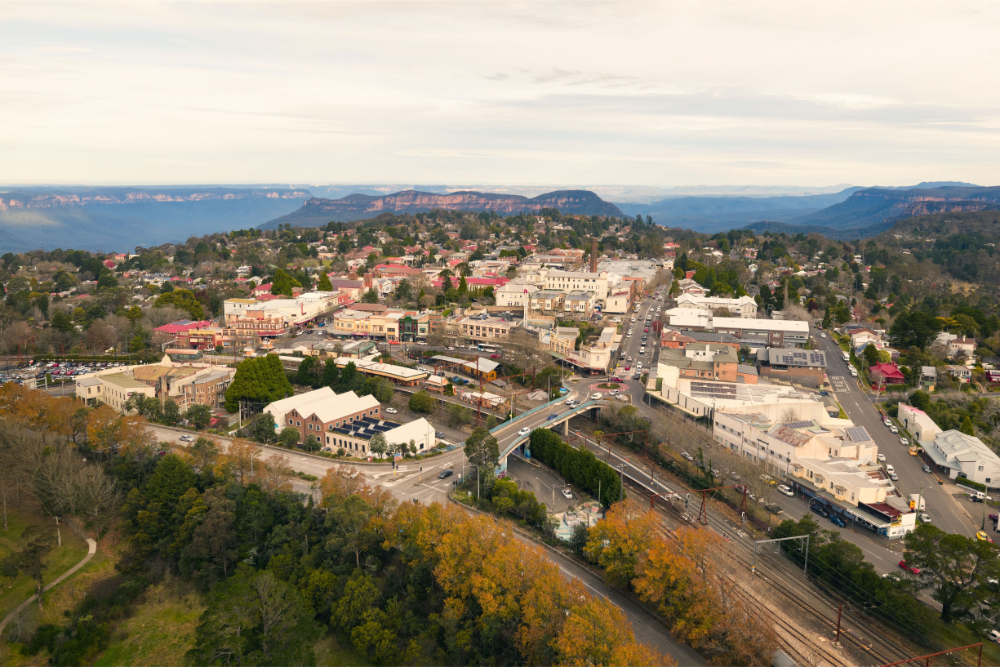
When you pull into Katoomba Station, you are immediately adjacent to the town’s main street.
Katoomba has seen better days. Some of its once-glorious heritage buildings, including the Art Deco Paragon Cafe, have been boarded up.
That said, the main street is quirky and funky, with op shops, vintage stores, galleries, bookshops, cafes, and a few excellent bakeries. Beverley Place has a whole laneway of murals. The town centre is quite accessible.
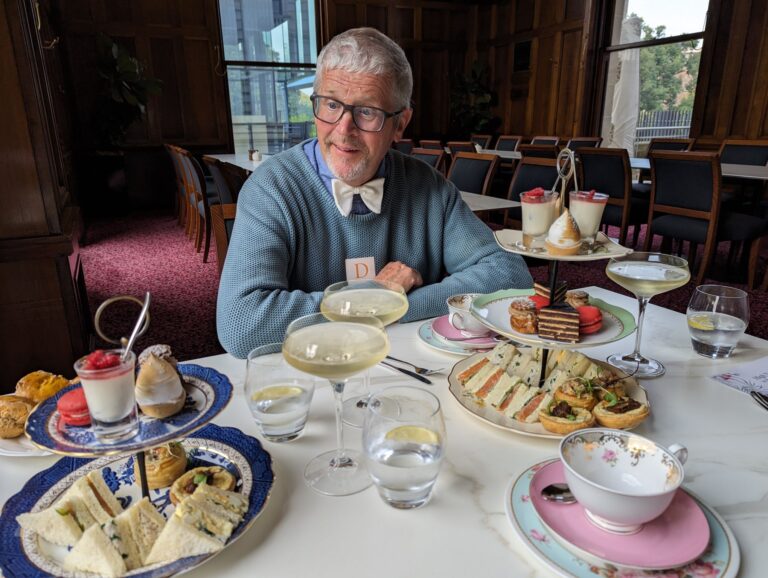
Even if not staying at The Carrington, I’d still drop in for a cocktail or cream tea. That way you can soak in the historic ambience and enjoy the heritage gardens.
I invited my recently acquired English friends back for a drink after bumping into them a couple of times in Katoomba (it’s a small place).
If you stay in central Katoomba, you can enjoy the township on foot. To reach major lookouts and rainforest attractions, I’d use the bus and save your walking for these places rather than expending all your energy getting there.
Getting around by local bus
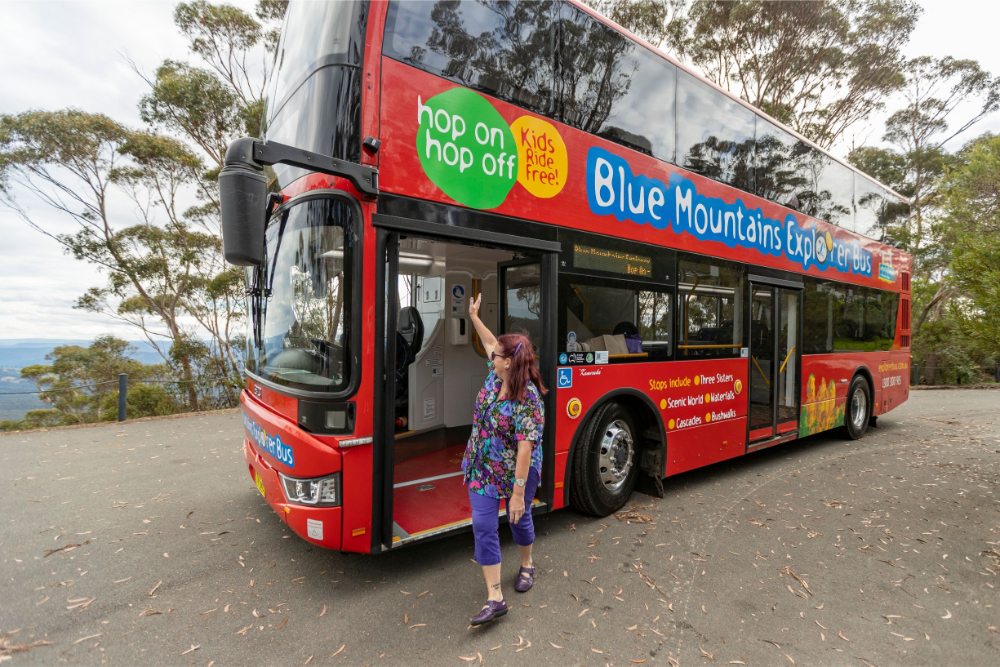
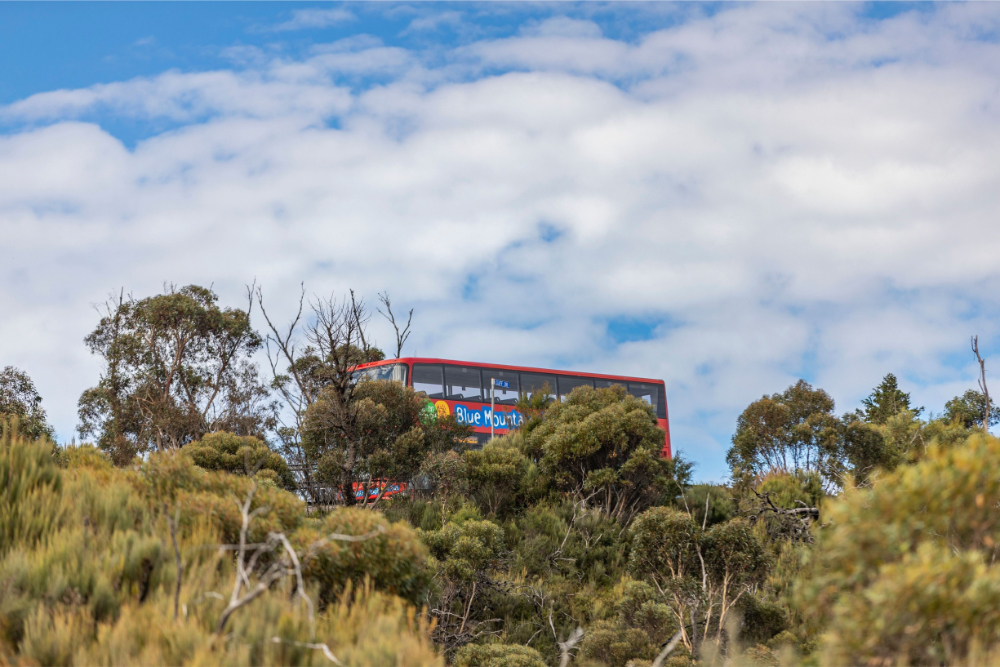
As luck would have it, the bus stop directly outside The Carrington served as a major transport hub for local buses and the hop-on, hop-off Explorer Bus, which I chose for its focus on tourist sites.
But while researching this article, I realised I could have reached several attractions using only local buses. That way, the fare would have been capped at $2.50 for the day.
The most useful routes for visitors are:
- 686 — runs to Echo Point, Scenic World, and Katoomba Falls Reserve.
- 685 — connects Katoomba with Wentworth Falls.
- 698 — runs from Katoomba to Blackheath, dropping you near the Heritage Centre on Govetts Leap Road.
- 695 — runs to South Leura. Or take a three-minute ride on the intercity train from Katoomba Station to Leura Station.
Here is the timetable information.
All Blue Mountains local buses are wheelchair accessible.
Sightseeing at your own pace: the Explorer Bus
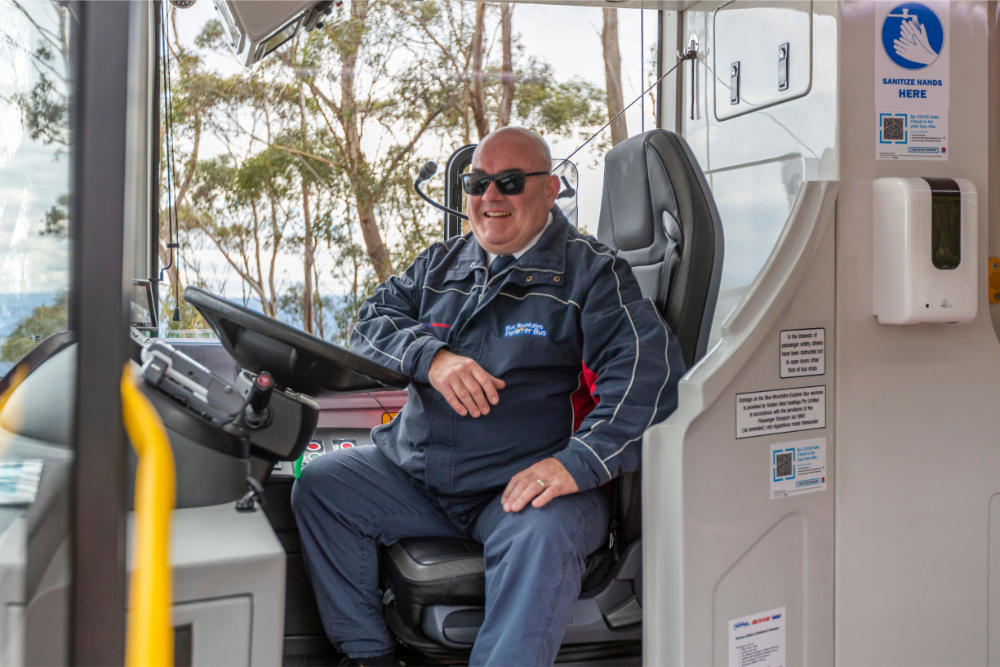
With the Blue Mountains Explorer Bus, there is the convenience of a tour without sacrificing your independence, as you can hop on and off at any of the stops.
The service connects Katoomba with Echo Point, Scenic World, waterfalls, lookouts and Leura.
Services vary according to demand, generally in 30-or 60-minute intervals.
I can’t praise this service highly enough. The drivers are personable and passionate about their local area, providing fascinating local facts and stories.
They provide individualised commentary, rather than prerecorded garble, and they answer passengers’ questions.
You can make the journey as simple or as complex as you like.
I planned to go around once, learn what I could and check out what I would like to come back to, as the buses keep circling.
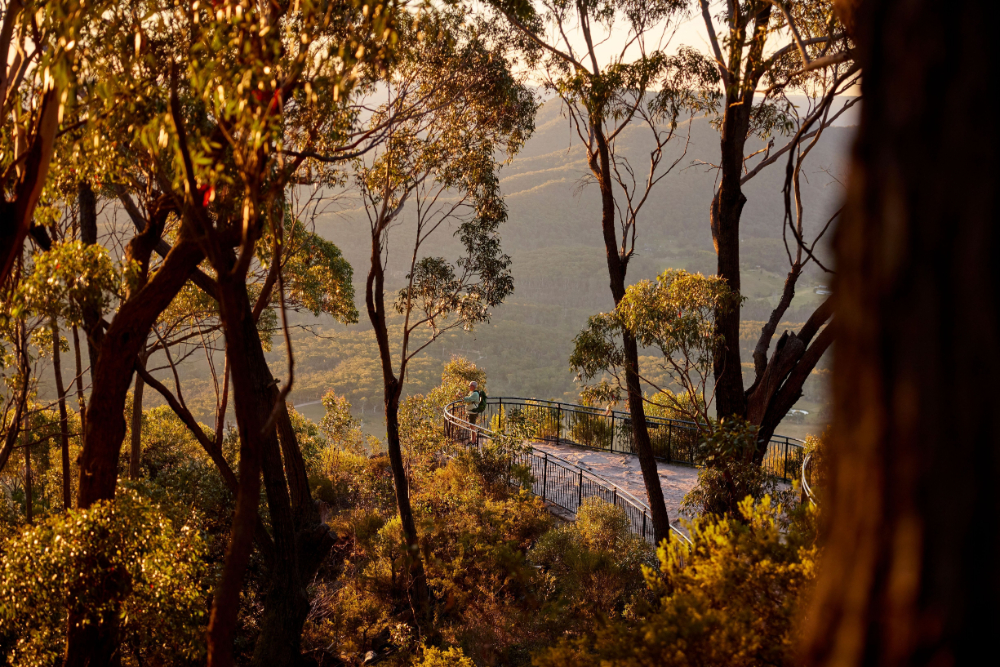
Other passengers stopped at various cliff-top walks to take in the magnificent views.
I overheard the driver being very helpful, pointing out a walk and then pinpointing on a map where these people could catch the next bus afterwards.
All bush walks are graded by difficulty. Some are as easy as 600 metres, roughly 30 minutes. Loop walks return to the same stop, while other bush walks are between consecutive stops.
Here is an index of the walks and guidance on building a walking itinerary.
The more expensive Lyrebird Pass includes ride tickets to Scenic World. Since you already have the tickets, you can beat the crowds to the rides.
I’ve done Scenic World on a previous family trip. But you should definitely go if you haven’t been before.
Yes, it’s like a theme-park overlay on nature, but it also makes nature more accessible.
Ride the world’s steepest passenger railway, plunging through a cliffside tunnel at a thrilling 52-degree incline. It’s not just a ride; it’s history. The Katoomba Scenic Railway began as a 19th-century industrial tramline built to haul coal and oil shale up from the Jamison Valley floor.
In the 1920s, the mining company allowed weary bushwalkers and curious tourists to ride in open coal skips on weekends. It was first fully converted into a tourist attraction in the 1940s.
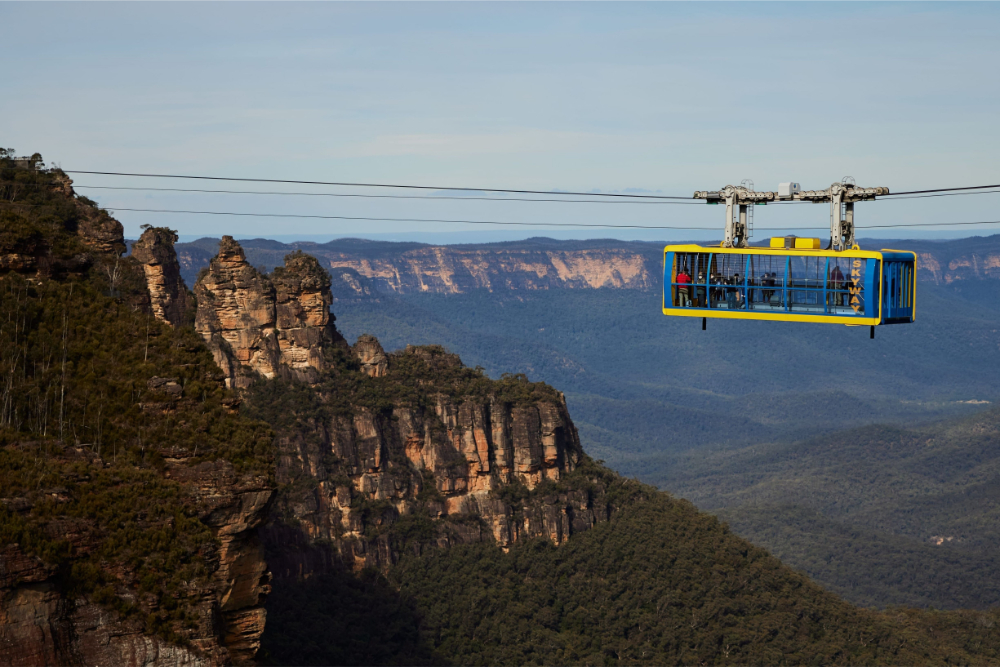
Glide in the Scenic Skyway: a large cable car 270 metres above the ravine, featuring a glass floor for views into the forest canopy.
Experience the steepest aerial cable car in the Southern Hemisphere, gently descending into the Jamison Valley with sweeping vistas of the world-famous Three Sisters and Katoomba Falls. A 2.4-kilometre elevated boardwalk winds through an ancient Jurassic rainforest at the valley floor.
Rides are generally accessible; see Scenic World’s accessibility page.
Tickets for the Blue Mountains Explorer Bus can be bought online, at the booking office at Katoomba Station, or on board the bus.
Tip: Blue Mountains Explorer Bus standard passes are valid for one full day, but if you are staying overnight, you can extend your pass for up to three days free of charge.
Check the Timetables before you go
The Blue Mountains Explorer Bus finishes much earlier than the local public buses. Keep this in mind when planning your day, especially if you want to stay out sightseeing into the evening.
Echo Point Lookout is said to offer magnificent views of the Three Sisters at sunset.
Blue Mountains Explorer Bus (Hop-on, Hop-off)
- First bus: Departs Katoomba Station at 9:15 am.
- Last bus: Final departures are around 4:57–5:00 pm.
- Frequency: Every 30–60 minutes, depending on the season and timetable.
Local public buses (Transport NSW)
Last buses: Services such as Route 686 operate until approximately 9:00 pm, although times vary by route and day.
Leura: a village to browse
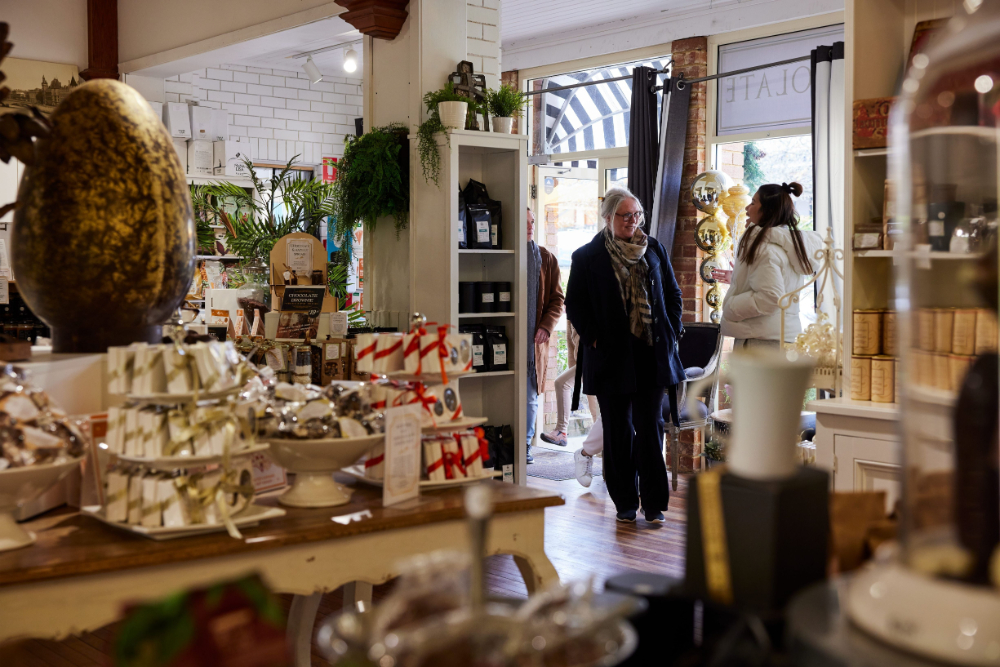
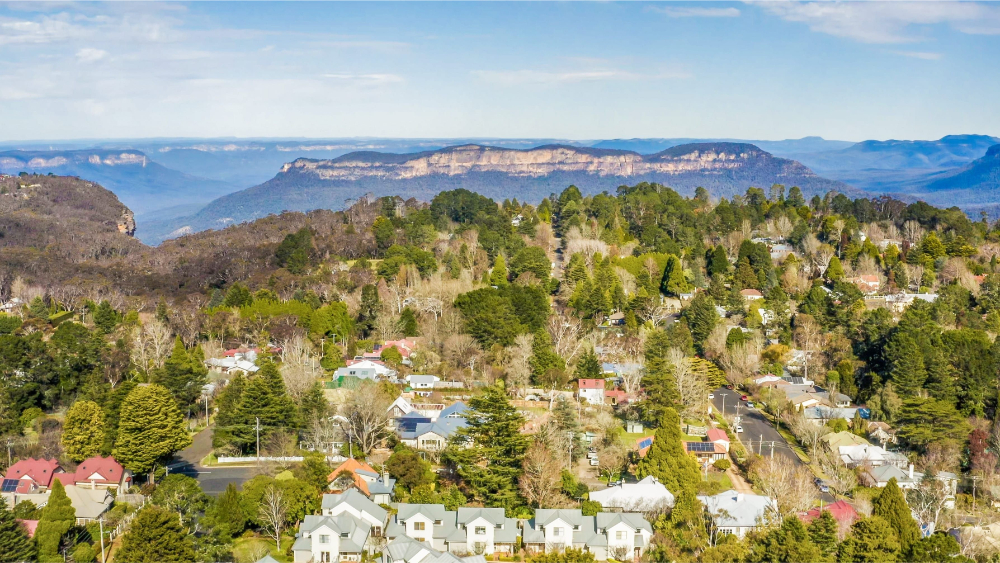
I planned to visit the upmarket village of Leura, where the tree-lined Leura Mall is lined with eclectic boutiques, artisan co-operatives and vintage treasure troves. The merchandise was generally beyond my budget, but it was still a delightful place to browse.
Some shops are attractions in their own right. Bygone Beautys, for instance, houses an extraordinary collection of teapots, including what is described as the world’s largest private teapot collection, as well as traditional tearooms. Josophan’s Fine Chocolates occupies a former church, while the quirky Cabinet of Curiosities invites a leisurely browse. I also enjoyed discovering the local crafts at The Nook and the independent Megalong Books.
Even without buying anything, Leura’s charming shopfronts and relaxed village atmosphere make for a worthwhile outing.
Everglades: a historic home worth the detour
But high on my list was a visit to the National Trust’s Everglades House and Gardens.
The stunning Art Deco house perches on a ridge. Landscape artist Paul Sorensen transformed the rugged terrain into a garden designed to frame views of the Jamison Valley.
It’s a wonderful place for anyone who appreciates historic homes, architecture and gardens.
Getting there without a car was my biggest challenge to date.
It was out of town. Although the walk from Leura was supposedly only half an hour, it involved a long, continuous uphill slog on asphalt.
Once again, a conversation turned out to be the key to solving my transport problems. I chatted with the Explorer driver about many things, including how to get to the Everglades.
Since no one else was on board at the time, he kindly dropped me there, even though it wasn’t part of the route. Travelling often confirms how kind strangers can be.
Then a traveller I chatted to in the Everglades gift shop on the way out kindly cleaned off her front seat and dropped me back in Leura, where I could reconnect with the bus.
I Could
There’s always a way. Sometimes you have to follow the Little Engine’s mantra of “I think I can”, and somehow things turn out.
I’d set out to explore the Blue Mountains without a car, although I wasn’t sure I could manage it. But I did get there by train, reached the places I’d yearned to visit, and, thanks to some very kind strangers, managed not to fall into a gap and to visit the Everglades.
As I headed down the mountain back to Sydney, I felt chuffed with myself. “I thought I could. I thought I could,” I told myself. If I’d had a horn, I would have honked it. Or perhaps writing this piece is my triumphant toot.
Nadine travelled at her own expense.
Heading off on your own Melbourne adventures? Join our Facebook Group and share your stories, ask questions and connect with others for further inspiration.