Getting around Sydney: an accessible transport guide for easier travel
Most travellers arrive in Sydney dreaming of the Sydney Harbour Bridge, the Opera House and that breathtaking harbour view. If you’re anything like me, however, there’s another question you need to ask before you set off: Can I actually get there without encountering a staircase?
I’ve learned the hard way that accessible transport isn’t simply about whether a train, bus or ferry has a wheelchair symbol. It’s about the whole journey — getting into the station, finding the lift, reaching the platform and, ideally, arriving without having to rely on a kind stranger to help with my luggage.
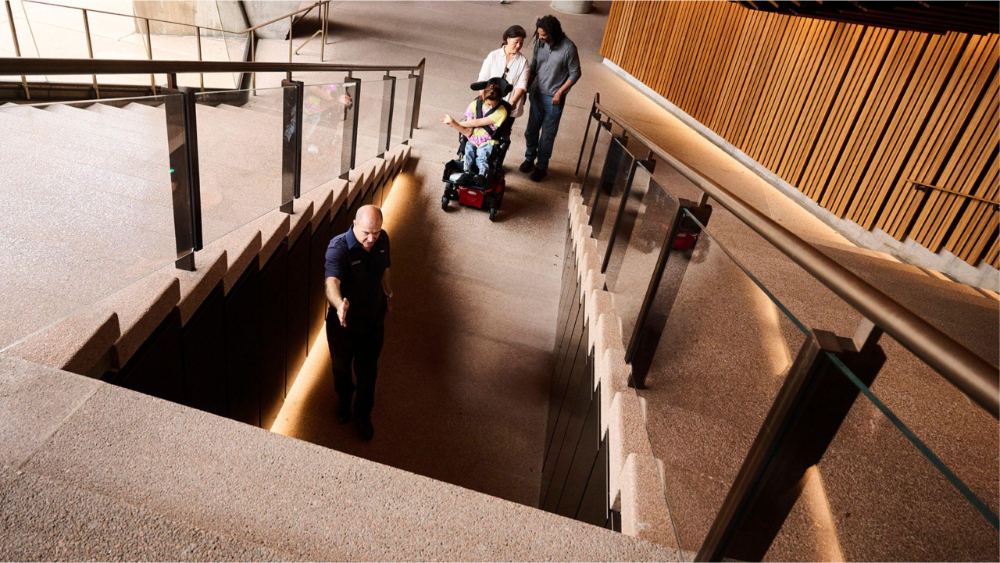
I’ll never forget one such stranger at a light rail station near Seattle airport. When I discovered the elevator was out of service, I stood beside my luggage, gaping at a tower of stairs and wondering how far I’d have to backtrack to find another entrance.
Then an airline pilot swooped down on me wearing a crisp white shirt and gold-winged jacket.
“I’ll help you with those, ma’am,” he said, snatching up my bags and bounding up the steps while I scrambled breathlessly somewhere behind him.
It did cross my mind that a stranger had just sprinted off with my belongings.
Thankfully, he was waiting patiently at the top. When I gasped out my thanks, he grinned. “Don’t mention it, ma’am. I missed my morning gym session. You’ve just done me a favour!”
Rarely do good Samaritans like this one and staircases collide when travelling.
And there is no guarantee it will happen in Sydney. So, if you have mobility or accessibility issues, it’s worth doing a little homework before you travel. Sydney has an extensive public transport network of trains, Metro, buses, light rail and ferries, along with accessible taxis and rideshare options — but accessibility can vary from one station, stop or wharf to another.
Here’s what you need to know before you set off, so you can spend less time waiting for a well-meaning stranger and more time enjoying Sydney. Plus we have included a handful of extra accessibility maps worth bookmarking before you go.
This is the companion piece to our guide on seven accessible Sydney attractions — read that first for the sights, and use this one for the logistics.
Accessible attractions and maps
These are just some of Sydney’s accessible attractions. For more ideas, consider:
- The Rocks Access map
- Sydney CBD and Circular Quay Access Map
- Bondi Beach Accessibility
- Manly Beach Accessibility
- Accessible History and Heritage Landmarks
Accessible toilets
The National Public Toilet Map allows tourists to identify appropriate places for toilet breaks and whether toilets are wheelchair accessible.
Accessible transport
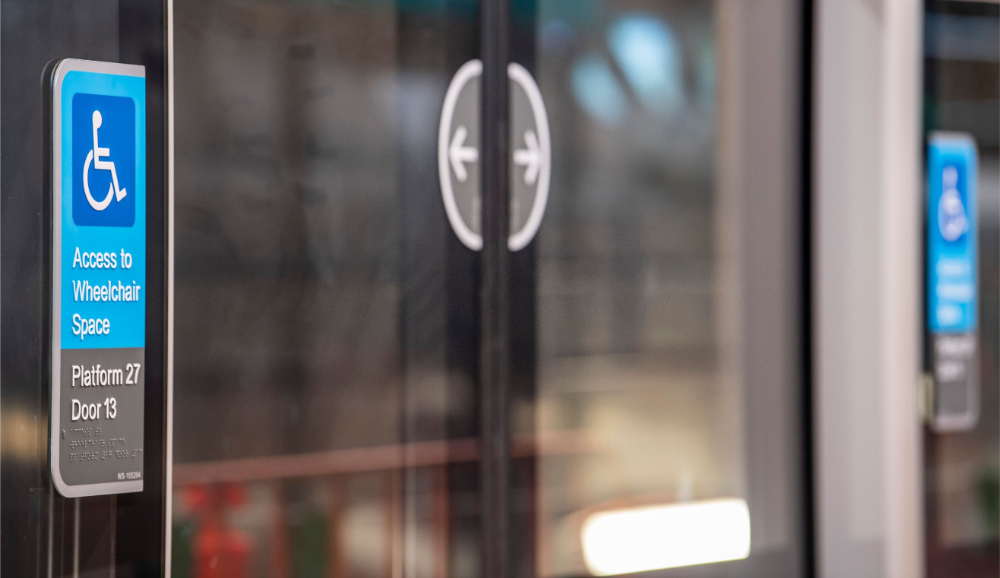
In Sydney, the majority of public transport services are accessible.
Mobility aids can safely board and travel on all Metro and light rail services, and on most trains, buses and ferries.
Transport NSW provides an online Trip Planner showing accessible service information.
Alternatively, download a transport accessibility app that best suits your needs.
Fares and concessions
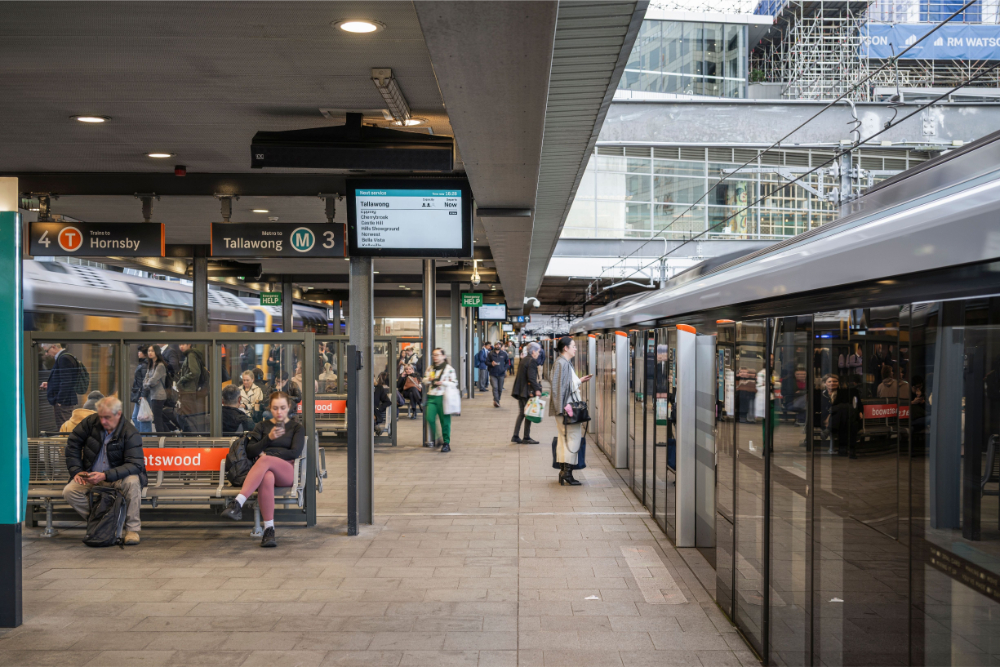
If you hold a NSW or ACT Seniors Card, you can apply for a Gold Opal card, which caps your daily public transport spend at $2.50 across trains, buses, ferries, light rail and Metro. From mid-2026, NSW and ACT cardholders have also been able to link that concession to a contactless credit or debit card, phone or smartwatch, so there’s no physical card to carry or lose.
Visiting from interstate, including Victoria? Your own state’s Seniors Card generally makes you eligible for the same $2.50-a-day fares, but you’ll need to apply for a physical Gold Opal card ahead of time rather than using contactless payment — the interstate application can take three to four weeks to process, so it’s worth sorting before you leave home. Once approved, carry your Seniors Card as proof of entitlement whenever you’re travelling on the concession fare.
From the airport
Sydney Airport’s T1 International and T2/T3 Domestic terminals are wheelchair accessible, with lifts, ramps and dedicated accessible pick-up spaces at arrivals. If you’ll need a wheelchair at the airport, ask your airline to arrange one, ideally at least 48 hours before you fly.
The Airport Link train connects both terminals to the city centre in around 13 minutes, with lifts at both airport stations and priority seating on board. A dedicated special assistance lane also operates at the taxi ranks, and wheelchair-accessible taxis and rideshare (including Uber Assist) can be booked at the kerb.
Ferries
While ferries are accessible, certain older wharves have steps. View a list of Sydney’s accessible wharves.
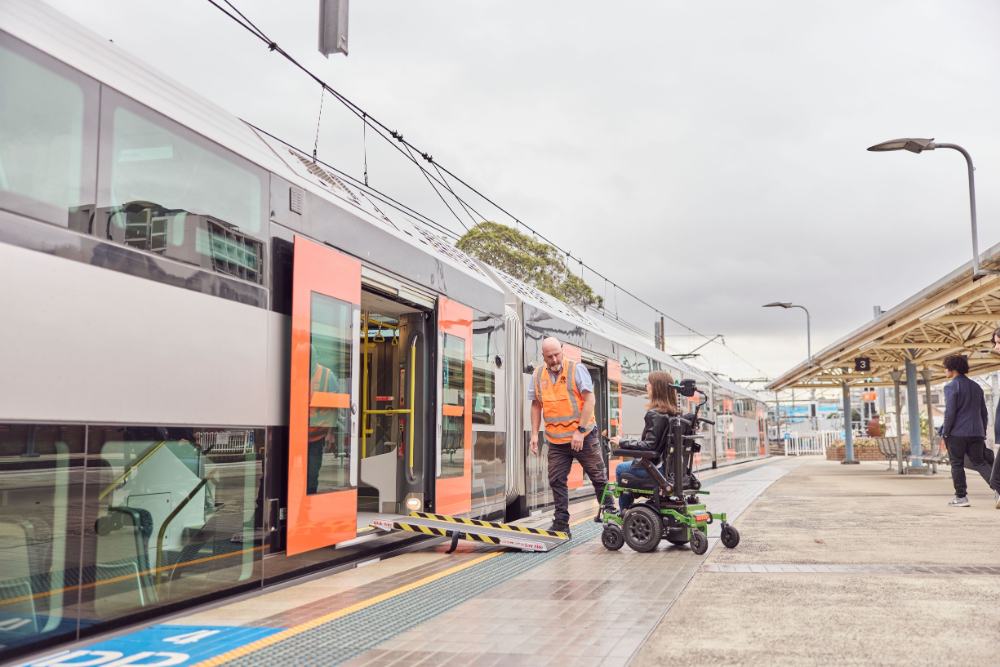
Trains
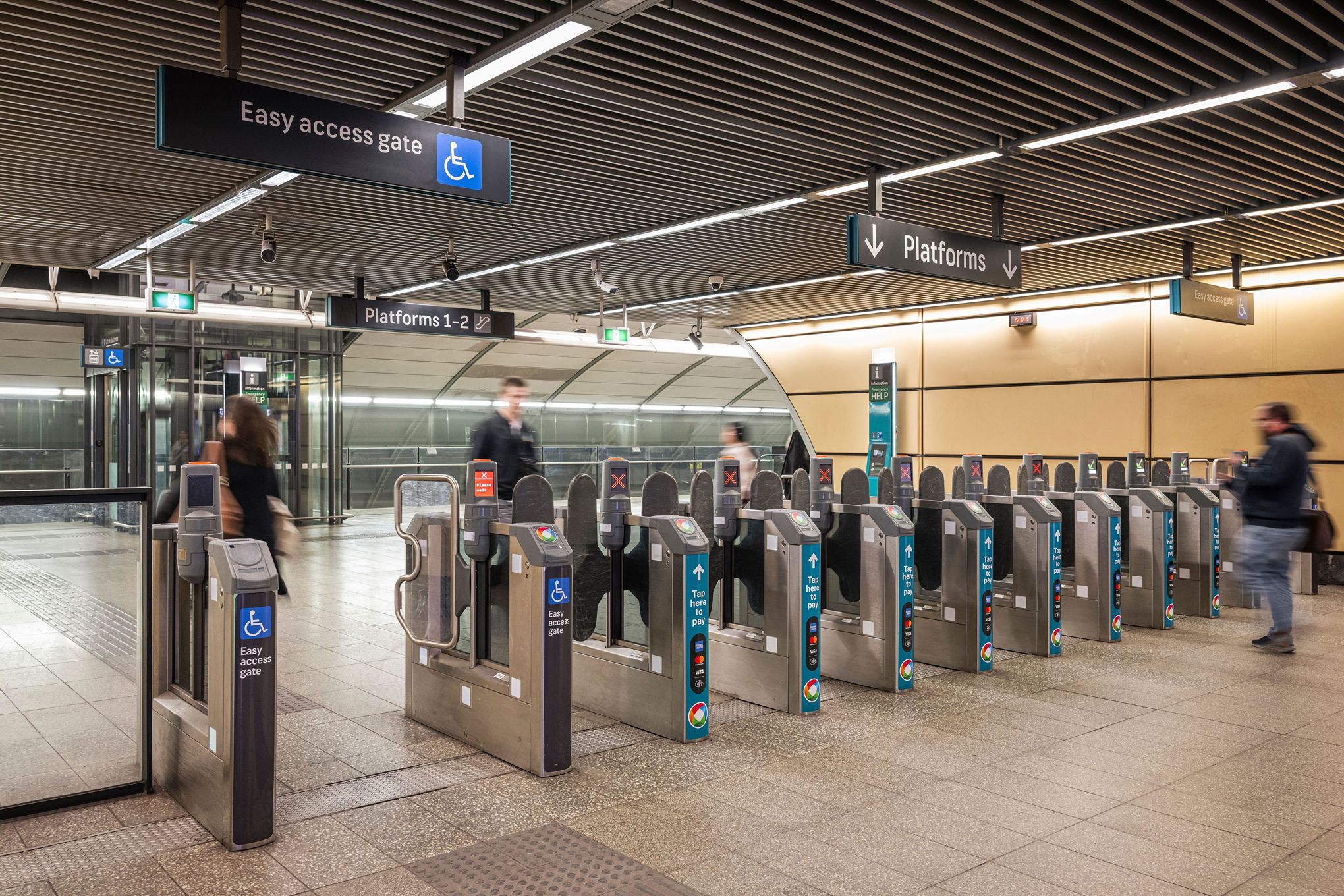
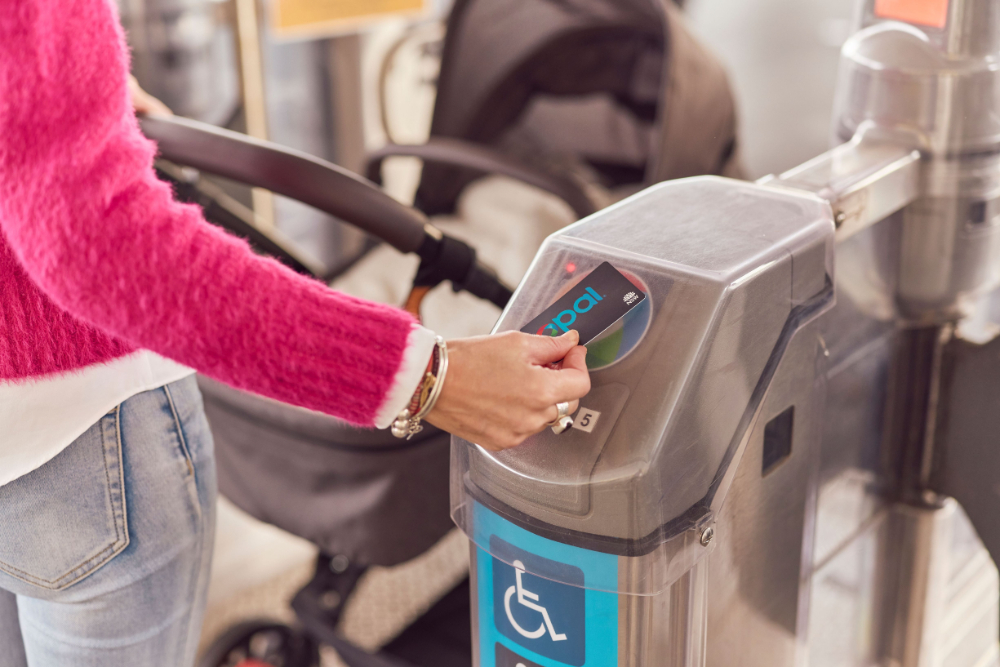
Sydney Metro is a fully accessible railway with level boarding. Stations feature lift access.
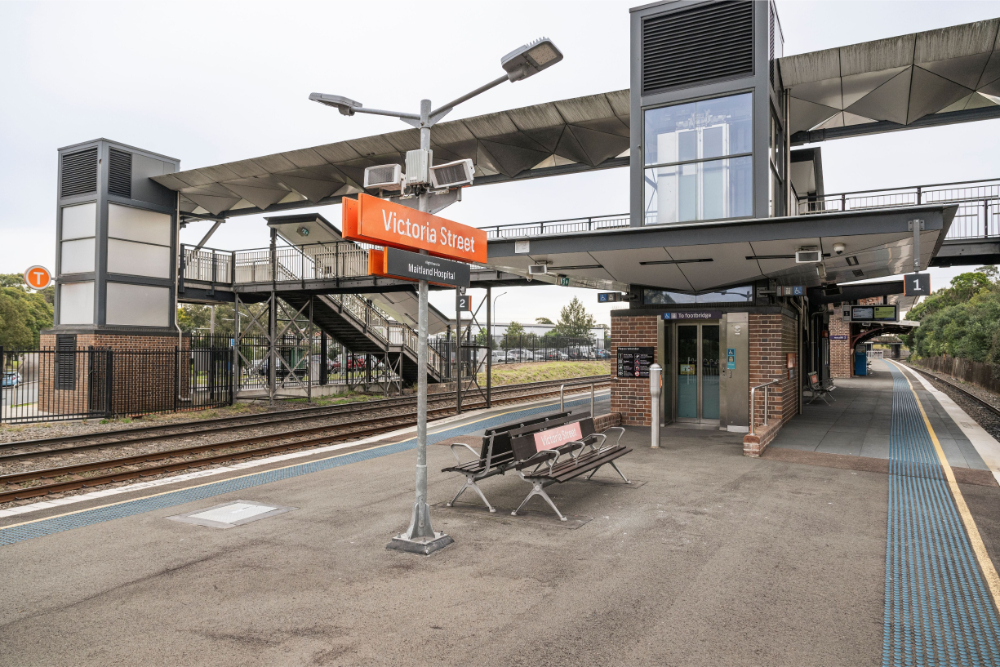
But don’t confuse Metro stations with Sydney’s older outlying train stations, as the broader Sydney rail network is a different story. Transport NSW provides a station-by-station lookup.
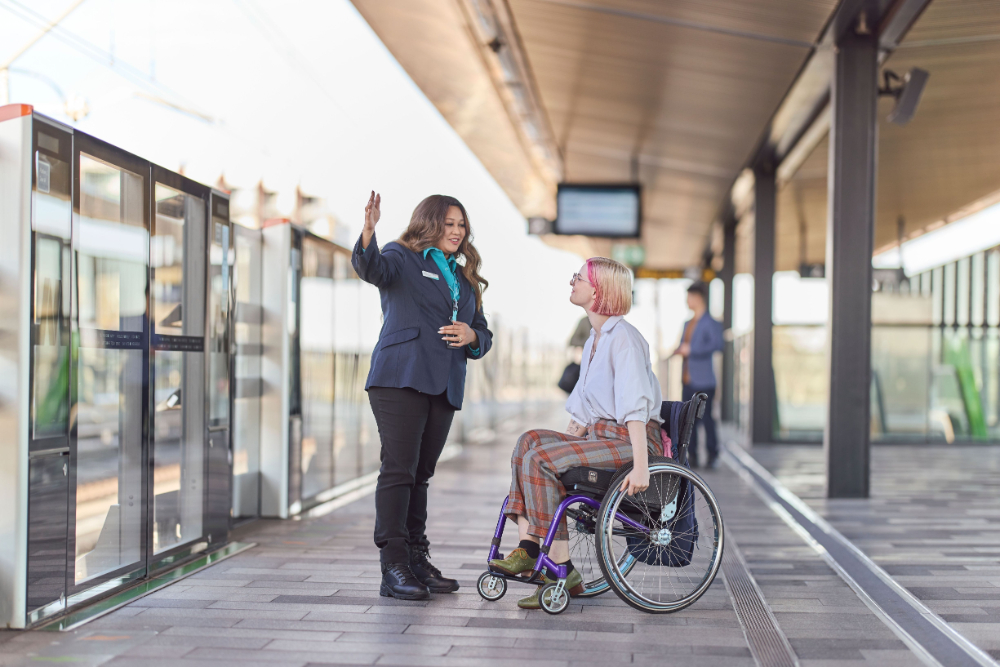
Buses
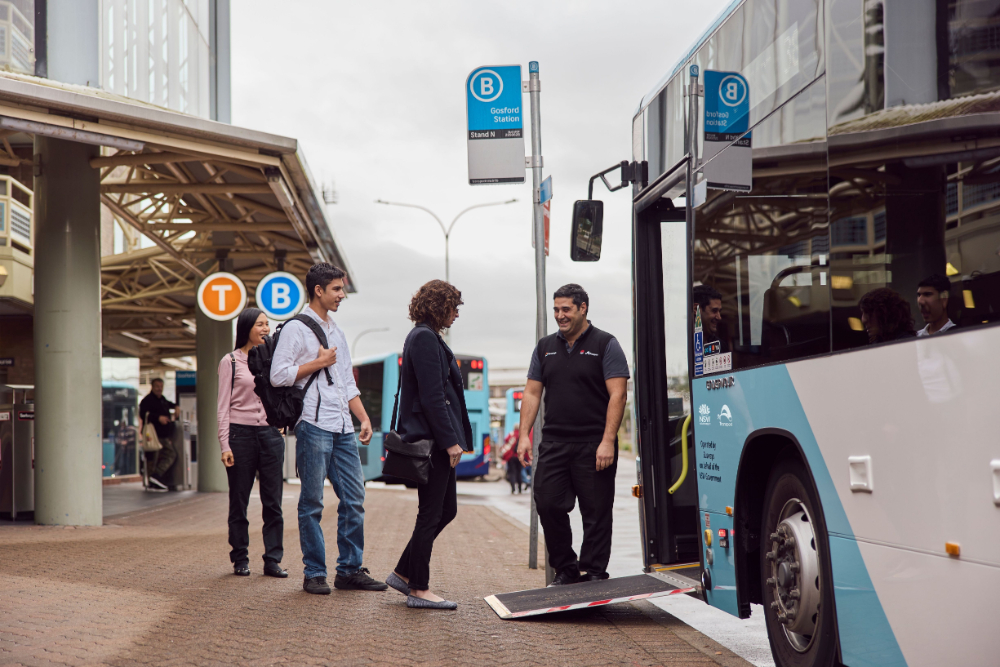
Accessible buses display the wheelchair symbol. There are no steps in the front half of the bus.
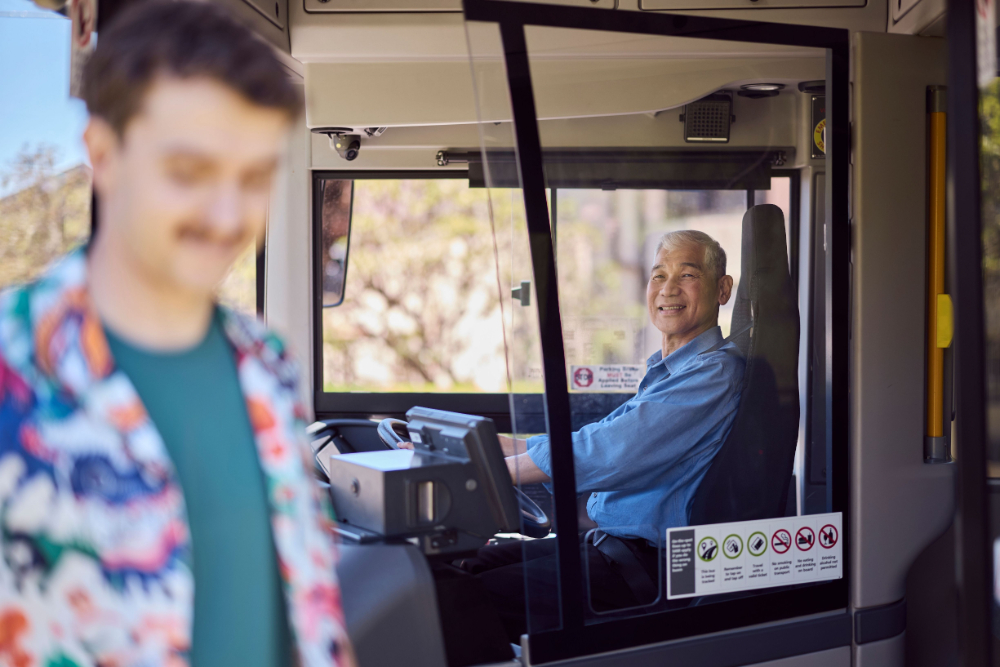
Light rail
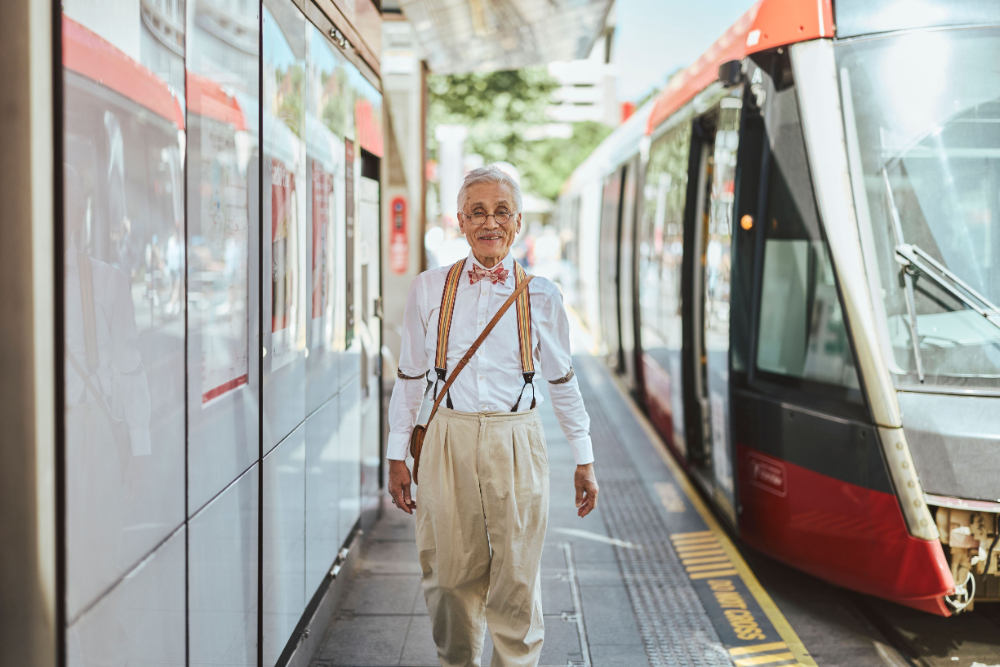
There are ramps or lifts to access the platform. Staff can assist with boarding and alighting.
Check the accessibility facilities at Sydney’s light rail stop locations here.
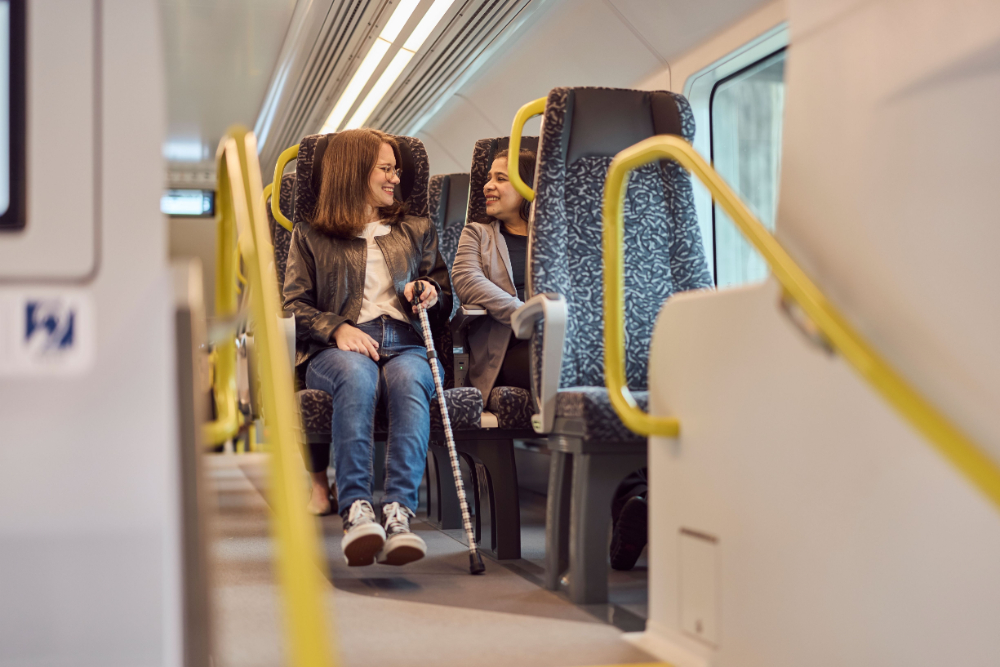
Useful to know
Find the accessibility features of a station, stop or wharf. Check the accessibility features of any stations and stops you will need to use on your trip using the Stations, Stops and Wharves lookup.

Taxis
Accessible taxis phone Zero200, a centralised booking service for wheelchair-accessible taxis. Phone: 02 8332 0200
Ubers
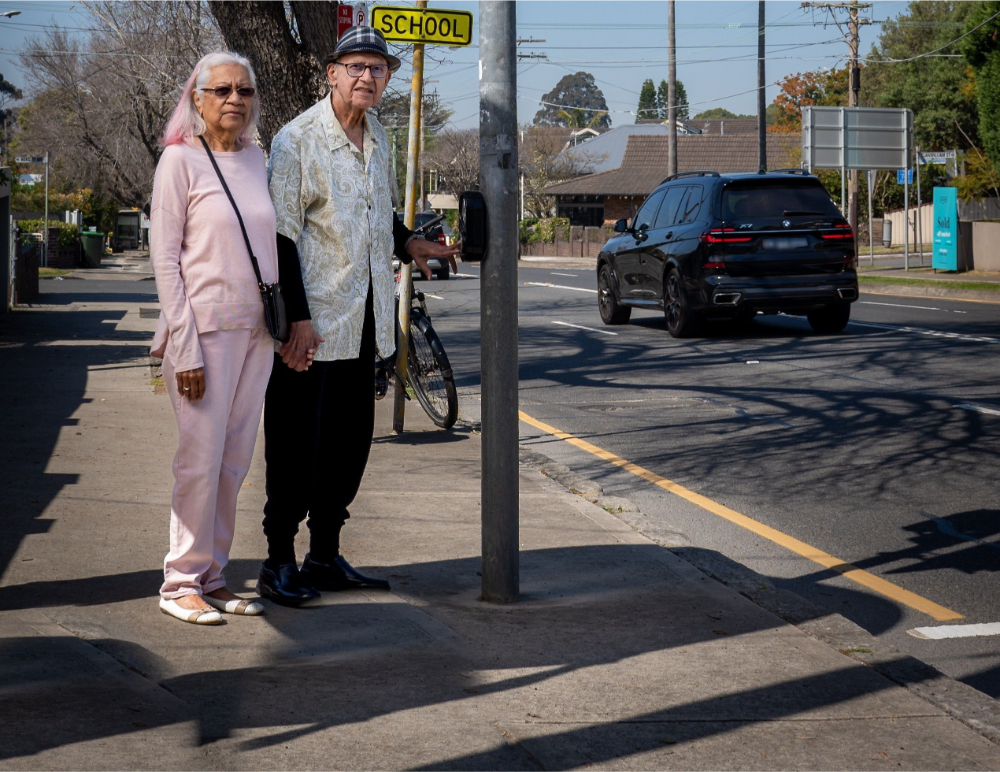
Even if you have a mobility aid, you can still use Uber. But choose carefully. UberX and Uber Comfort can carry a folded walker in the boot. Uber Assist is for a folding wheelchair or a collapsible scooter, but does not provide ramps or lifts. Uber WAV is designed for non-folding, motorised wheelchairs requiring a wheelchair-accessible vehicle with a ramp or lift.
Mobility parking
The City of Sydney provides a list of mobility parking spaces in the city centre.
Written by Nadine
Heading off on your own Melbourne adventures? Join our Facebook Group and share your stories, ask questions and connect with others for further inspiration.