A Yarra River Secret Island
Confession time: I’d never been to Herring Island in the Yarra River. In fact, I’d never heard of it.
To be fair, the isle can be hard to distinguish. From the South Yarra side, it can seem to be just the opposite riverbank — but look more carefully and you’ll see the delightful artificial island and its small dock.
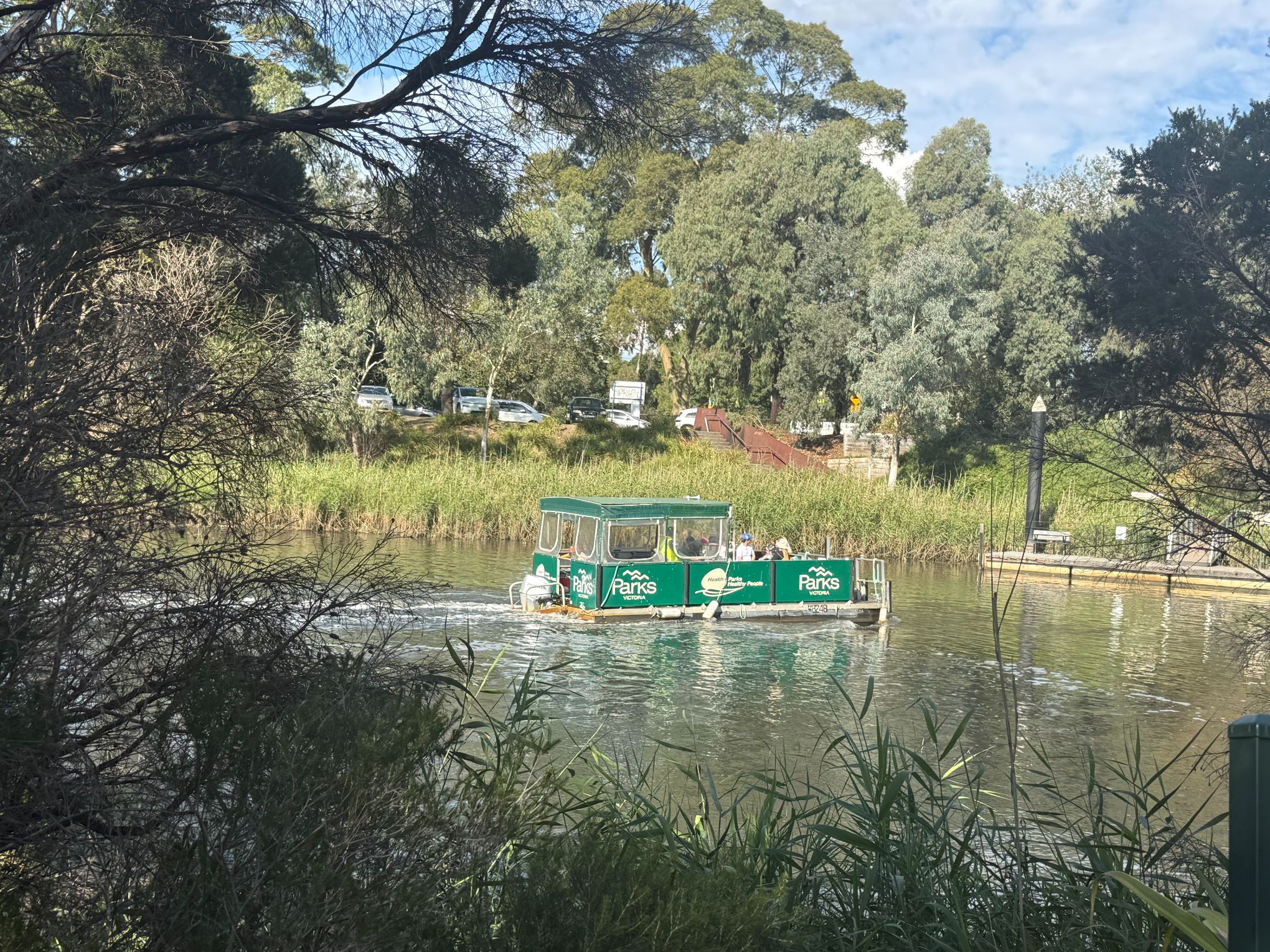
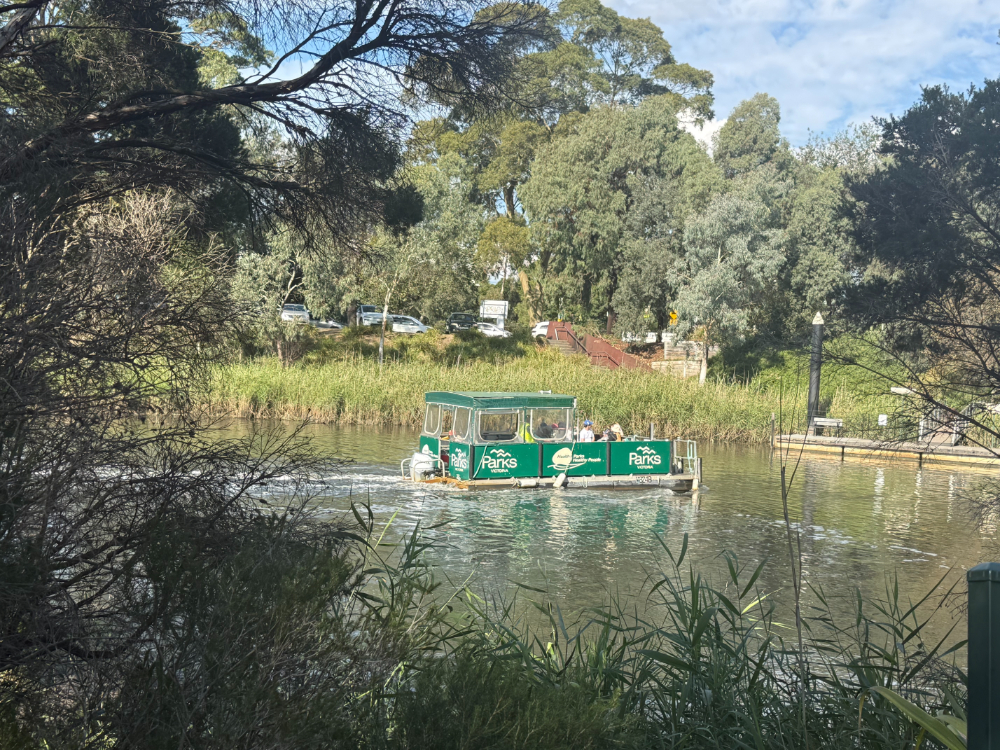
The triangular-shaped island is accessible only by water. From January until Easter, you can travel on the free Parks Victoria punt service — but you can also visit by boat, canoe, kayak or paddleboard anytime! (No swimming allowed.)
A Hidden Island in Plain Sight
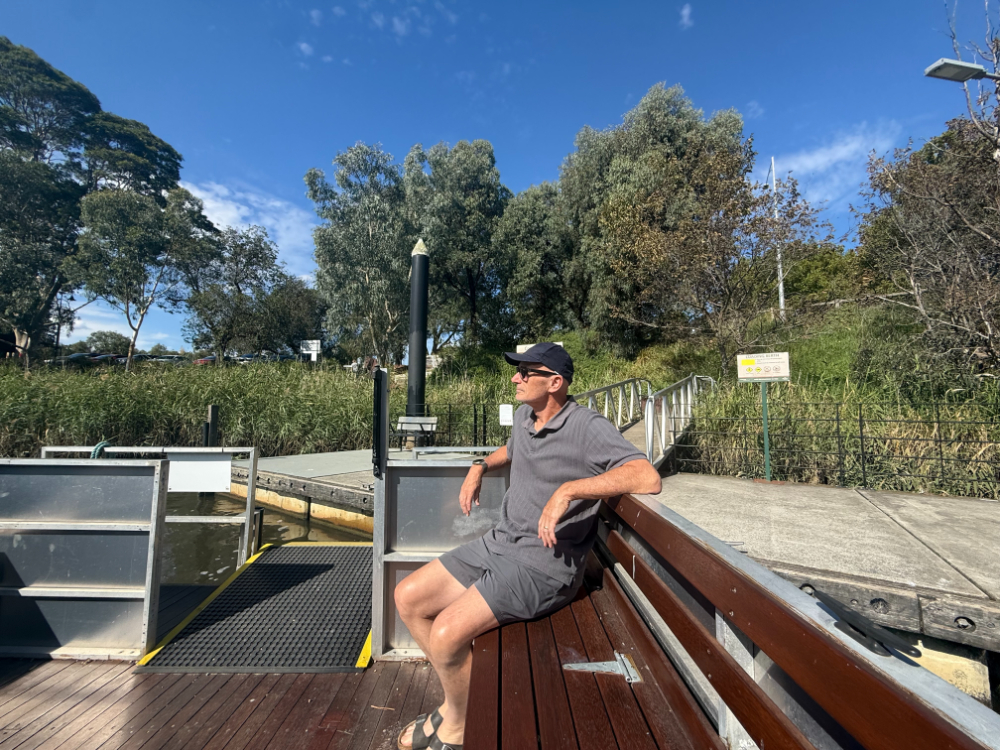
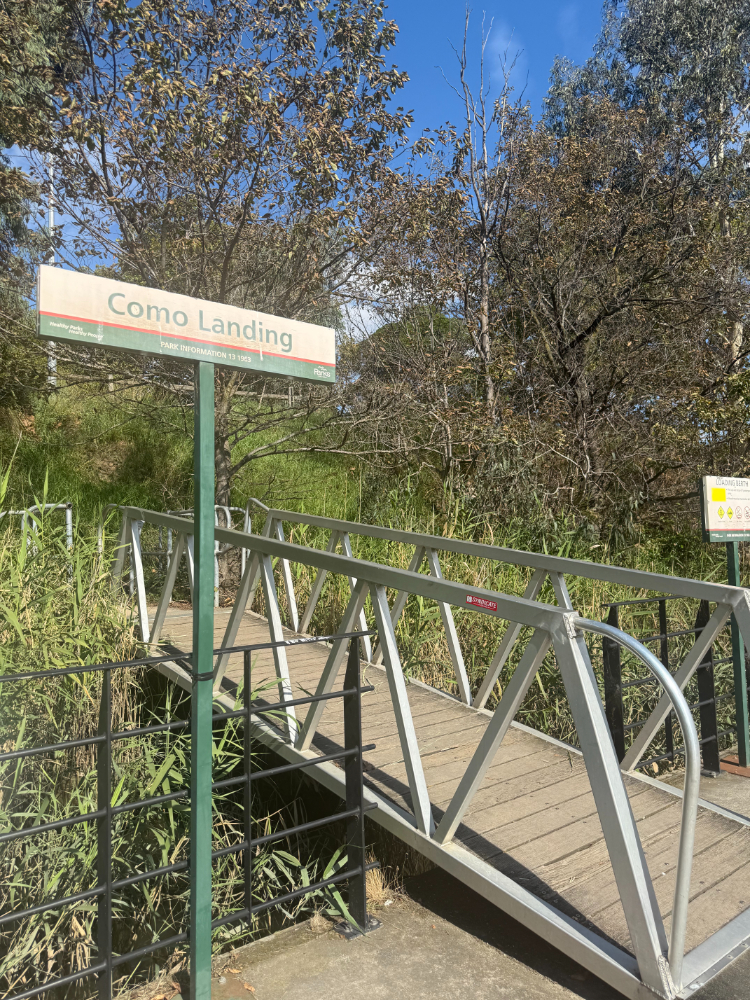
I learned about Herring Island after reading a social media post about an art exhibition in its gallery in March. We drove to Alexandra Avenue in South Yarra, parked the car, and wandered down to the pretty Como landing. The punt was on its way back from the island (it’s a very short trip).
We jumped on board and alighted at the mooring a few minutes later.
River Red Gums are dominant around the perimeter, while Silver Wattles, Manna Gum, Drooping Sheoak, and grasses and native flowers also feature. Honeyeaters, Willie Wagtails, Magpies, and various ducks are easy to spot. We didn’t hear a kookaburra, but I was told they are there, as are possums, lizards, and snakes.
Even a wallaby was seen on the island in 2004. It had been seen coming along the Yarra corridor and presumably swam to the island, but disappeared after a week or so.
Illustrated information boards outside the art gallery describe the flora and fauna that you may come across.
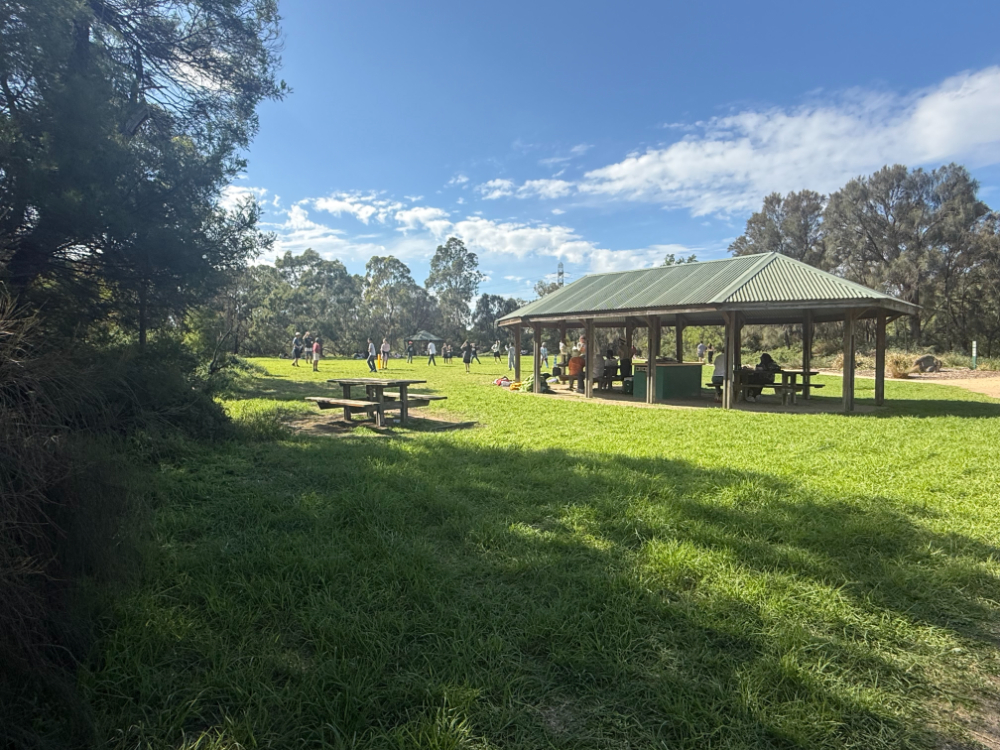
On our visit, families were enjoying a large open space, picnicking and playing cricket. Other visitors were exploring the pathways.
A Riverside Sculpture Walk
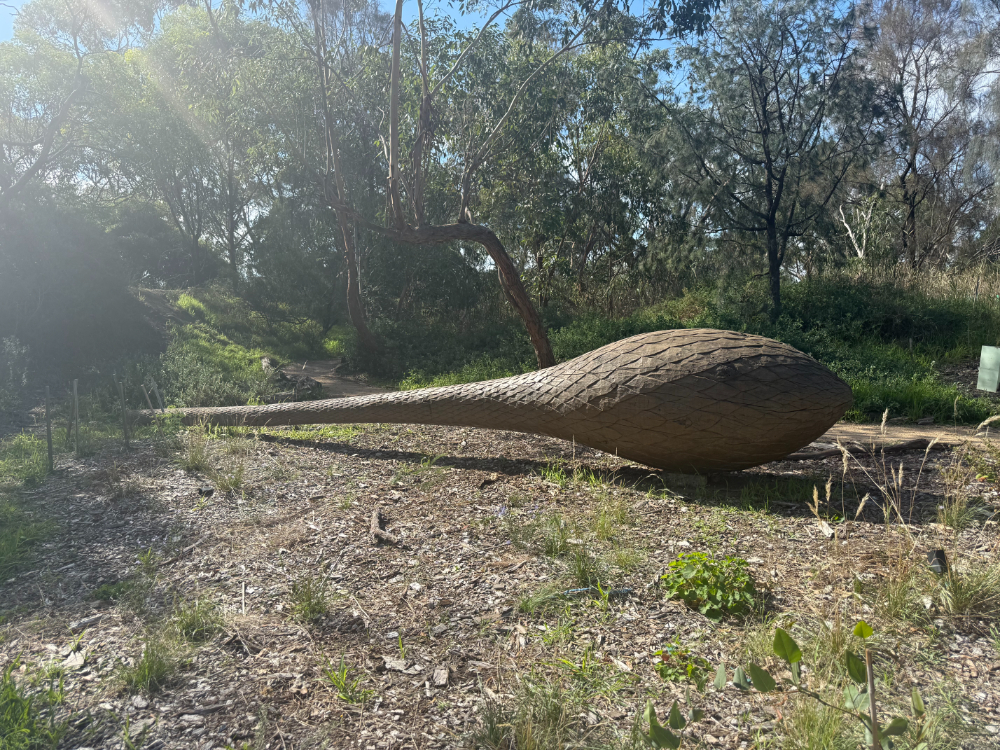
Herring Island is best known as a sculpture park, and the trail of nine environmental artworks is a must-do for visitors. The intricate sculptures are made from natural materials, including timber, rocks, sandstone, earth, slate and granite, all celebrating the local landscape.
Herring Island’s History
Originally a basalt quarry in the 1800s, the island was formed in 1928 by cutting a river channel through the disused Richmond quarry, severing the section of land that is the island from the Richmond side, creating a shortcut for the river to lessen the likelihood of flooding.
In doing so, the natural course of the river, which winds around the southern side of the island, was altered. In 1934, a flood submerged the island, after which the levee banks were rebuilt and revegetation of the island began.
During the 1950s and 1970s, the Scout Association of Australia leased the island, then known as Como Island. The name of the island was changed by the Scouts in 1952 to Herring Island in honour of the association’s president, Sir Edmund Herring.
In the 1990s, the Victorian Government took over the island’s management. In 1996, Parks Victoria, in association with the late Maudie Palmer, a curator and arts advocate, developed the concept for an Environmental Sculpture Park.
Over the next five years, the sculptures were added to the landscape to enhance the island’s natural and recreational attributes and provide a retreat from the city.
Conservation Days and Volunteering
The Friends of Herring Island are holding conservation days, weeding and planting native shrubs and grasses on the island on 5 June and 5 July 2026. For more information, visit www.herringisland.org or call Damian Curtain on 9442 2521.
Special transport will be available on those days from the Parks Victoria depot in Burnley.
Visiting Herring Island
Apart from the conservation days, you will need to wait until next summer to visit the island (unless you have your own water transport).
The free 12-person punt operates from Como Landing (near Alexandra Ave, South Yarra) from January until Easter on Saturdays, Sundays, and public holidays from 11 am to 5 pm.
The grassy picnic area contains free electric barbecues, or you can bring portable gas or liquid barbecues. Drinking fountains, picnic shelters and nearby toilet facilities are provided.
Accessibility: The walking paths are generally unpaved, featuring uneven, narrow, or steep sections, which may pose challenges for mobility-impaired visitors.
Transport: The 605 bus stops near Como Landing.
Find out more about Herring Island via Parks Victoria here.
Heading off on your own Melbourne adventures? Join our Facebook Group and share your stories, ask questions and connect with others for further inspiration.