Melbourne Recital Centre: What to Know Before You Go
Everything you need to know before a concert at Melbourne Recital Centre — accessibility, parking, tram stops and a bit of the fascinating engineering behind that famous acoustic.
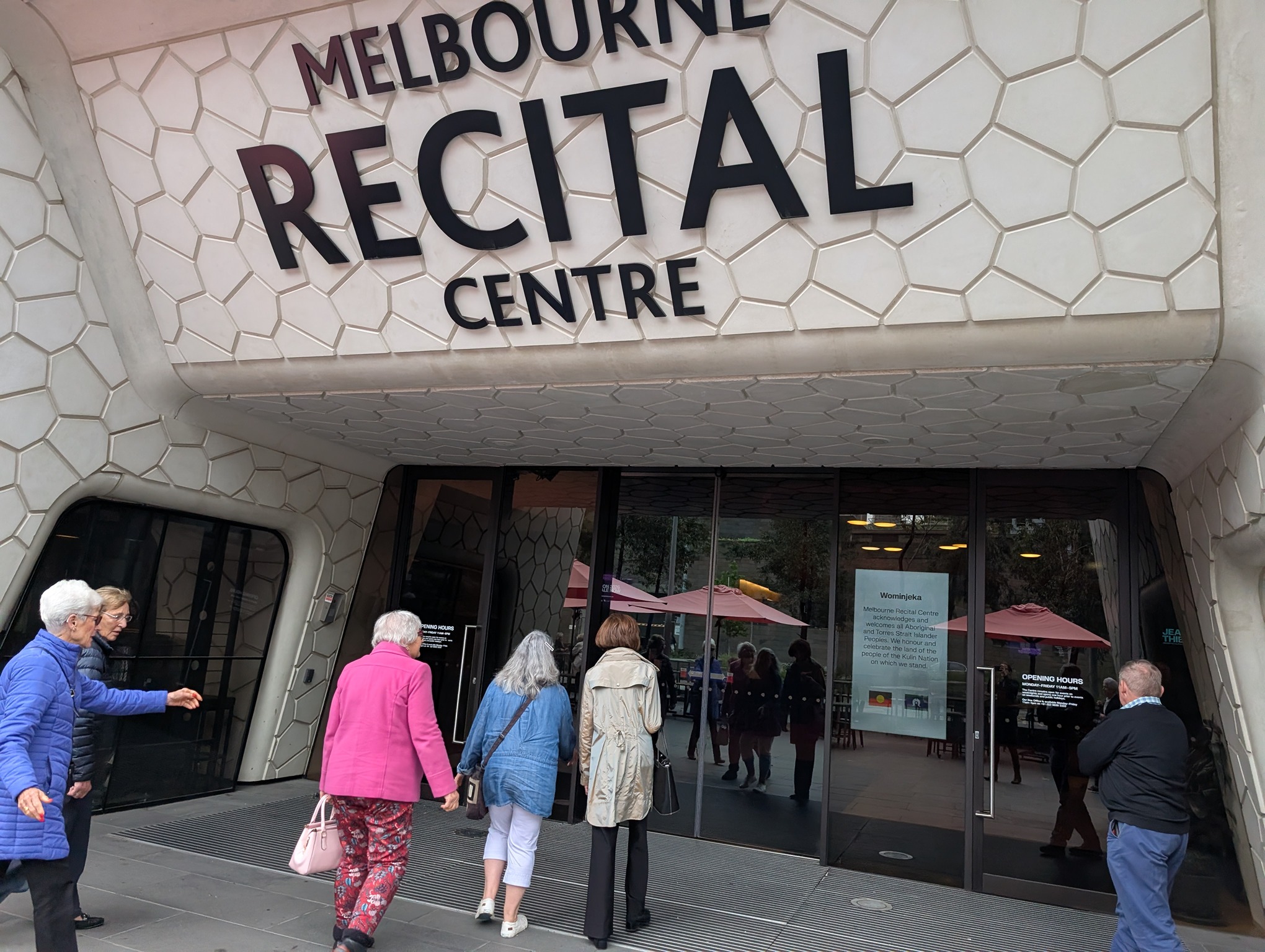
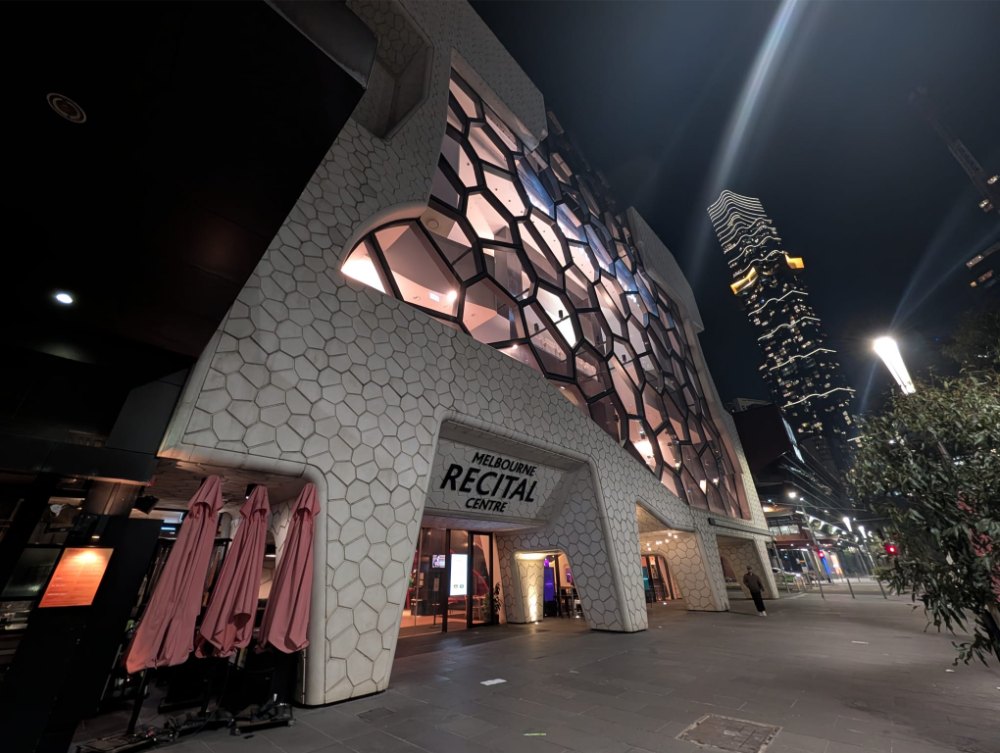
We’ve lost count of how many Sunday afternoons we’ve spent in Elisabeth Murdoch Hall, and it never quite loses its shine. Southbank’s white honeycomb-windowed building doesn’t look like a traditional concert hall from the outside, and it doesn’t sound like one from the inside either — in the best way. If you’re planning your first visit, or you haven’t been in a while, here’s what’s worth knowing before you go, from getting there to where to sit.
Related reading: our guide to concerts in Melbourne has more venues and seasons worth adding to your calendar, and if chamber music matinees are your thing, don’t miss our notes on Mostly Mozart.
About the Venue
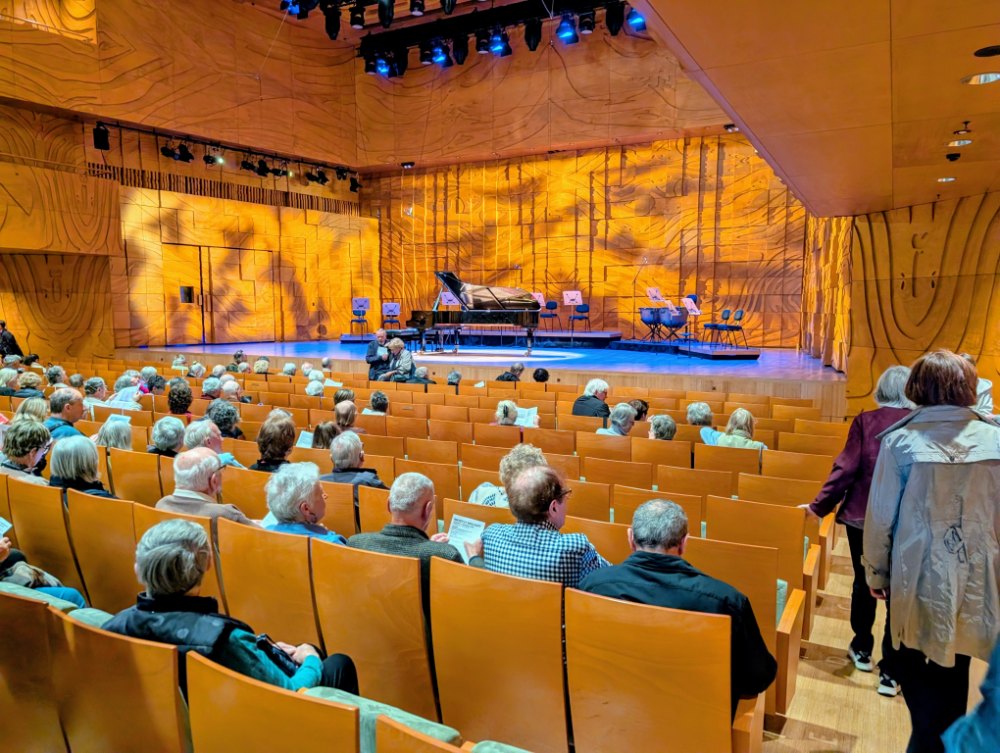
Melbourne Recital Centre sits on the corner of Southbank Boulevard and Sturt Street, in the heart of the Arts Precinct. It’s built around two performance spaces: the 1,000-seat Elisabeth Murdoch Hall, a “shoebox” shaped auditorium designed specifically for chamber music and acoustic clarity, and the smaller, more intimate Primrose Potter Salon. The Centre hosts a broad program across the year — classical, jazz, cabaret, world music and more — but it’s best known among our readers for chamber music and orchestral matinees. Find what’s on here.
Insider Tips for Your Visit
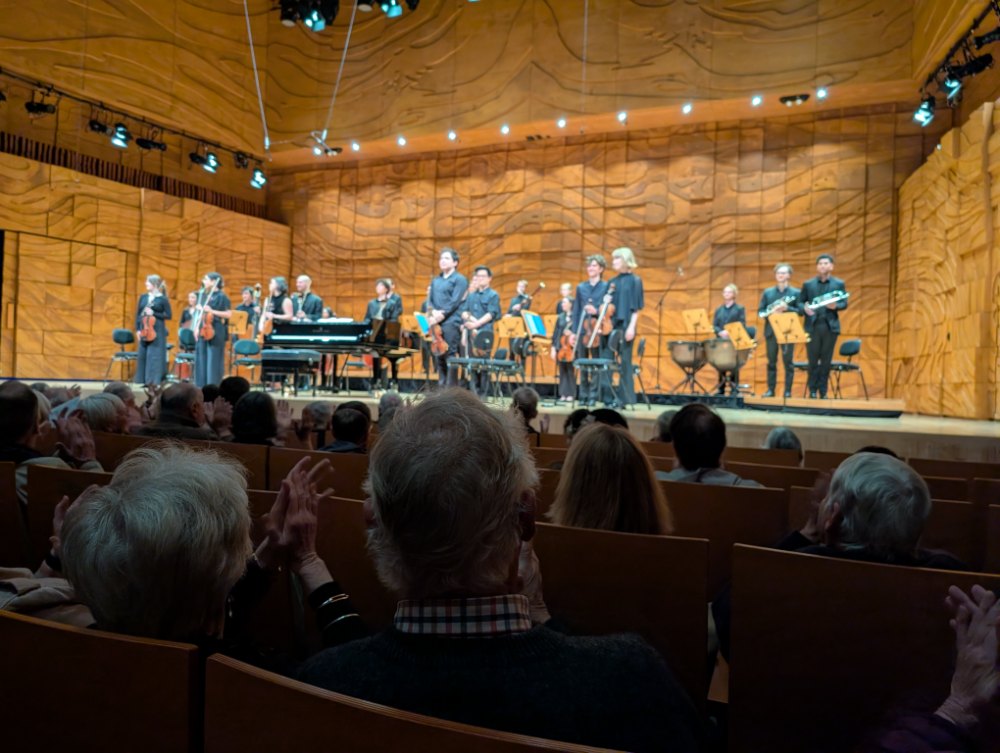
- Look out for the Melbourne Chamber Orchestra. One of our favourite series to catch here — reliably excellent programming in a hall that suits chamber music perfectly.
- The matinee series Mostly Mozart is another favourite. A daytime concert here draws a lovely, relaxed crowd if you’d rather avoid an evening outing.
- Arrive with at least 25 minutes to spare. The Centre recommends this so you have time to find your seat and settle in before the performance starts — and because the hall is built for unamplified acoustic sound, latecomers may not be let in until a suitable break, which for some concerts means not until interval.
- Bring a card, not cash. MRC is a cashless venue — the foyer bars and Box Office only take card payments (EFTPOS, Visa, Mastercard, Amex and Diners).
- Use the free cloakroom. It’s complimentary and staffed for the duration of the concert. Bags, umbrellas and anything larger than an A3 sheet need to be cloaked before you go in, so factor in a few extra minutes if you’ve come straight from somewhere else.
- Pick up a program sheet in the foyer. Stewards hand out free sheets outlining the movements for each piece, which is handy if you like to know when it’s appropriate to applaud (traditionally, that’s at the end of the final movement, not between movements).
- No need to dress up. There’s no formal dress code — smart casual is the general rule, though shoes are required.
- Ask about a booster cushion if you’d like one. A limited number are available from the cloakroom on request, great for kids and teens.
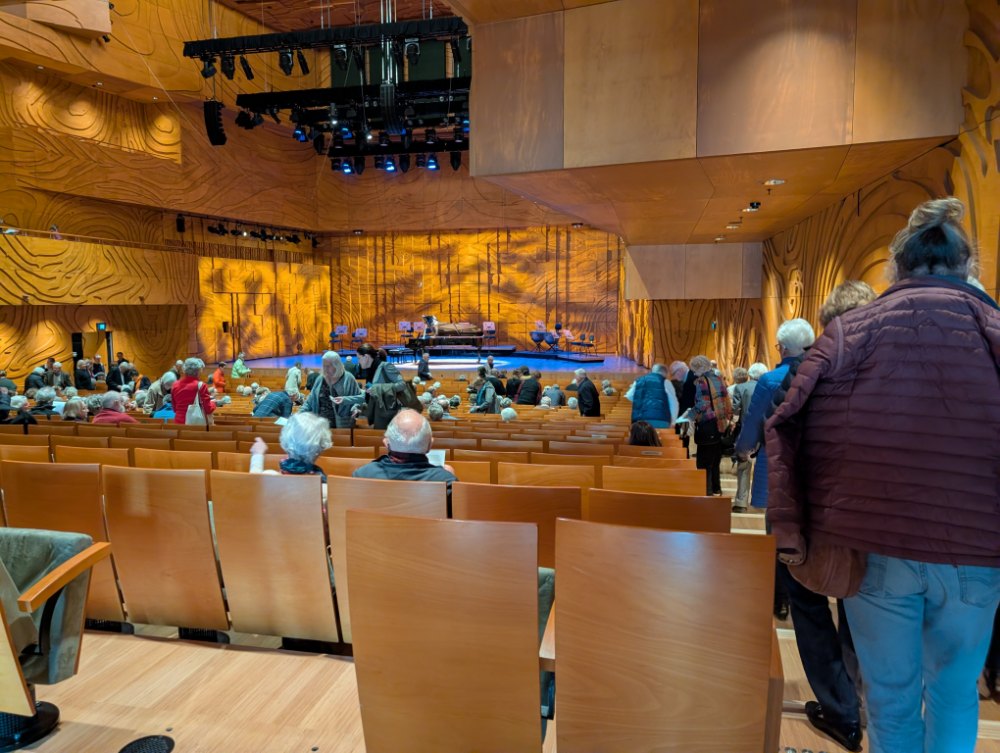
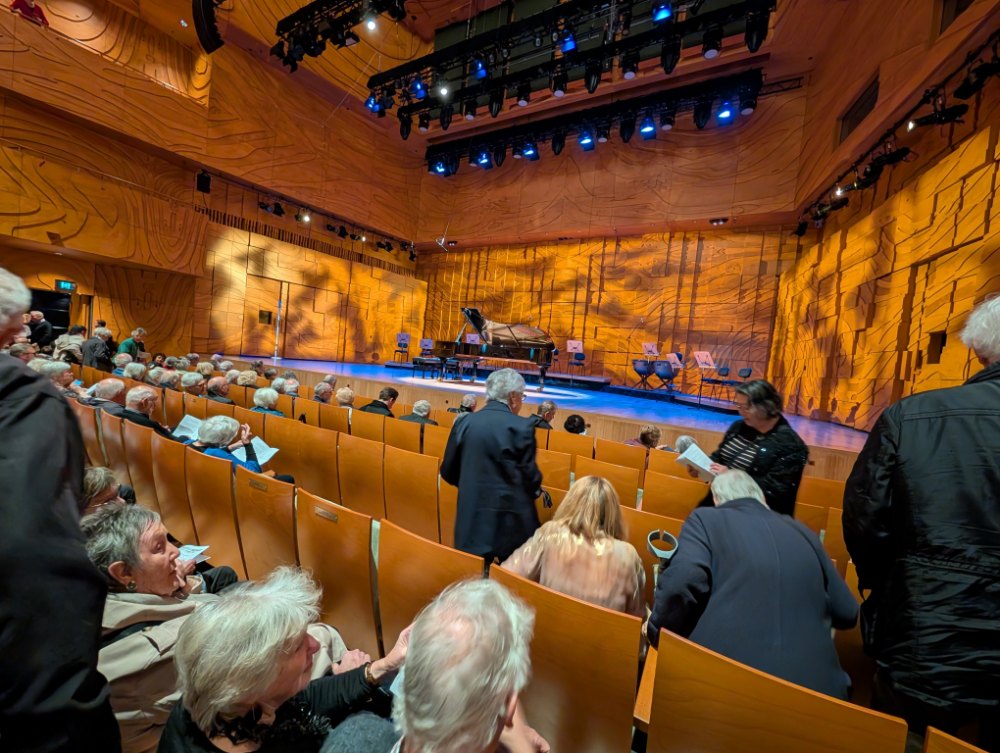
- Plan your route into the hall. You can reach Elisabeth Murdoch Hall via stairs, escalator or lift, but once you’re inside the auditorium doors, getting to your seat usually means a few small steps down toward the stage. Worth knowing if you’d rather take that last stretch slowly, or if you want to request stair-free seating in advance (see Accessibility below).
A Bit of History
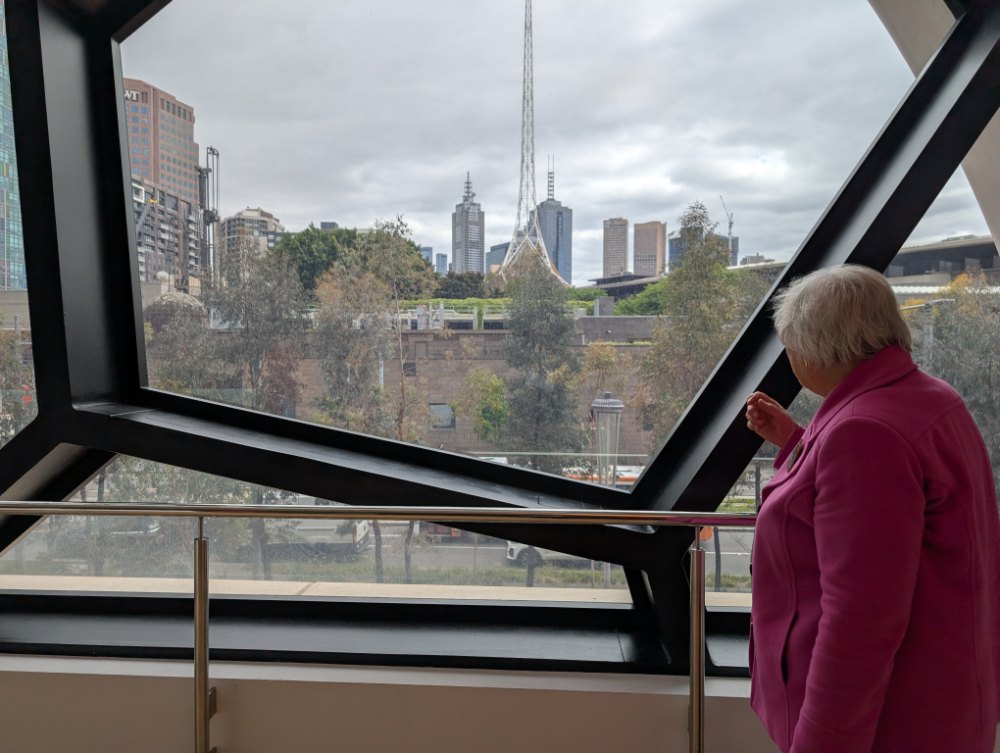
Melbourne Recital Centre opened in February 2009, part of a shared complex with the Melbourne Theatre Company’s Southbank Theatre. It was designed by Melbourne architecture firm Ashton Raggatt McDougall (ARM), with acoustic consulting by Arup. The design team’s brief was ambitious: create a genuinely world-class recital hall for the 21st century, using the “shoebox” shape long associated with acoustically excellent halls like Vienna’s Musikverein and London’s Wigmore Hall, but built with a distinctly Melbourne character.
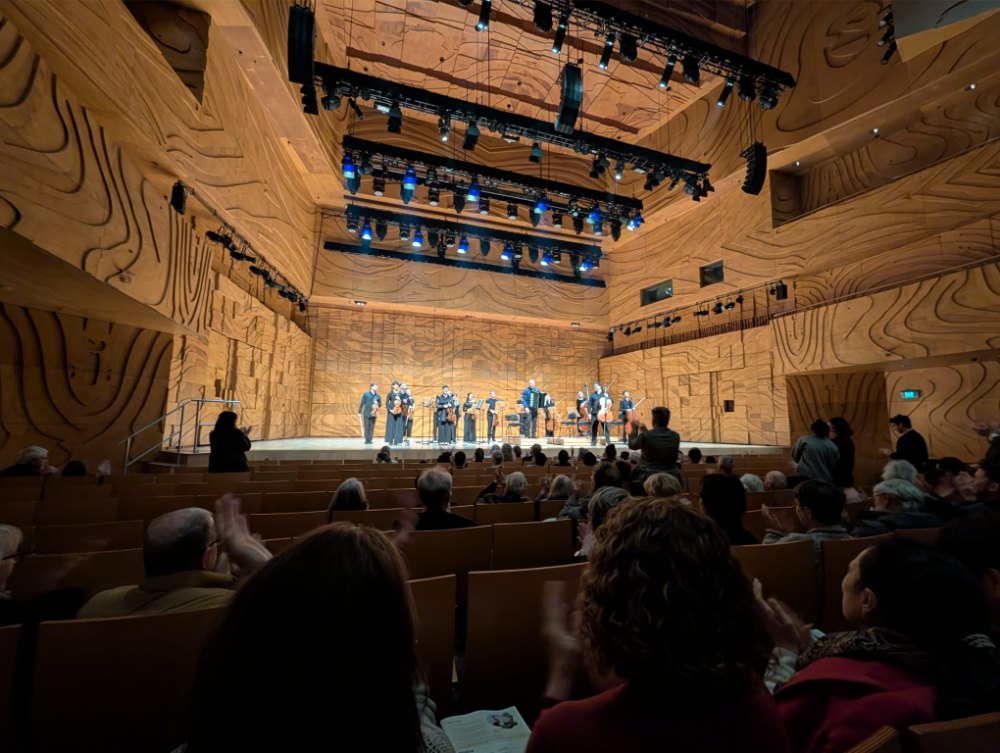
The result is Elisabeth Murdoch Hall, named for its founding patron, lined floor to ceiling in hoop pine plywood panels routed to resemble timber grain — designed, as the architects put it, to feel like sitting inside a beautiful instrument rather than a conventional theatre.
One of the more fascinating engineering details is on a plaque in the building itself: the hall is built as a separate structure suspended on spring bearings, designed to isolate it acoustically from outside traffic and vibration — engineering by Melbourne firm Embelton Limited. (Note for Amy: the on-site plaque you photographed states 54 bearings supporting 5,500 tonnes, but other published sources describe 38 spring bearings supporting around 550 tonnes. That’s a significant difference, so I’d recommend confirming with Melbourne Recital Centre directly before we publish a specific figure — happy to phrase this more generally in the meantime if you’d rather not chase it up.)
The building won a swag of architecture awards in 2009, including the Victorian Architecture Medal, and remains one of Melbourne’s most distinctive pieces of contemporary public architecture.
Accessibility
- Wheelchair-accessible spaces are located in Stalls Row U and the Upper East and Upper West Wings, all with companion seating available, and can be booked through any sales channel.
- Patrons with restricted mobility who don’t require a wheelchair can request stair-free seating in Stalls Row U, Circle Row A, or seats 11–15 in either upper wing.
- Lift access is available to all levels; escalators run between Ground Level and Level 1.
- A hearing loop is available in Elisabeth Murdoch Hall and the Primrose Potter Salon — switch hearing aids to the “T” position, or ask Front of House staff for a receiver and headphones.
- Accessible toilets are available on all foyer levels.
- The Centre accepts the Companion Card for patrons who need a companion seat.
- Walkers are generally stored outside the auditorium doors and returned by staff at interval or after the performance; if you’d prefer to keep yours with you, call the Box Office ahead to arrange suitable seating.
- Assistance animals are welcome — let the Ticketing Services team know in advance.
For any specific access requirements, it’s worth calling the Box Office on (03) 9699 3333 ahead of your visit so staff can prepare the best seating option for you. Find more on the website.
Getting There
- Public Transport: The closest tram stop is Stop 17 (Sturt St/Southbank Blvd), right at the Centre’s doorstep on Route 1 — a level-access platform stop. Alternatively, alight at Stop 16 or 14 on St Kilda Road (routes 1, 3, 5, 6, 16, 64, 67, 72) and walk around 200 metres down Southbank Boulevard. The closest train station is Flinders Street, about a 10-minute walk away.
- Driving: Parking is available at the Arts Centre Melbourne car park and the Primrose Potter Australian Ballet Centre car park, both a short walk away, with accessible spaces at each. On-street parking around Southbank is limited and time-restricted. Note that ongoing works in the Arts Precinct mean some car park entries and pedestrian routes change from time to time, so it’s worth allowing extra time.
- Drop-off Zone: The Sturt Street entrance has a drop-off bay right outside, and is the safest spot for taxis and rideshare. For a step-free drop-off, Dodds Street (accessed via Southbank Boulevard) has four accessible car spaces.
Melbourne Recital Centre 31 Sturt Street, Southbank VIC 3006 For Box Office enquiries, please contact Melbourne Recital Centre on (03) 9699 3333.
Heading off on your own Melbourne adventures? Join our Facebook Group and share your stories, ask questions and connect with others for further inspiration.